Post Disclaimer
This post contains affiliate links. If you buy something through these links, I may earn a small commission at no extra cost to you. Full disclosure.
This article is for informational purposes only and does not constitute medical advice. Always consult a healthcare professional for personal health concerns. Full disclaimer.
Last updated: June 25, 2026
Quick Answer: The last 60 minutes before bed have a disproportionate effect on how quickly you fall asleep and how well you stay asleep. Most insomnia solutions focus on what happens at the moment you close your eyes – but the real window for change starts an hour earlier. Adjusting specific behaviors during that final hour can reduce sleep onset time and improve sleep quality without medication.
Key Takeaways
- Your nervous system needs a deliberate transition period before it can shift into sleep mode – you can’t just switch it off
- Blue light from screens suppresses melatonin production, but the mental stimulation from devices matters just as much as the light itself
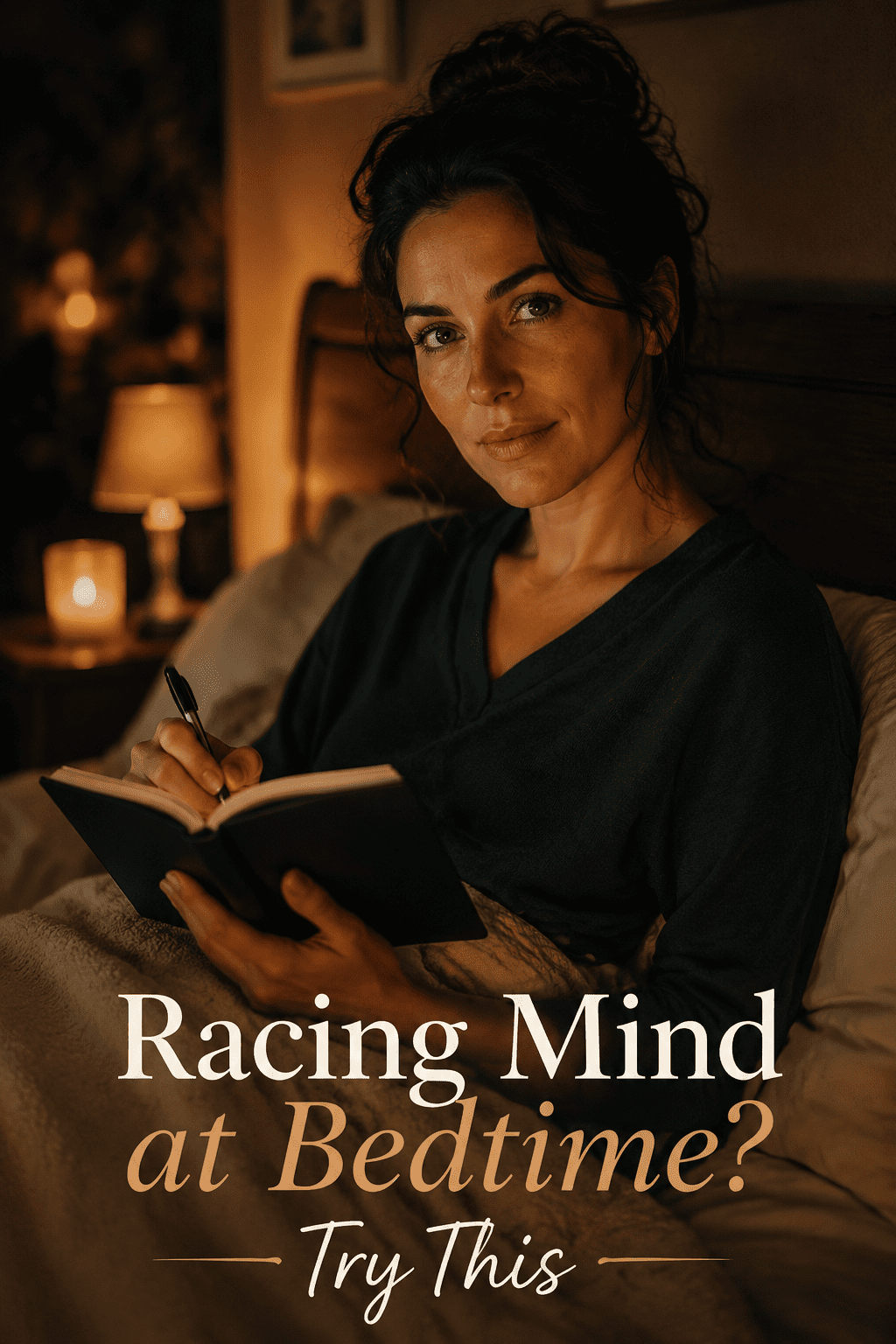
- Room temperature between 65-68°F (18-20°C) is consistently linked to faster sleep onset
- Anxiety and racing thoughts at bedtime respond well to specific behavioral techniques, not just relaxation advice
- There’s a meaningful difference between one bad night and clinical insomnia – knowing which you’re dealing with changes what you should do
- Behavioral changes typically show results within 1-2 weeks, not overnight
- Shift workers can adapt these strategies – the timing shifts, but the principles hold
- Melatonin supplements address one small part of the sleep equation; behavioral change addresses the whole system
What Causes Insomnia and Why Does Your Bedtime Routine Matter
Insomnia isn’t usually one thing going wrong – it’s a pattern of signals telling your nervous system that now is not the time to sleep. The most common drivers include stress, anxiety, irregular schedules, and the habits you’ve built around bedtime without realizing it [7].
Here’s what the research actually says: your brain learns associations. If you spend most evenings in a state of stimulation right up until you lie down, your brain starts to associate your bed with alertness rather than rest. This is called conditioned arousal, and it’s one of the main reasons people with chronic insomnia lie awake even when they’re exhausted [8].
The hour before bed is the window where those associations are being written. What you do during that time either reinforces the problem or starts to undo it.
If you’ve been dealing with this for a while and want to understand what might be driving it specifically, this breakdown of why you have insomnia and how to find your trigger is worth reading before you change anything.
What’s the Difference Between Insomnia and Just Having a Bad Night
A bad night is occasional – triggered by stress, illness, travel, or a late coffee. Insomnia is a pattern: difficulty falling asleep, staying asleep, or waking too early at least three nights per week, for three months or more, despite having adequate opportunity to sleep [10].
The distinction matters because one bad night doesn’t need fixing. Trying to aggressively “solve” a single rough night can actually create anxiety around sleep that makes things worse. Clinical insomnia, on the other hand, is a learned pattern – and learned patterns can be unlearned.
It’s not just you if you’ve had a few rough nights and suddenly started dreading bedtime. That dread itself becomes part of the problem.
How Does What You Do Before Bed Affect Sleep Quality
What you do in the 60 minutes before bed directly influences your cortisol levels, core body temperature, and melatonin production – three of the main biological levers of sleep [2].
In practice this means: a stimulating argument, a tense work email, a fast-paced video game, or even an anxiety-inducing news scroll can keep your cortisol elevated long enough to delay sleep onset by 30 minutes or more. Your body needs time to physically cool down and chemically shift gears.
Major health organizations including the Mayo Clinic and the NHS both recommend a deliberate 60-minute wind-down period as a core part of managing sleep problems [2][5]. Not because it’s a nice idea – because the physiology demands it.
7 Insomnia Solutions That Work in the Last Hour Before Bed
These aren’t the basics you’ve already heard. Each one is specific, behavioral, and grounded in what actually changes the neuroscience of sleep onset.
1. Set a hard stop on screens – and make it 45 minutes, not 30
The advice to “put your phone down before bed” is so overused it’s become noise. But the honest version is: most people who struggle with sleep are underestimating how long the stimulation effect lasts.
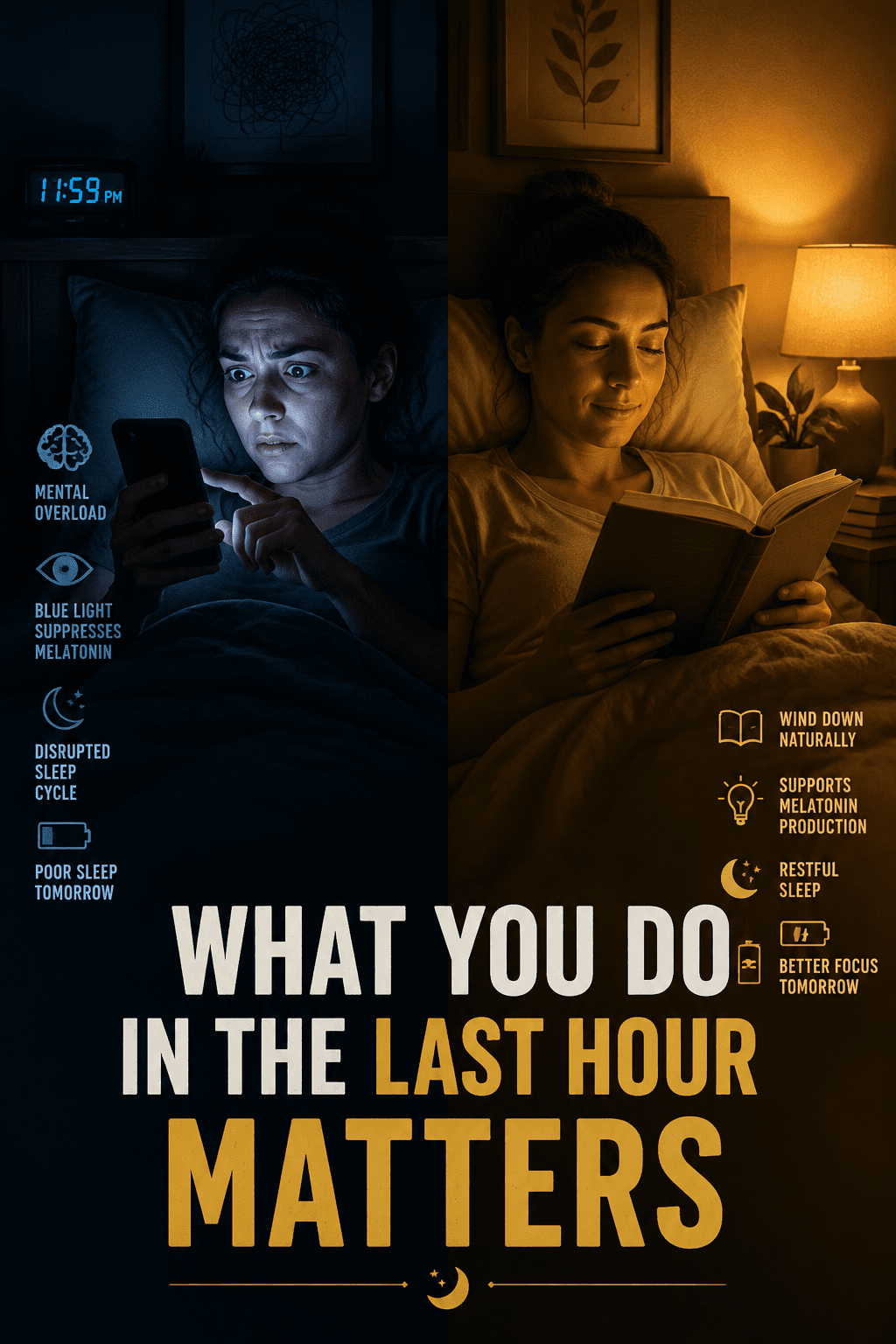
Blue light suppresses melatonin, yes – but the mental activation from checking notifications, social feeds, or work messages is a separate problem that persists after the screen goes off [1]. Forty-five minutes gives both effects time to fade.
Worth trying if you currently scroll until 10 minutes before sleep and wonder why your mind is still racing at midnight.
2. Lower your room temperature before you get into bed
Your core body temperature needs to drop slightly to initiate sleep. A room that’s too warm actively fights this process [9].
The research points to 65-68°F (18-20°C) as the range most adults sleep best in [2]. If you can’t control your thermostat, a warm shower or bath 60-90 minutes before bed achieves the same effect through a different mechanism – your body temperature rises during the bath, then drops sharply afterward, which accelerates the natural cooling process that triggers sleep.
3. Write down tomorrow’s problems tonight
Racing thoughts at bedtime are often your brain’s attempt to solve unfinished business. It’s not a character flaw – it’s your prefrontal cortex doing its job at the wrong time.
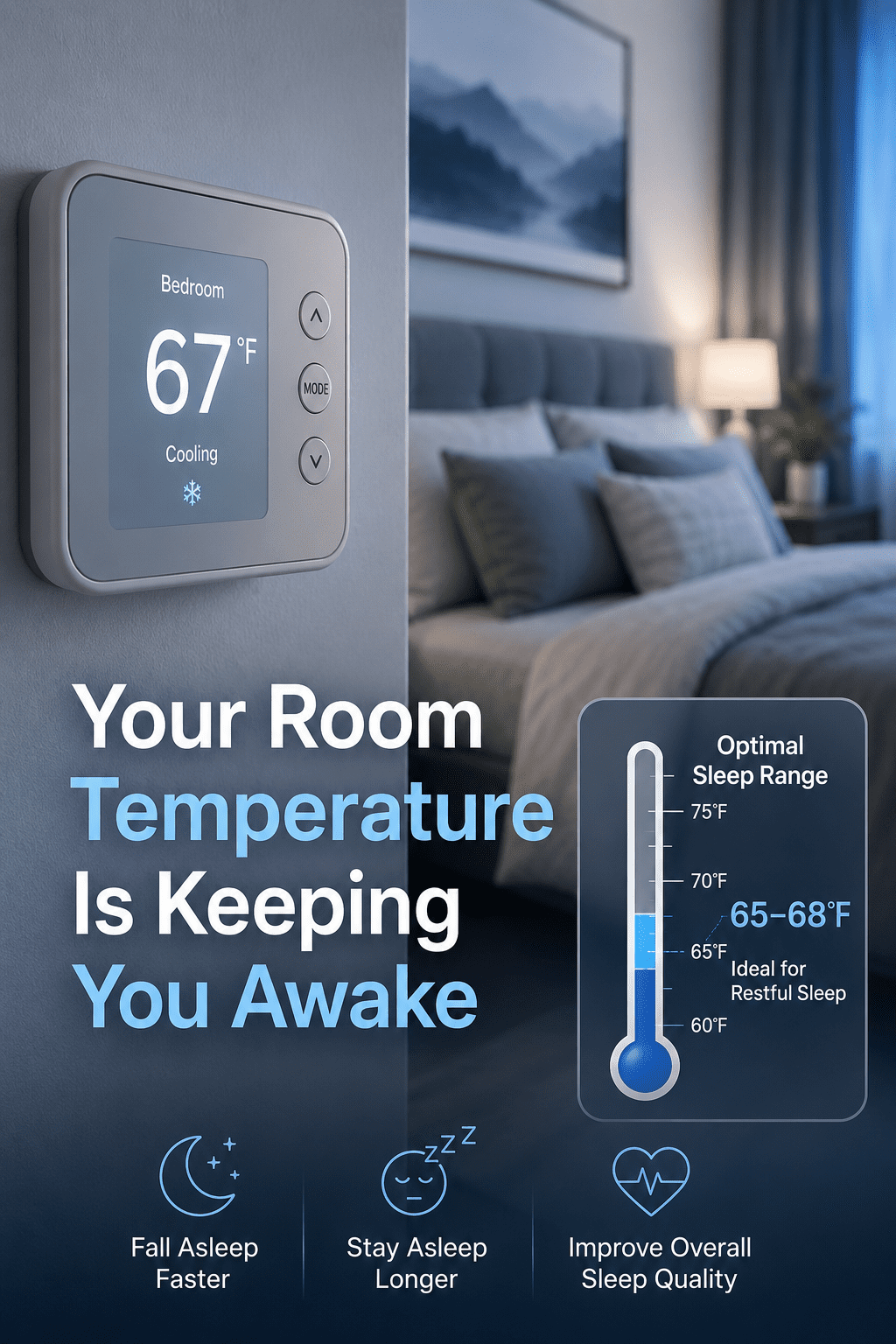
A 2018 study published in the Journal of Experimental Psychology found that writing a to-do list before bed – specifically tasks for the next day – helped people fall asleep significantly faster than journaling about completed tasks [8]. Five minutes, pen and paper, everything that needs doing tomorrow. Then close the notebook.
This is what worked for me, personally. I spent years trying to “clear my mind” before bed. Writing things down worked better than any relaxation technique because it gave my brain permission to stop holding onto them.
4. Stop eating at least 90 minutes before bed
Late eating keeps your digestive system active during a period when your body is trying to shift into rest mode. It also raises your core body temperature – the opposite of what sleep requires [6].
This isn’t about weight or metabolism. It’s about not giving your body competing signals at the exact moment it needs to consolidate into sleep.
5. Dim every light in your home, not just your bedroom
Most people think about their bedroom lighting. But the bright overhead lights in your kitchen or living room during the hour before bed are sending the same “daytime” signal to your brain that screens do [1].
Switch to lamps. Use warm-toned bulbs. Your brain reads light intensity and color temperature as information about what time of day it is – and it responds accordingly.
6. Do something genuinely boring – on purpose
This sounds like a joke. It isn’t. Light reading, a slow podcast, gentle stretching – activities with low cognitive demand give your brain something to do while gradually reducing arousal. The goal isn’t to force sleep. It’s to stop actively preventing it.
You don’t have to fall asleep – you just have to rest. That reframe alone reduces the performance anxiety that keeps a lot of people awake.
For a fuller list of what to actually do during that hour, see 10 things to do before bed for your best sleep.
7. Keep your wind-down time consistent, even on weekends
Your circadian rhythm is set by consistent timing signals. Staying up two hours later on Friday and Saturday is enough to shift your internal clock – a phenomenon researchers call “social jetlag” [7].
The reason this matters is that inconsistency makes every other insomnia solution less effective. You can do everything else right and still struggle if your sleep and wake times vary by more than 60-90 minutes across the week.

Does Blue Light Really Keep You Awake at Night
Yes – but it’s one factor among several, and probably not the biggest one. Blue light wavelengths suppress melatonin production by signaling to your brain that it’s still daytime [1]. This is real and documented.
What’s less discussed is that the content you’re consuming matters independently of the light. A stressful email read on a blue-light-filtered screen still activates your stress response. The light filter helps; stopping the stimulating content helps more.
How long before bed should you stop using your phone? The Sleep Foundation recommends at least 30 minutes; in practice, 45-60 minutes shows better results for people with chronic insomnia [1].
What Should You Avoid Doing Before Bed if You Can’t Sleep
The short list: intense exercise within 2-3 hours of bed, alcohol (it fragments sleep architecture even if it helps you fall asleep), caffeine after 2pm if you’re sensitive, and anything that generates significant emotional activation – arguments, stressful news, work emails [2][4].
The honest version is that most people know these things. The harder part is that many of these behaviors are how people decompress from a stressful day. If late-night TV or a glass of wine is how you unwind, removing it without replacing it with something else rarely works.
Replace, don’t just remove.
Does Exercise Before Bed Help or Hurt Sleep
It depends on the intensity and timing. Vigorous exercise – running, HIIT, heavy lifting – raises your core body temperature and cortisol, which can delay sleep onset if done within 2 hours of bed [9].
Light exercise – a 15-minute walk, gentle yoga, stretching – is generally fine and may actually help by reducing physical tension. The Scripps Health guidelines suggest finishing intense workouts at least 3 hours before your intended sleep time [4].
If you work late and can only exercise in the evening, lower the intensity rather than skipping it entirely.
Are There Insomnia Solutions That Work if You Have Anxiety or Racing Thoughts
Yes – and behavioral approaches tend to work better for anxiety-driven insomnia than sleep aids, because they address the actual mechanism rather than sedating it.
If you’re experiencing symptoms that feel bigger than just sleep trouble, it’s worth taking stock of what’s happening. There’s a free, anonymous insomnia and anxiety test here – it takes a few minutes and asks how you’ve been feeling over the past two weeks. Sometimes naming what’s going on is the first useful step.
The most effective techniques for racing-mind insomnia include:
- Cognitive shuffling – deliberately thinking of random, unconnected images to interrupt anxious thought loops
- The worry dump – writing every anxious thought onto paper before bed, then physically closing the notebook
- Progressive muscle relaxation – tensing and releasing muscle groups systematically, which shifts attention away from thoughts and into the body [8]
For a deeper look at this specific problem, insomnia overthinking: how to quiet your mind at night covers the techniques in more detail.
Can Changing Your Evening Routine Fix Insomnia, or Do You Need Medication
Behavioral change – specifically Cognitive Behavioral Therapy for Insomnia (CBT-I) – is the first-line treatment recommended by most sleep medicine organizations, ahead of medication [7]. It works by addressing the thoughts, habits, and patterns that maintain insomnia rather than temporarily suppressing symptoms.
Medication can be appropriate for short-term or severe cases, but it doesn’t retrain the conditioned arousal patterns that keep chronic insomnia going. Most sleep specialists recommend it as a short-term bridge, not a long-term solution [10].
The honest version is: if you’ve had insomnia for months or years, behavioral change is harder and slower than taking a pill – but it’s also more durable.
Is Changing Your Routine Better Than Melatonin or Sleep Aids
Melatonin works best for circadian rhythm problems – jet lag, shift work, delayed sleep phase. It’s not particularly effective for sleep-maintenance insomnia or anxiety-driven sleep problems, because those aren’t caused by low melatonin [6].
Behavioral change addresses the underlying system. Melatonin addresses one small signal within it. They’re not competing – but if you’re relying on melatonin and still struggling, it’s probably because melatonin isn’t targeting the right problem.
For more on what actually works when the basics haven’t, see 15 insomnia tips that actually work when nothing else has.
What If You Work Late Shifts – Can You Still Fix Your Sleep Schedule
Yes, but the approach shifts. The goal for shift workers isn’t a conventional sleep schedule – it’s consistency within whatever schedule you’re working [7].
If you work nights and sleep during the day, the same principles apply: create a 60-minute wind-down before your sleep period, control light exposure (blackout curtains become critical), keep your sleep timing consistent across your work days, and treat your pre-sleep hour with the same intentionality as anyone sleeping at night.
The bigger challenge for shift workers is social pressure to adopt a “normal” schedule on days off. That inconsistency is usually what causes the most disruption. For more on this, how to fix your sleep schedule in 7 days has a practical step-by-step approach.
How Quickly Will a Better Bedtime Routine Help Your Insomnia
Most people notice some improvement within 1-2 weeks of consistent behavioral change. Full benefit from approaches like CBT-I typically takes 4-8 weeks [7][8].
This is slower than a sleeping pill. It’s also more permanent. If you’ve been dealing with this for a while, a few weeks of consistent effort is a reasonable investment.
The mistake most people make is trying one thing for three nights, not sleeping perfectly, and concluding it doesn’t work. Behavioral change requires enough repetition to actually rewire the associations your brain has built around sleep.
What’s the Best Temperature and Environment for Falling Asleep
Temperature: 65-68°F (18-20°C) for most adults [2][9]. Darkness: as close to complete as possible – even small amounts of light during sleep can affect sleep quality. Noise: consistent low-level noise (white noise, a fan) tends to be better than silence for people in noisy environments, because it masks irregular sounds rather than eliminating all sound.
Your bed should be associated with sleep, not work or screens. If you regularly use your bed for things other than sleep and sex, you may be weakening the association your brain makes between the bed and rest – a key factor in conditioned arousal [8].
If you’re unsure whether what you’re experiencing is insomnia, anxiety, or something else entirely, the free anonymous test at this link is a quick way to get some clarity. It evaluates how you’ve been feeling over the past two weeks and takes about 3 minutes.
FAQ
Q: How long should a bedtime wind-down routine be?
A: 45-60 minutes is the standard recommendation from major health organizations including the NHS and Mayo Clinic. Less than 30 minutes is usually not enough for people with chronic insomnia.
Q: Can I use my phone in bed if I use night mode or blue light glasses?
A: Blue light filters help with melatonin suppression but don’t reduce mental stimulation from content. For insomnia specifically, the content is usually the bigger problem.
Q: What if I can’t fall asleep after 20 minutes in bed?
A: Get up. Do something calm in dim light until you feel sleepy, then return to bed. Lying awake in bed for long periods strengthens the association between bed and wakefulness [1].
Q: Is it normal to wake up at 3am every night?
A: Waking briefly during the night is normal – most people do it without remembering. Waking and being unable to return to sleep for 30+ minutes regularly is a form of insomnia worth addressing.
Q: Does alcohol help with sleep?
A: Alcohol helps some people fall asleep faster but consistently disrupts sleep architecture in the second half of the night, reducing REM sleep and causing early waking [4].
Q: Should I take melatonin every night?
A: Melatonin is generally considered safe for short-term use, but it’s most effective for circadian rhythm issues rather than chronic insomnia. Daily long-term use isn’t well-studied [6].
Q: What’s the single most effective thing I can do in the last hour before bed?
A: Consistent timing matters most – going to bed and waking at the same time every day, including weekends. Everything else builds on that foundation [7].
Q: Can insomnia go away on its own?
A: Acute insomnia (triggered by a specific stressor) often resolves when the stressor does. Chronic insomnia rarely resolves without some form of behavioral intervention, because the conditioned arousal patterns persist even after the original cause is gone [10].
Conclusion
The last hour before bed isn’t just wind-down time – it’s when your nervous system either gets the signals it needs to shift into sleep mode, or keeps getting told to stay alert. Most insomnia solutions fail because they address the moment of trying to sleep rather than the hour that precedes it.
Start with two or three of these changes rather than all seven at once. Consistency matters more than perfection. If you’ve been dealing with this for a while, give any change at least two weeks before deciding it isn’t working.
And if the sleep problems feel tied to something bigger – anxiety, low mood, ongoing stress – that’s worth looking at directly. The free anonymous test here can help you evaluate what’s been going on over the past two weeks and whether professional support might help. It’s not a diagnosis, but it’s a useful starting point.
For practical next steps, how to build a sleep routine that calms your brain walks through exactly how to structure that 60-minute window. And if you’re still lying awake wondering why nothing works, why can’t I sleep at night even when I’m tired addresses the specific mechanisms that keep exhausted people awake.
You don’t have to fix everything tonight. You just have to start somewhere.
References
[1] What Do When You Cant Sleep – https://www.sleepfoundation.org/insomnia/treatment/what-do-when-you-cant-sleep
[2] Art 20048379 – https://www.mayoclinic.org/healthy-lifestyle/adult-health/in-depth/sleep/art-20048379
[4] 6218 8 Tips To Beat Insomnia And Get You Sleeping Again – https://www.scripps.org/news_items/6218-8-tips-to-beat-insomnia-and-get-you-sleeping-again
[5] How To Fall Asleep Faster And Sleep Better – https://www.nhs.uk/every-mind-matters/mental-wellbeing-tips/how-to-fall-asleep-faster-and-sleep-better/
[6] Natural Sleep Remedies – https://www.ncoa.org/article/natural-sleep-remedies/
[7] Nbk279320 – https://www.ncbi.nlm.nih.gov/books/NBK279320/
[8] Strategiesfortroublesleeping – https://med.stanford.edu/content/dam/sm/insomnia/documents/StrategiesforTroubleSleeping.pdf
[9] 17 Tips To Sleep Better – https://www.healthline.com/nutrition/17-tips-to-sleep-better
[10] Insomnia – https://www.nhs.uk/conditions/insomnia/