Post Disclaimer
This post contains affiliate links. If you buy something through these links, I may earn a small commission at no extra cost to you. Full disclosure.
This article is for informational purposes only and does not constitute medical advice. Always consult a healthcare professional for personal health concerns. Full disclaimer.
Last updated: June 9, 2026
Quick Answer: Being tired doesn’t automatically mean your brain is ready to sleep. When you can’t sleep at night despite exhaustion, it’s usually because your nervous system is still in an activated state — driven by stress hormones, disrupted sleep-wake signals, or an underlying condition that hasn’t been identified yet. The good news is that this is a well-understood problem with real, evidence-based solutions.
Key Takeaways
- Being physically tired and being neurologically ready to sleep are two different things — your brain can override your body’s fatigue signals
- Cortisol and adrenaline from stress or anxiety are among the most common reasons you lie awake even when exhausted
- Conditions like sleep apnea, restless legs syndrome, and circadian rhythm disorders can all cause the “tired but wired” feeling
- Insomnia is not just “being a light sleeper” — it’s a clinical condition that responds well to Cognitive Behavioral Therapy for Insomnia (CBT-I) [1]
- Screen time before bed genuinely disrupts melatonin production, but it’s rarely the only problem
- Most people who struggle with sleep need more than basic sleep hygiene advice — and that’s not a personal failure
- Knowing when to see a doctor matters: chronic sleeplessness lasting more than three months warrants professional evaluation
- Cheap, practical changes — consistent wake time, cold bedroom, limiting alcohol — often outperform expensive supplements
Is It Normal to Be Tired But Unable to Sleep?
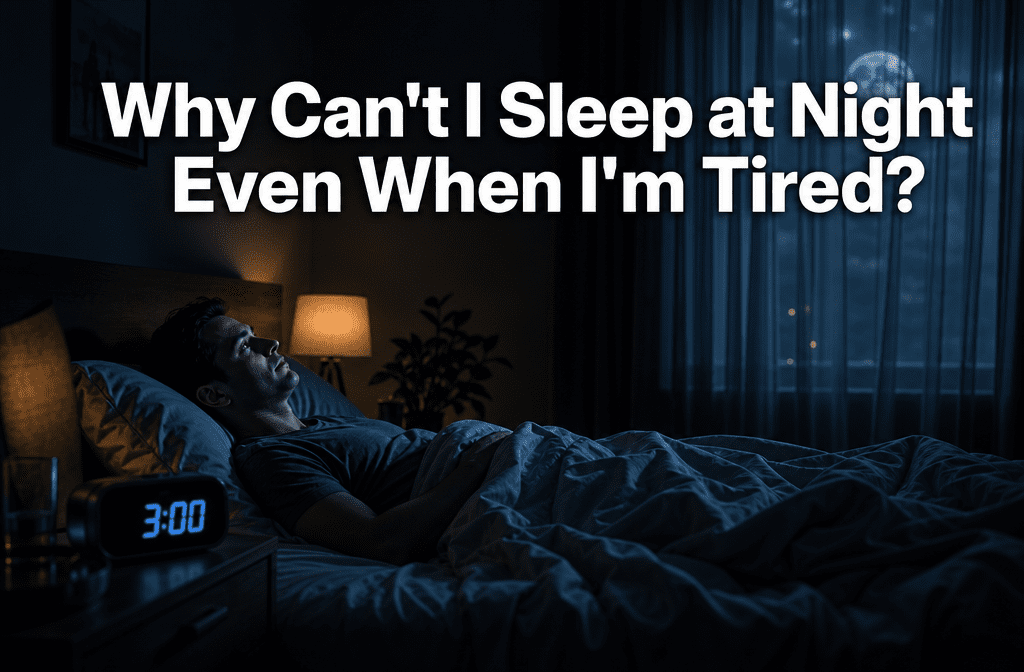
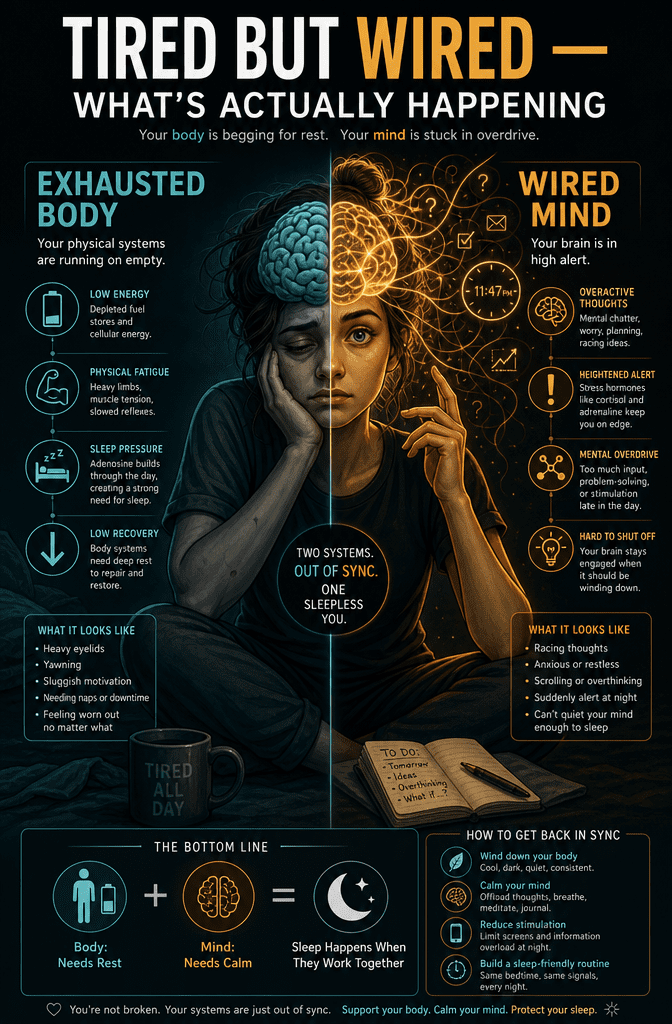
Yes, and it’s more common than most people realize. The feeling of being bone-tired but lying awake for hours has a name in sleep research: “tired but wired.” It happens when your body’s fatigue signals and your brain’s arousal system are working against each other at the same time.
It’s not you being dramatic. It’s not a character flaw. It’s a physiological conflict — and understanding why it happens is the first step to fixing it.
I’ve had nights where I’ve been so exhausted I could barely form a sentence, and still watched the clock tick from 11pm to 3am. That’s not insomnia being mysterious. That’s a nervous system that hasn’t gotten the message that the day is over.
What Causes Insomnia When You’re Exhausted?
The core issue is that sleep requires two things to happen at the same time: your sleep drive (the pressure that builds the longer you’re awake) has to be high, and your arousal system has to be low. If your brain is still running on high alert — from stress, anxiety, pain, or habit — the arousal system wins, even when your body is depleted.
Here’s what the research actually says: altered connectivity in the thalamus — the brain’s relay center — is directly linked to increased daytime fatigue in people with insomnia [5]. In other words, the same neurological disruption that keeps you awake at night also makes you feel worse the next day. It’s a cycle that feeds itself.
Common drivers include:
- Hyperarousal — your nervous system stuck in “on” mode, often from chronic stress
- Conditioned wakefulness — your brain has learned to associate your bed with being awake
- Hormonal disruption — cortisol, adrenaline, or melatonin imbalances
- Underlying conditions — sleep apnea, restless legs, or mood disorders
- Irregular sleep schedule — a misaligned circadian rhythm that confuses your body clock
For a deeper look at the most common root causes, this breakdown of what causes lack of sleep covers 10 specific culprits in detail.
How Do Stress and Anxiety Affect Sleep — and What Hormones Are Involved?
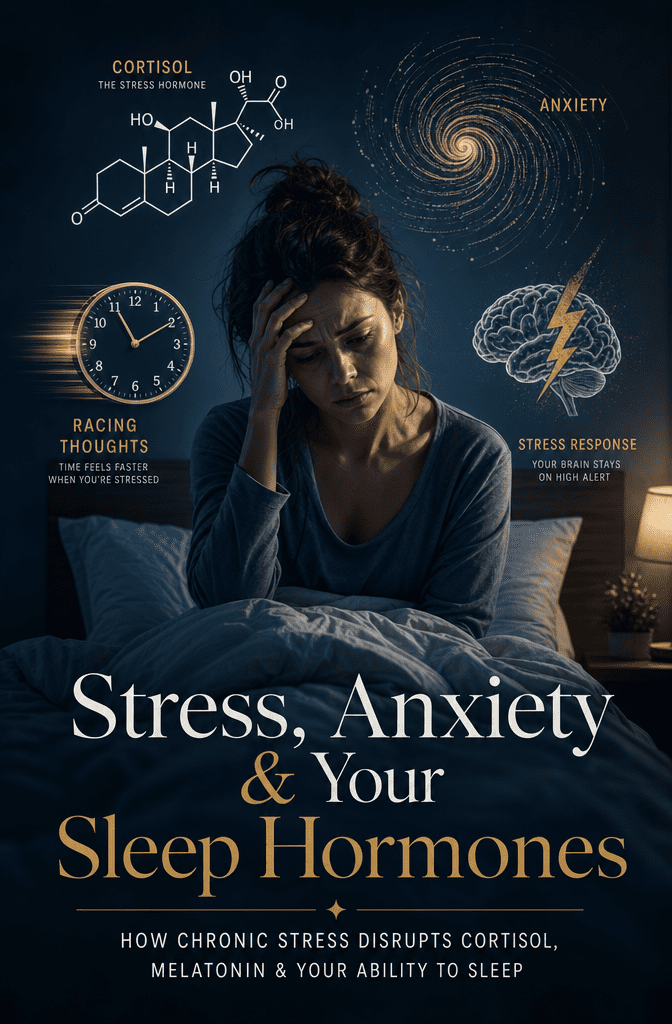
Stress and anxiety are probably the single biggest reason people can’t sleep at night even when they’re tired. When your brain perceives a threat — real or imagined, physical or emotional — it triggers a cortisol and adrenaline release. Those hormones are designed to keep you alert. They don’t care that it’s midnight.
The reason this matters is that cortisol follows a natural daily rhythm. It should peak in the morning and drop by evening. Chronic stress disrupts that rhythm, keeping cortisol elevated at night when it should be bottoming out. Meanwhile, melatonin — the hormone that signals darkness and promotes drowsiness — gets suppressed.
The result is a brain that’s chemically primed to stay awake, even when your body is exhausted.
Anxiety adds another layer. Racing thoughts, worst-case-scenario thinking, and the specific anxiety of “I need to fall asleep right now” all activate the same stress response. The harder you try to force sleep, the more alert your nervous system becomes. It’s one of the cruelest feedback loops in human biology.
If anxiety is a major part of your sleep problem, it’s worth reading about how to identify your specific insomnia trigger — because anxiety-driven insomnia responds differently than, say, circadian-based insomnia.
What’s the Difference Between Insomnia and Just Being Tired?
This distinction matters more than most people think. A study published in the Journal of Psychosomatic Research found that fatigue and sleepiness are distinct symptoms — and depression plays a key role in differentiating them [4]. Feeling tired all the time is not the same as having insomnia, and treating them the same way leads to frustration.
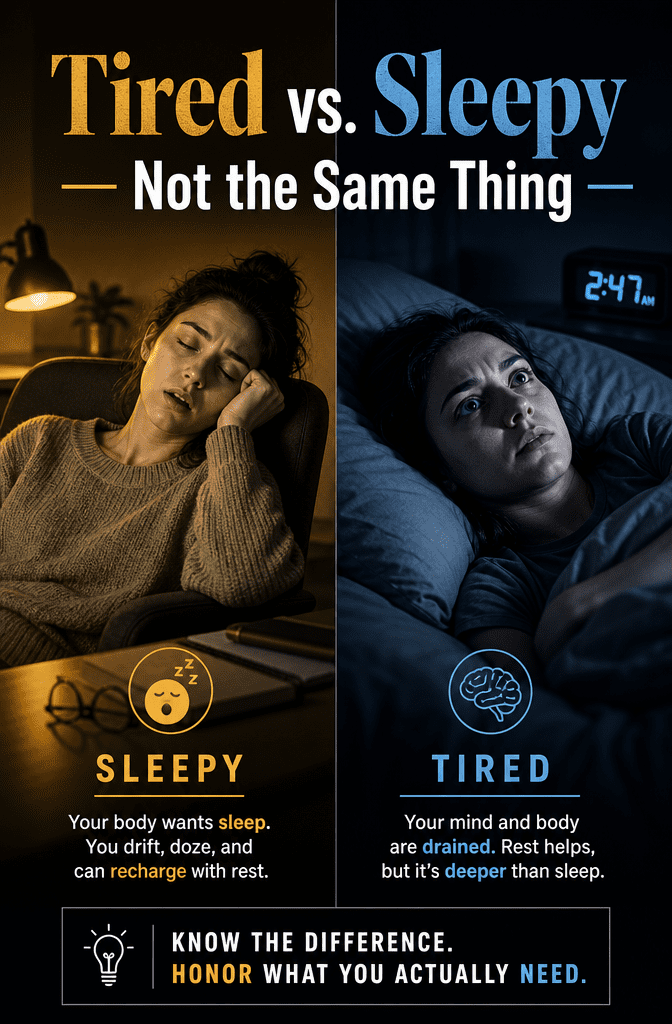
Sleepiness is the neurological drive to sleep — you nod off easily, you can fall asleep in quiet situations, your body is genuinely ready to shut down.
Fatigue is a state of physical or mental depletion where you feel exhausted but your brain won’t actually let you sleep. This is the hallmark of insomnia.
If you’ve been dealing with this for a while — difficulty falling asleep, staying asleep, or waking too early, at least three nights a week for more than three months — that’s clinical insomnia, not just “bad sleep.” The distinction matters because it changes what actually helps.
If you’re unsure which category you’re in, this free, anonymous insomnia test can help you evaluate your symptoms over the past two weeks. It takes just a few minutes and gives you a clearer picture of what you’re dealing with.
Are There Medical Conditions That Prevent Falling Asleep?
Several medical conditions can make it genuinely difficult to fall or stay asleep — and they’re frequently missed because people assume their sleeplessness is “just stress.”
The most common ones:
| Condition | How It Disrupts Sleep |
|---|---|
| Obstructive Sleep Apnea (OSA) | Repeated breathing interruptions cause micro-arousals throughout the night |
| Restless Legs Syndrome | Uncomfortable leg sensations worsen at night, making it hard to settle |
| Chronic Pain | Pain signals override sleep signals, especially in lighter sleep stages |
| Thyroid Disorders | Both hypo- and hyperthyroidism can disrupt sleep architecture |
| GERD / Acid Reflux | Lying down worsens symptoms, causing discomfort that prevents sleep |
| Depression | Directly linked to insomnia and fatigue — depression mediates the relationship between insomnia severity and daytime exhaustion [6] |
Worth noting: insomnia and obstructive sleep apnea frequently occur together. The Department of Defense and VA updated their clinical guidelines in January 2026 specifically to address this co-occurrence, recognizing that treating only one condition often leaves patients still struggling [3].
If you suspect a medical cause, that’s not a reason to feel hopeless — it’s actually useful information, because it points toward a specific solution.
Can Screen Time Really Mess Up My Sleep Schedule?
Yes — but it’s probably not the only thing going on, and it’s rarely the whole story. Blue light from screens suppresses melatonin production, which delays the signal that tells your brain it’s time to sleep. The Sleep Foundation estimates this effect can push your sleep onset back by 30–60 minutes with regular evening screen use.
The honest version is: screens are a contributing factor, not usually the primary cause of serious insomnia. If you’ve already cut screens before bed and you’re still lying awake for hours, something else is driving it.
That said, the habit of scrolling — particularly through stressful content, social media, or news — activates the stress response on top of the light exposure. It’s the combination that does the most damage.
In practice this means: putting your phone down an hour before bed is worth doing, but don’t expect it to fix chronic sleep problems on its own.
The Difference Between Being Tired and Being Sleepy — Why It Matters for Treatment
This is one of the most under-discussed aspects of why people can’t sleep at night. You can be profoundly fatigued — muscles aching, eyes heavy, brain foggy — and still not be in a state where sleep will come easily.
Research on thalamic connectivity suggests that the neurological mechanisms behind daytime fatigue in insomnia are distinct from those that drive actual sleep pressure [5]. This is why people with chronic insomnia often feel exhausted all day but then become inexplicably alert the moment they get into bed.
The clinical term for this is “hyperarousal.” And it’s why advice like “just go to bed earlier” or “try to relax” often does nothing. Your arousal system needs to come down first — and that takes specific strategies, not just willpower.
Best Natural Remedies to Help You Sleep Faster — and Cheap Ways to Improve Sleep Without Medication
The most effective non-medication approach for chronic insomnia is Cognitive Behavioral Therapy for Insomnia (CBT-I). The American Academy of Sleep Medicine updated its clinical practice guidelines in 2026 to confirm CBT-I as the first-line treatment — ahead of medication [1][2]. It works by restructuring the thoughts and behaviors that perpetuate insomnia, not just masking symptoms.
But CBT-I takes time and access. Here’s what you can do right now, without spending much:
Behavioral changes that actually move the needle:
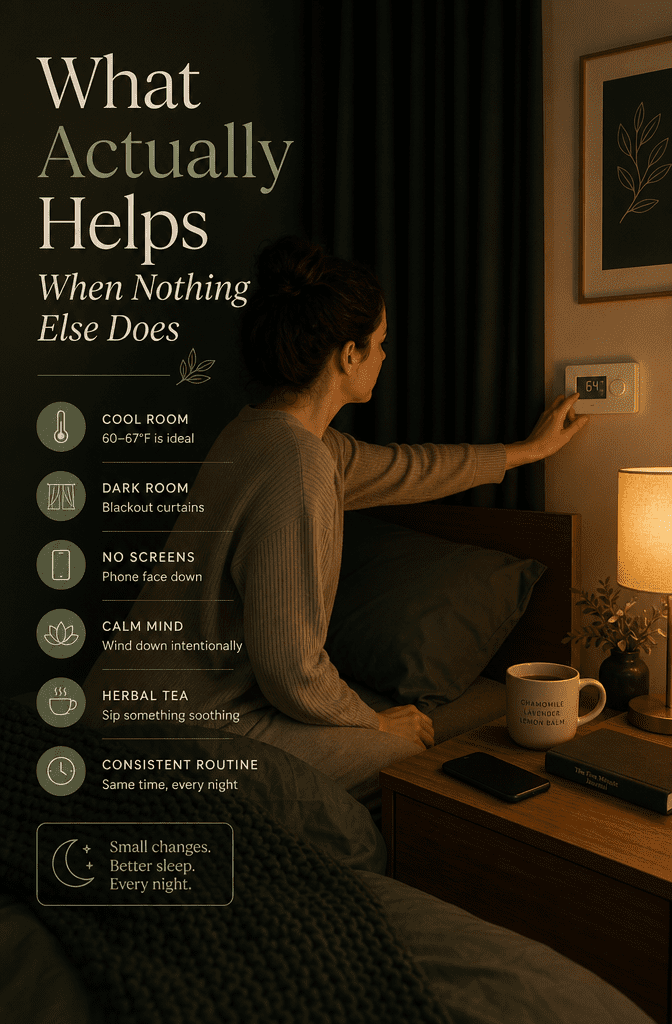
- Fix your wake time first. A consistent wake time — even on weekends, even after a bad night — is the single most powerful anchor for your circadian rhythm. Don’t try to fix your bedtime first.
- Get out of bed if you can’t sleep. Lying awake in bed trains your brain to associate the bed with wakefulness. Get up, do something quiet and boring, and return when you feel genuinely sleepy.
- Keep your bedroom cold. Core body temperature needs to drop to initiate sleep. Around 65–68°F (18–20°C) is the range most sleep researchers point to.
- Limit alcohol. It helps you fall asleep but fragments the second half of your night badly.
- Try the military sleep method if you need a structured approach to relaxing your body — this guide walks through it step by step.
For a wider set of techniques, these 10 methods for falling asleep faster cover approaches that go beyond the standard advice.
This is what worked for me: fixing my wake time before anything else. I didn’t change my bedtime, I didn’t buy anything. I just got up at the same time every day for two weeks. It didn’t fix everything, but it was the first thing that actually shifted the pattern.
Signs That Your Sleep Problems Need a Doctor
Most sleep problems don’t need a doctor immediately — but some do. Here’s when to stop trying to self-manage and make an appointment:
- You’ve had difficulty sleeping at least three nights a week for more than three months
- You wake up unrefreshed even after a full night’s sleep (possible sleep apnea)
- Your partner reports that you stop breathing, snore loudly, or thrash during sleep
- You feel depressed, anxious, or emotionally dysregulated and can’t tell which came first
- You’ve tried consistent sleep hygiene changes for 4–6 weeks with no improvement
- You’re relying on alcohol or over-the-counter sleep aids regularly
When should you be worried about chronic sleeplessness? The honest answer is: three months is the clinical threshold for “chronic” insomnia, but if your sleep problems are affecting your work, relationships, or mental health before that point, don’t wait.
If you’re not sure where you land, taking this free anonymous insomnia test is a reasonable first step — it evaluates how you’ve been feeling over the past two weeks and can help clarify whether what you’re experiencing matches clinical insomnia criteria.
Common Mistakes People Make That Ruin Their Sleep
Most people who struggle with sleep have already tried the basics. But there are a few patterns that quietly make things worse — even when people think they’re doing everything right.
The biggest ones:
- Spending too long in bed. Counterintuitively, going to bed early to “catch up” on sleep often fragments it further. Mild sleep restriction — keeping your time in bed closer to your actual sleep time — builds sleep pressure faster.
- Napping too late or too long. A 20-minute nap before 2pm is usually fine. A 90-minute nap at 5pm is borrowing from tonight’s sleep.
- Clock-watching. Knowing exactly how long you’ve been awake increases anxiety and arousal. Turn the clock away.
- Treating every night as a crisis. One bad night doesn’t create insomnia. The anxiety about bad nights does. The phrase that actually helped me: you don’t have to fall asleep — you just have to rest.
- Relying on melatonin as a sleep aid. Melatonin is a timing signal, not a sedative. It’s most useful for jet lag or shifting your schedule — not for helping you stay asleep.
For a full breakdown of surprising reasons sleep fails, this guide covers 12 specific causes that go beyond the usual explanations.
How Much Sleep Do Adults Actually Need?
Most adults need 7–9 hours per night, according to the CDC and the National Sleep Foundation. That range is real — some people genuinely function well on 7 hours, others need closer to 9. What’s not real is the idea that you can train yourself to need less. Sleep debt accumulates and it has measurable consequences.
Research published in late 2023 found that insomnia can impair muscle function by disrupting protein regulation and the muscle clock — meaning poor sleep affects your physical capability, not just your mood and cognition [7].
The quality of sleep matters as much as the quantity. Six hours of uninterrupted, deep sleep often leaves people feeling better than eight hours of fragmented, shallow sleep. This is why people with sleep apnea or insomnia can sleep “enough” hours and still feel terrible.
Conclusion
If you’ve been lying awake at night wondering why you can’t sleep even when you’re exhausted, you’re not broken and you’re not imagining it. The tired-but-wired feeling is a real neurological state — driven by stress hormones, disrupted circadian signals, or underlying conditions that haven’t been addressed yet.
The path forward isn’t one dramatic fix. It’s usually a combination of small, consistent changes — starting with your wake time, reducing arousal before bed, and understanding what’s actually driving your particular pattern.
Actionable next steps:
- Lock in your wake time — same time every day, starting tomorrow, no exceptions
- Stop trying to force sleep — get out of bed after 20 minutes of lying awake and return when genuinely sleepy
- Take the free insomnia test to evaluate your symptoms and get a clearer picture of what you’re dealing with
- Look into CBT-I — either through a therapist or a structured digital program; it’s the most evidence-backed treatment available [1]
- See a doctor if you’ve been struggling for more than three months, or if you suspect sleep apnea
It’s not just you. And it’s not permanent. But it does usually require more than the standard advice — and now you know where to actually start.
Frequently Asked Questions
Why am I so tired but can’t fall asleep at night?
Your body’s fatigue and your brain’s arousal system are working against each other. Stress hormones like cortisol can keep your nervous system activated even when your body is depleted, preventing sleep onset despite exhaustion.
Is it insomnia if I can fall asleep but wake up at 3am?
Yes. Insomnia includes difficulty staying asleep, not just difficulty falling asleep. Waking in the early hours and being unable to return to sleep is a recognized form of insomnia, often linked to anxiety or depression.
How long does it take for sleep to improve once you make changes?
Behavioral changes like fixing your wake time typically show results within 1–2 weeks. CBT-I programs usually show significant improvement within 4–8 weeks. Medication works faster but doesn’t address the underlying cause.
Can anxiety cause physical insomnia symptoms?
Yes. Anxiety triggers cortisol and adrenaline release, which physically suppresses melatonin and keeps the nervous system alert. It’s not “just in your head” — it’s a measurable hormonal and neurological effect.
Is melatonin actually useful for insomnia?
Melatonin is a circadian timing signal, not a sedative. It’s most effective for jet lag or shifting your sleep schedule earlier or later. It has limited evidence for treating chronic insomnia.
Does alcohol help or hurt sleep?
Alcohol helps you fall asleep faster but significantly disrupts sleep architecture — particularly REM sleep and the second half of the night. Regular use makes insomnia worse over time.
What is CBT-I and does it really work?
Cognitive Behavioral Therapy for Insomnia is a structured program that addresses the thoughts and behaviors that maintain insomnia. The American Academy of Sleep Medicine recommends it as the first-line treatment for chronic insomnia, ahead of medication [1][2].
Can poor sleep affect my physical health, not just my mood?
Yes. Research shows insomnia can impair muscle function by disrupting protein regulation and the body’s internal clock [7]. Chronic poor sleep is also linked to cardiovascular risk, immune function, and metabolic health.
Should I see a sleep specialist or my regular doctor first?
Start with your regular doctor to rule out medical causes (thyroid, sleep apnea, etc.). If those are cleared and sleep problems persist, ask for a referral to a sleep specialist or a CBT-I trained therapist.
How do I know if I have sleep apnea?
Common signs include waking unrefreshed despite adequate hours, loud snoring, a partner reporting breathing pauses during sleep, and excessive daytime sleepiness. A sleep study (polysomnography) is the diagnostic standard.
References
[1] Pmc13076838 – https://pmc.ncbi.nlm.nih.gov/articles/PMC13076838/?utm_source=openai
[2] New Guidelines Highlight Behavioral Therapy Insomnia 129783 – https://www.drugs.com/news/new-guidelines-highlight-behavioral-therapy-insomnia-129783.html?utm_source=openai
[3] News556510 – https://www.health.mil/News/Dvids-Articles/2026/01/22/news556510?utm_source=openai
[4] S0022399924000187 – https://www.sciencedirect.com/science/article/abs/pii/S0022399924000187?utm_source=openai
[5] S0165032723005852 – https://www.sciencedirect.com/science/article/pii/S0165032723005852?utm_source=openai
[6] pubmed.ncbi.nlm.nih.gov – https://pubmed.ncbi.nlm.nih.gov/31272015/?utm_source=openai
[7] arxiv – https://arxiv.org/abs/2312.05033?utm_source=openai