Post Disclaimer
This post contains affiliate links. If you buy something through these links, I may earn a small commission at no extra cost to you. Full disclosure.
This article is for informational purposes only and does not constitute medical advice. Always consult a healthcare professional for personal health concerns. Full disclaimer.
Last updated: June 8, 2026
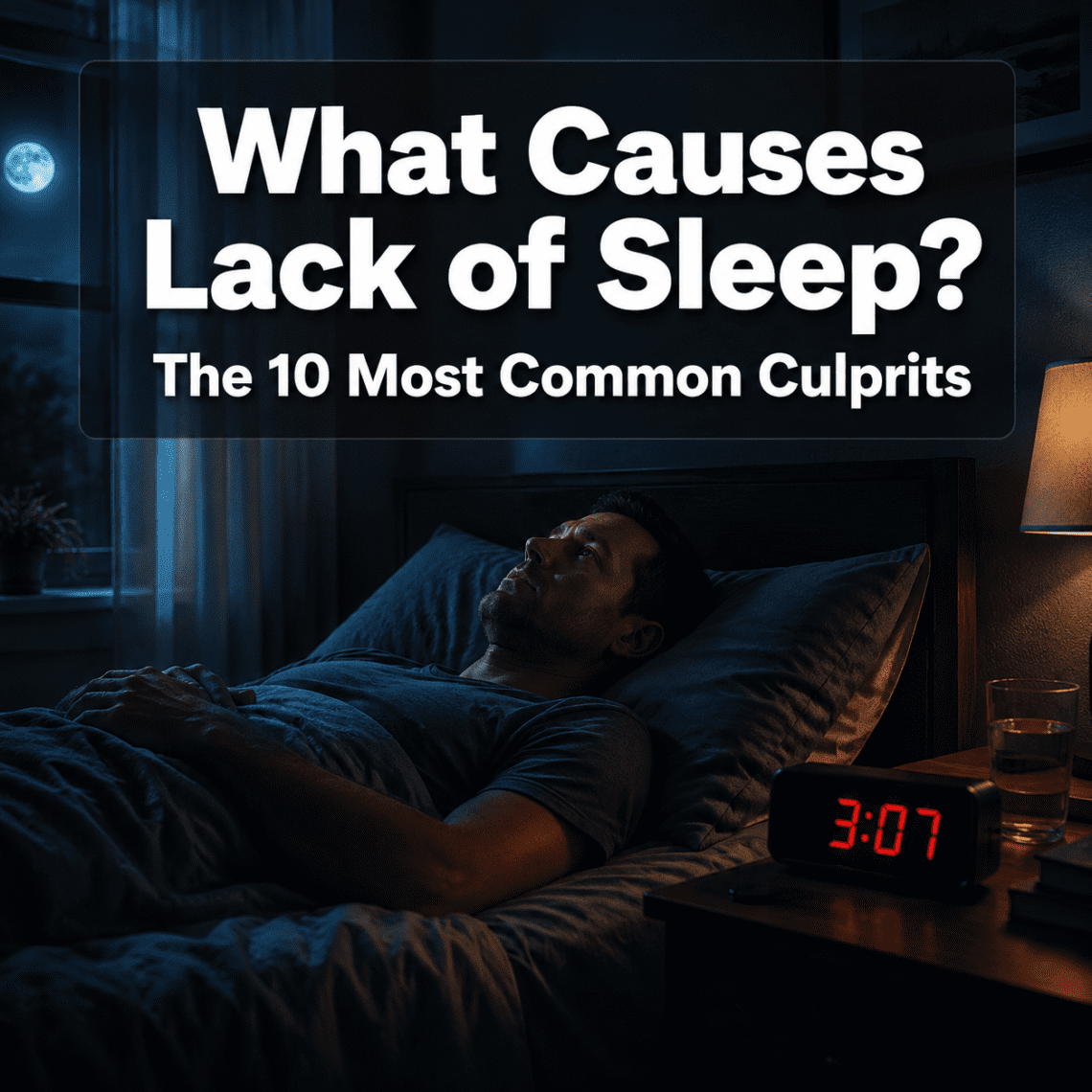
Quick Answer: What causes lack of sleep is rarely one single thing. For most people, it’s a combination of stress, anxiety, poor sleep habits, screen exposure, caffeine, underlying medical conditions, hormonal shifts, and environmental factors working against you at the same time. Identifying your specific culprits — not just following generic sleep hygiene advice — is what actually moves the needle.
Key Takeaways
- Stress and anxiety are the most common drivers of nighttime wakefulness, and they create a feedback loop that gets harder to break over time
- Blue light from screens suppresses melatonin production, but the mental stimulation from devices matters just as much as the light itself
- Caffeine has a half-life of 5–7 hours, meaning an afternoon coffee can still be active in your system at midnight
- Medical conditions like sleep apnea, restless legs syndrome, and chronic pain are frequently undiagnosed causes of poor sleep
- Depression and sleep disorders are deeply intertwined — each can cause and worsen the other
- Hormonal changes (cortisol, melatonin, estrogen, testosterone) directly regulate your ability to fall and stay asleep
- Alcohol feels like a sleep aid but consistently reduces sleep quality in the second half of the night
- Most adults need 7–9 hours of sleep, but the quality of those hours matters as much as the number
- Shift work and irregular schedules disrupt circadian rhythm in ways that standard sleep advice doesn’t address
- Lifestyle changes help, but if you’ve been struggling for months, something deeper may be going on
What Are the Main Reasons You Can’t Sleep at Night
Most people who struggle with sleep assume the problem is one thing — stress, or their phone, or just being a “bad sleeper.” The honest version is that sleep deprivation almost always has multiple causes stacked on top of each other [1].
Here are the ten most common culprits:
- Chronic stress and racing thoughts
- Anxiety and mental health conditions
- Screen use and blue light exposure
- Caffeine and stimulant intake
- Alcohol and substance use
- Undiagnosed medical conditions (sleep apnea, restless legs, chronic pain)
- Hormonal imbalances
- Medications with stimulating side effects
- Environmental factors (noise, light, temperature)
- Irregular schedules and shift work
If you’ve been dealing with this for a while and basic sleep hygiene hasn’t helped, the reason is probably that you haven’t identified which of these actually applies to you — or you’ve identified one and missed the others.
How Does Stress Affect Your Sleep Quality
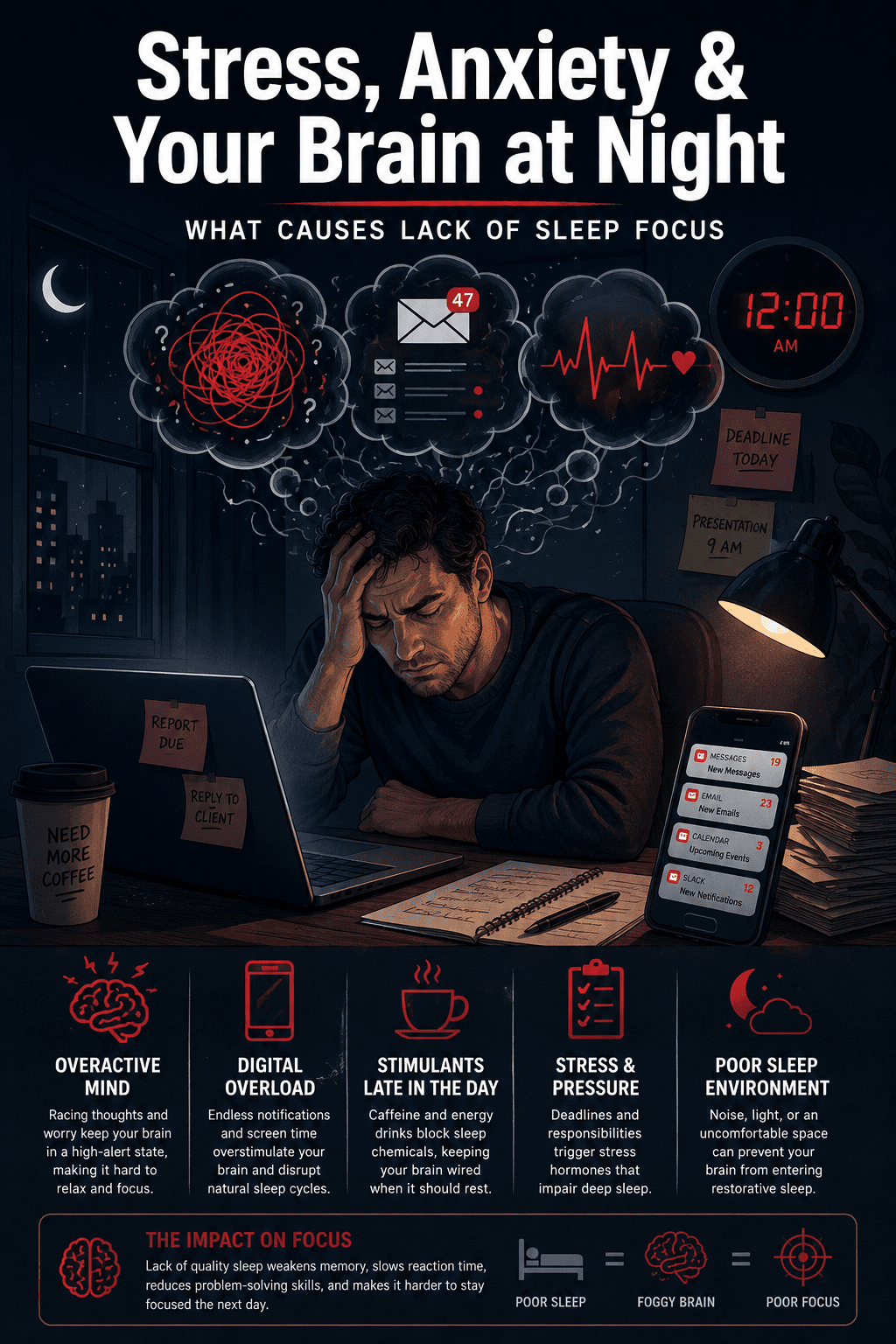
Stress is the single most common answer to what causes lack of sleep, and it works against you in a very specific biological way. When you’re stressed, your body releases cortisol — a hormone that keeps you alert and ready to respond to threats. That’s useful during the day. At night, it’s the reason you’re staring at the ceiling at 2am replaying a conversation from three days ago [2].
The problem isn’t just that stress keeps you awake tonight. It’s that chronic stress reshapes your sleep architecture over time. You spend less time in deep, restorative sleep. You wake more easily. And then the sleep deprivation itself becomes a stressor, which raises cortisol further — and the loop tightens.
In practice this means: if your stress is situational (a deadline, a difficult week), your sleep will likely recover on its own. If it’s been months, the pattern may have become self-sustaining, and addressing stress alone won’t be enough.
Can Anxiety Cause Insomnia — and Can Depression Make It Worse
Yes, and yes. Anxiety and depression are two of the most underrecognized answers to what causes lack of sleep, and they operate differently [2].
Anxiety tends to cause difficulty falling asleep. Your mind won’t quiet down. You’re anticipating tomorrow, catastrophizing, running through scenarios. The bed starts to feel like a place where bad thoughts happen — which is its own problem.
Depression more commonly causes early morning waking. You fall asleep okay, but you wake at 4 or 5am and can’t get back to sleep. You also tend to feel unrefreshed no matter how many hours you log, because depression alters sleep architecture and reduces the restorative stages.
Here’s what the research actually says: the relationship runs both ways. Poor sleep worsens anxiety and depression, and anxiety and depression worsen sleep. You can’t always tell which came first. What you can do is treat both simultaneously rather than waiting for one to resolve before addressing the other.
If you’ve been struggling with sleep alongside low mood or persistent worry, it’s worth taking a proper assessment. This free, anonymous insomnia test evaluates how you’ve been feeling over the past two weeks and can help clarify whether what you’re experiencing goes beyond ordinary tiredness. It takes just a few minutes.
Is Your Phone Actually Keeping You Awake
The screen time conversation has become so overplayed that most people tune it out. But it’s not just you being lectured — there’s a real mechanism here, and it’s worth understanding [3].
Blue light from screens suppresses melatonin, the hormone that signals to your brain that it’s time to sleep. But the more important factor — one that gets less attention — is mental arousal. Scrolling social media, reading news, watching something with narrative tension: these activities keep your brain in an engaged, alert state. That state is the opposite of what you need to fall asleep.
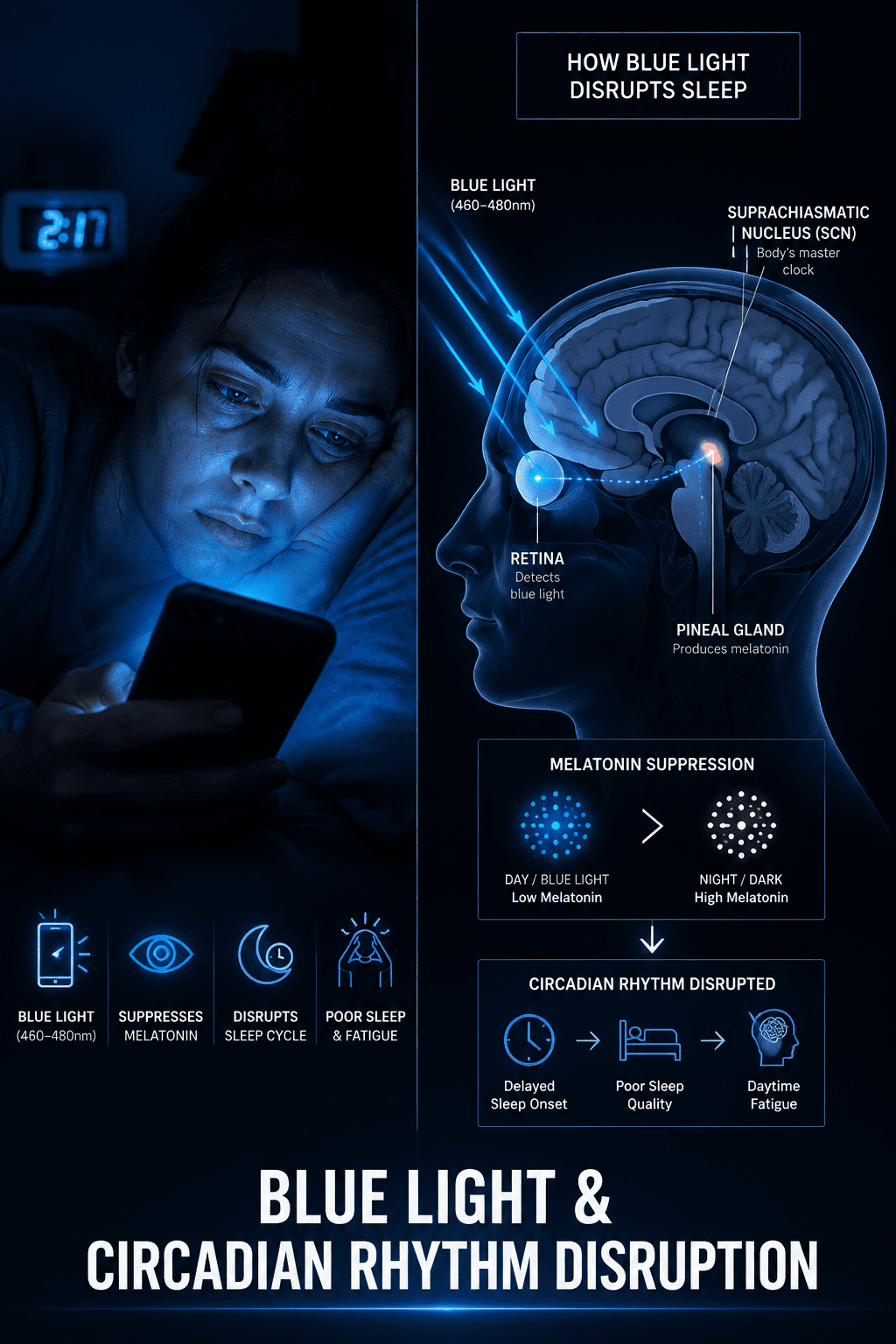
The honest version is that the blue light filter on your phone helps a little. Putting the phone in another room helps a lot more.
Worth trying if you’re skeptical: leave your phone outside the bedroom for two weeks. Not just face-down — outside the room. Most people are surprised by how much lighter they sleep.
How Much Does Caffeine Impact Your Sleep Schedule
More than most people account for. Caffeine has a half-life of roughly 5–7 hours, which means if you drink a coffee at 2pm, about half of that caffeine is still active in your system at 9pm [3].
For people who metabolize caffeine slowly (a genetic variation that’s more common than you’d think), that window extends further. A 2pm coffee could still be affecting sleep quality at midnight.
This is what worked for me: cutting my last caffeine to before noon. It felt extreme at first. Within a week, I noticed I was falling asleep faster and waking less in the early morning. I hadn’t changed anything else.
A rough guide:
- Morning coffee (before 10am): minimal sleep impact for most people
- Early afternoon coffee (12–2pm): moderate risk, especially for slow metabolizers
- Late afternoon coffee (after 3pm): high risk of delayed sleep onset and reduced deep sleep
What Medical Conditions Lead to Sleep Problems
This is the category most people overlook when asking what causes lack of sleep, because the symptoms aren’t always obvious [1].
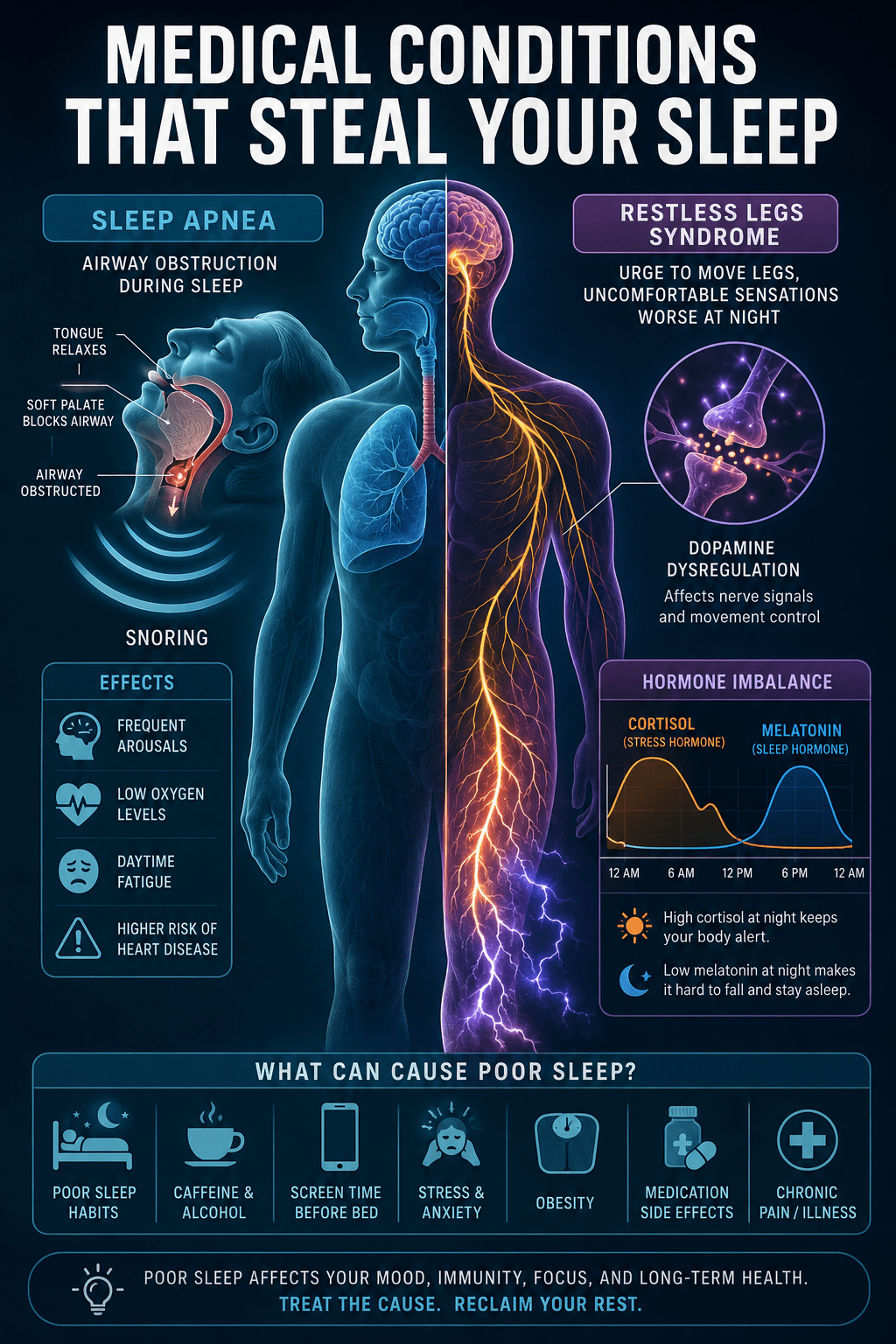
Sleep apnea is the most common undiagnosed sleep disorder. It causes you to stop breathing briefly during sleep — sometimes hundreds of times a night — which fragments your sleep without you knowing. You wake up exhausted, you may snore, and you might not remember waking at all. It’s far more common than most people realize, and it’s treatable.
Restless legs syndrome (RLS) creates an uncomfortable urge to move your legs, typically worse in the evening and at night. It makes falling asleep genuinely difficult, and it’s often dismissed or misdiagnosed.
Chronic pain — from arthritis, fibromyalgia, back problems, or other conditions — interrupts sleep at every stage. Pain and poor sleep worsen each other in a cycle that’s hard to break without addressing both [2].
Thyroid disorders, particularly hyperthyroidism, can cause insomnia and nighttime waking as a primary symptom.
If you’ve tried every sleep hygiene recommendation and still can’t sleep, ask your doctor about a sleep study. It’s not dramatic — it’s just data.
How Do Hormones Affect Your Ability to Sleep
Hormones are one of the most overlooked answers to what causes lack of sleep, particularly for women and for anyone over 35.
Cortisol is the main stress hormone and a primary regulator of your sleep-wake cycle. When it stays elevated in the evening — due to stress, overtraining, or HPA axis dysregulation — it delays sleep onset and reduces deep sleep.
Melatonin production naturally declines with age, which is part of why older adults often sleep lighter and shorter [1].
Estrogen and progesterone both influence sleep quality. Perimenopause and menopause commonly cause insomnia, night sweats, and early waking — not because of stress, but because of direct hormonal effects on sleep architecture.
Testosterone also plays a role in sleep quality for men, and low levels are associated with reduced deep sleep and increased fatigue.
It’s not just you if your sleep changed in your late 30s or 40s. Hormonal shifts are real, measurable, and worth discussing with a doctor rather than assuming it’s just stress.
What Lifestyle Changes Can Actually Improve Your Sleep
The basics — consistent sleep schedule, cool dark room, no caffeine late — are worth doing. But if you’ve already done them and you’re still struggling, here’s where to look next [3].
Exercise timing matters. Morning or early afternoon exercise improves sleep quality. Intense exercise within 2–3 hours of bed can delay sleep onset for some people.
Alcohol is not a sleep aid. It helps you fall asleep faster but consistently disrupts sleep in the second half of the night, reducing REM sleep and causing early waking [2].
Eating late affects sleep quality. Large meals close to bedtime raise core body temperature and can cause reflux — both of which interrupt sleep.
Your sleep environment is worth auditing. Noise, light (including streetlights through curtains), and temperature above 67°F (19°C) all measurably reduce sleep quality [2].
For people who’ve tried the lifestyle changes and still can’t sleep, the how to fall asleep fast methods that actually work page covers techniques beyond the basics — including some that work specifically for people with racing minds.
What Health Risks Come From Not Getting Enough Sleep
Sleep deprivation isn’t just about feeling tired. The downstream effects are significant and accumulate over time [1].
- Cardiovascular risk increases with chronic sleep deprivation — including higher blood pressure and elevated inflammation markers
- Immune function is impaired, making you more susceptible to illness and slower to recover
- Metabolic effects include disrupted blood sugar regulation and increased appetite, particularly for high-calorie foods
- Cognitive function — memory consolidation, decision-making, and emotional regulation — all degrade with insufficient sleep
- Mental health worsens in a measurable, dose-dependent way with poor sleep
The reason this matters is not to scare you — it’s to make the case that sleep problems deserve the same seriousness as any other health issue. You wouldn’t ignore persistent chest pain. Sleep deprivation that goes on for months or years has real consequences.
How Much Sleep Do You Actually Need
Most adults need 7–9 hours of sleep per night, according to guidance from the CDC and the American Academy of Sleep Medicine [1]. But here’s the part that gets glossed over: the quality of those hours matters as much as the quantity.
Six hours of uninterrupted, deep sleep can leave you feeling better than eight hours of fragmented, shallow sleep. If you’re waking multiple times a night, or if you wake up exhausted after a “full” night, the issue isn’t the number of hours — it’s what’s happening during them.
The difference between insomnia and just being tired is also worth clarifying. Tiredness is a physiological need for sleep. Insomnia is the inability to sleep despite having the opportunity and conditions to do so. If you’re exhausted but can’t sleep, that’s insomnia — not just a bad week.
If you recognize yourself in that description, you can learn more about the surprising reasons you can’t sleep — some of which are genuinely counterintuitive.
Substances That Disrupt Sleep More Than You Realize
Alcohol, nicotine, and certain medications are frequently underestimated contributors to poor sleep [2] [3].
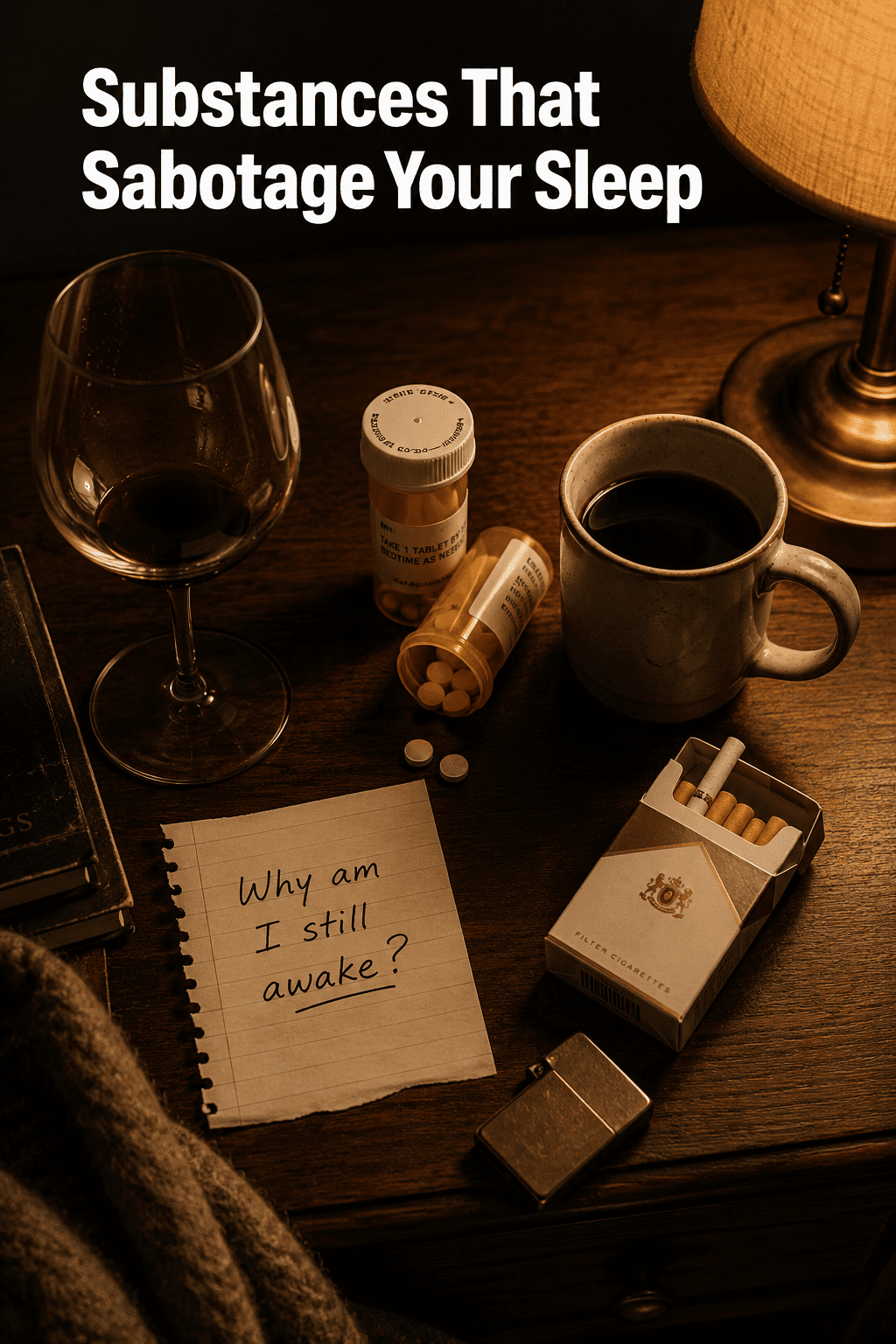
Alcohol is the most common. It’s sedating initially, which is why people use it to wind down. But it metabolizes during the night, causing a rebound effect — lighter sleep, more waking, and often early morning arousal around 3–4am.
Nicotine is a stimulant. Smokers and vapers often have more difficulty falling asleep and experience more nighttime waking than non-users [3].
Medications are a frequently missed cause. Certain antidepressants, blood pressure medications, corticosteroids, and even common decongestants can interfere with sleep as a side effect [2]. If your sleep changed around the time you started a new medication, mention it to your doctor — there may be alternatives or timing adjustments that help.
Conclusion
What causes lack of sleep is almost never one thing. It’s usually a combination of stress, mental health, habits, biology, and environment — and the combination is different for everyone.
The most useful thing you can do right now is stop trying to fix all of it at once. Pick the culprit that fits your situation most closely. If you’re waking at 3am with racing thoughts, anxiety and cortisol are likely involved. If you’re exhausted but can’t fall asleep, look at screen habits and caffeine timing. If nothing has worked despite doing everything “right,” ask your doctor about a sleep study.
You don’t have to fall asleep — you just have to rest. Start there.
And if you’re not sure where your sleep problems actually sit on the spectrum from “rough patch” to “clinical insomnia,” the free insomnia test here can help you evaluate that honestly. It’s anonymous, free, and based on how you’ve felt over the past two weeks — not a generic quiz.
For more on what might be behind your specific sleep struggles, the 12 surprising reasons you can’t sleep is worth reading next.
Frequently Asked Questions
What is the most common cause of lack of sleep?
Stress and anxiety are the most frequently cited causes, but in practice, most people have multiple overlapping factors — including caffeine habits, screen use, and undiagnosed conditions like sleep apnea.
Can you train yourself to need less sleep?
No. Research consistently shows that people who believe they’ve adapted to less sleep are still cognitively impaired — they’ve just lost the ability to accurately assess their own impairment. Most adults genuinely need 7–9 hours.
Why do I wake up at 3am every night?
Early morning waking is often linked to cortisol rising too early, alcohol metabolism, blood sugar dips, or depression. It’s one of the more specific symptoms worth discussing with a doctor.
Does melatonin actually work for insomnia?
Melatonin is most effective for circadian rhythm issues — jet lag, shift work, delayed sleep phase. For chronic insomnia driven by anxiety or hyperarousal, it has limited effect on its own.
Is it insomnia if I can fall asleep but keep waking up?
Yes. Insomnia includes difficulty staying asleep and waking too early, not just difficulty falling asleep. If this happens three or more nights a week for more than a month, it meets clinical criteria for chronic insomnia.
Can what I eat affect my sleep?
Yes. Large meals close to bedtime, high-sugar foods, and alcohol all negatively affect sleep quality. Some people find that a small protein-containing snack before bed stabilizes blood sugar and reduces early waking.
How long does it take to recover from sleep deprivation?
Short-term sleep debt can be partially recovered with a few nights of good sleep. Chronic sleep deprivation — months or years of insufficient sleep — takes longer and may require addressing the underlying cause, not just catching up on hours.
When should I see a doctor about sleep problems?
If sleep problems have persisted for more than a month, are affecting your daily functioning, or are accompanied by symptoms like loud snoring, gasping during sleep, or significant mood changes, see a doctor. Don’t wait until you’re desperate.
References
[1] Sleep Deprivation – https://www.hopkinsmedicine.org/health/conditions-and-diseases/sleep-deprivation
[2] Sleep Disorders Causes – https://www.webmd.com/sleep-disorders/sleep-disorders-causes
[3] Causes of Insomnia – https://stanfordhealthcare.org/medical-conditions/sleep/insomnia/causes.html