Post Disclaimer
This post contains affiliate links. If you buy something through these links, I may earn a small commission at no extra cost to you. Full disclosure.
This article is for informational purposes only and does not constitute medical advice. Always consult a healthcare professional for personal health concerns. Full disclaimer.
Last updated: June 26, 2026
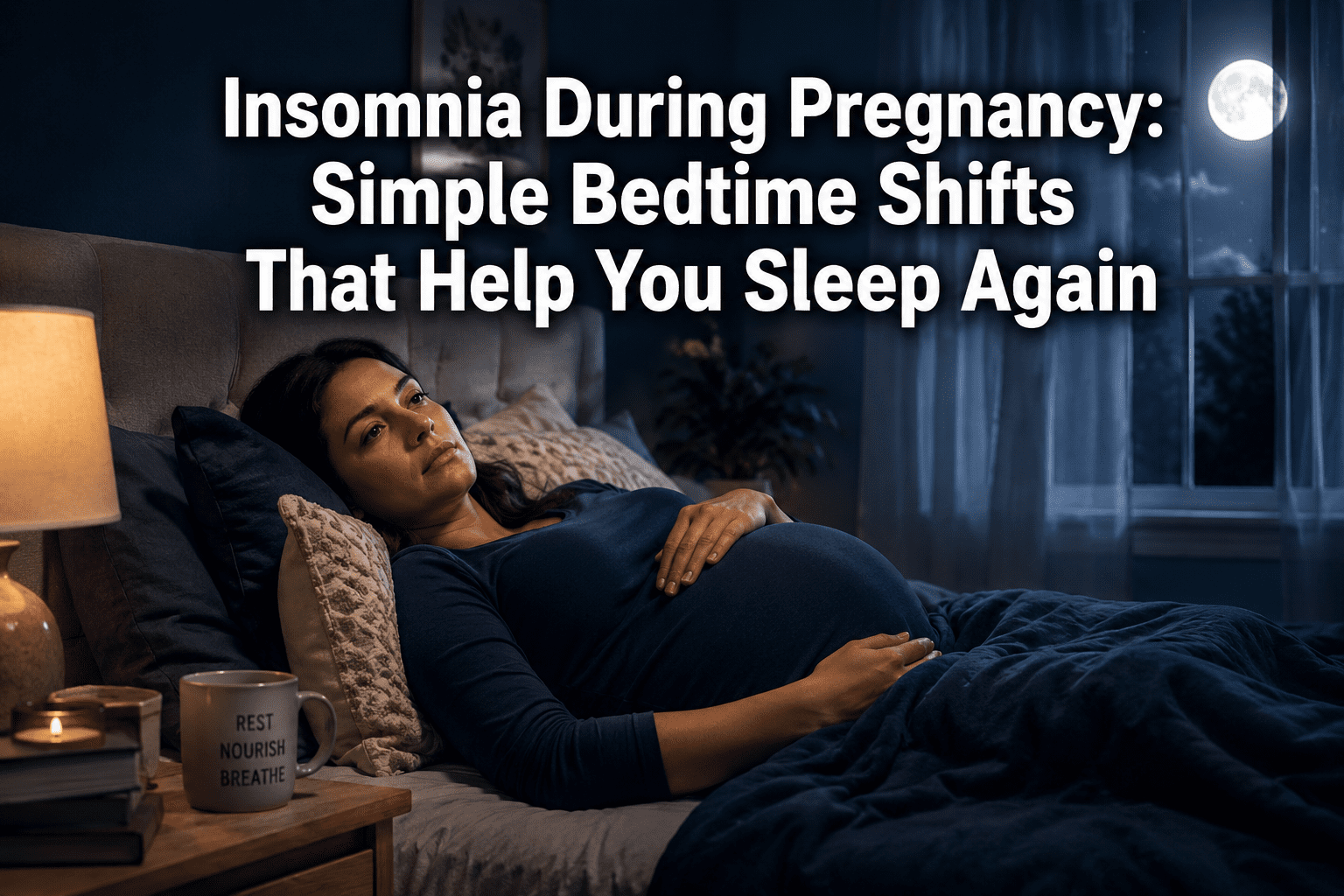
Quick Answer: Insomnia during pregnancy affects nearly 44% of pregnant women, according to a 2024 meta-analysis of over 47 million participants [1]. It’s not a personal failure or a sign something is wrong with your baby – it’s a physiological response to hormonal shifts, physical discomfort, and a nervous system that’s working overtime. The good news is that several small, practical changes to your sleep setup and evening routine can meaningfully improve how quickly you fall asleep and how long you stay there.
Key Takeaways
- Almost half of all pregnant women experience insomnia symptoms – you are not alone, and it’s not in your head [1]
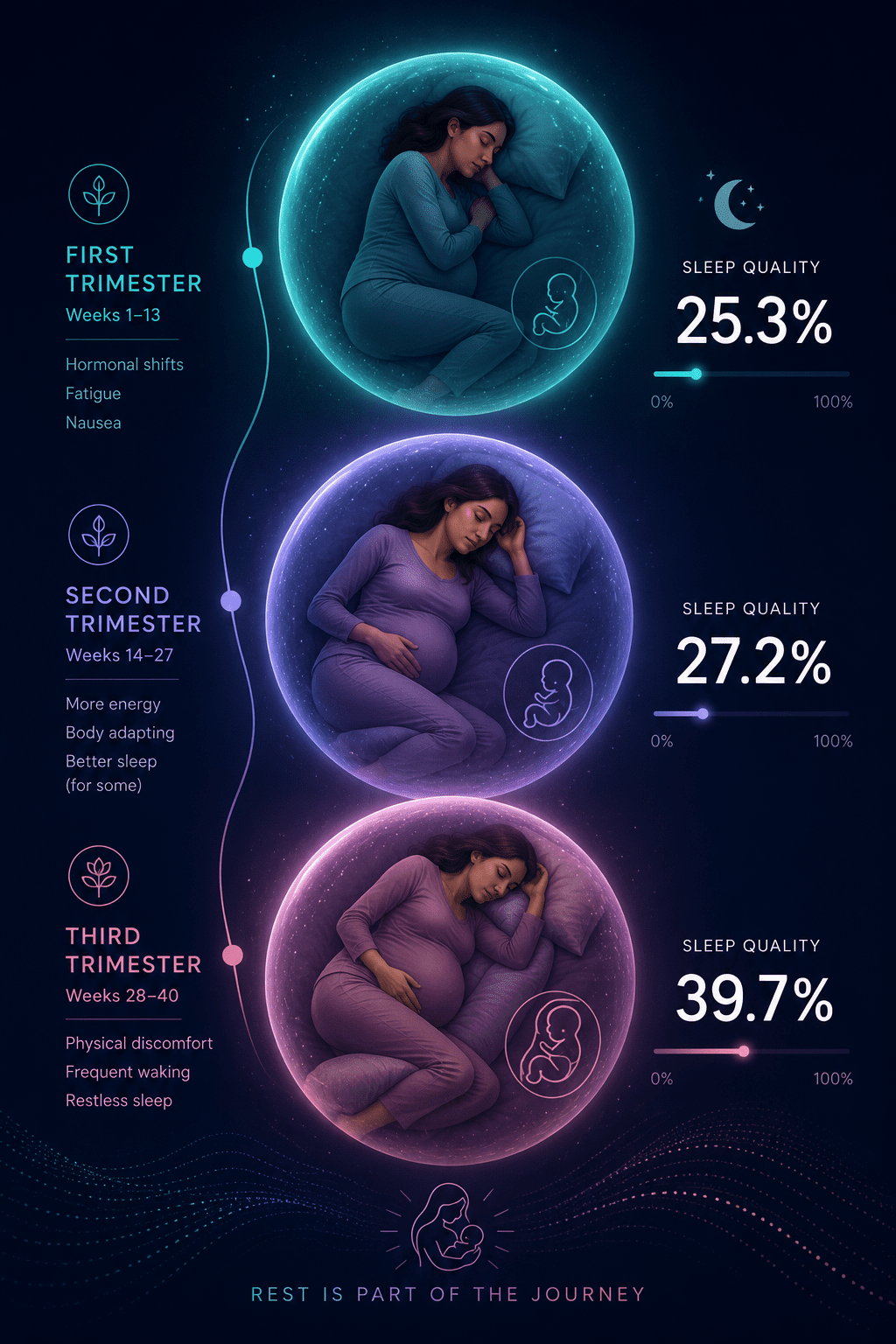
- Insomnia gets worse as pregnancy progresses, with the third trimester having the highest rates (39.7%) [2]
- Sleeping on your left side improves blood flow to the fetus and reduces physical discomfort [7]
- Most sleep medications are not considered safe during pregnancy – there are better options
- A consistent bedtime routine is one of the most effective and safest tools available
- Untreated insomnia during pregnancy has been linked to complications including preeclampsia and longer labor [3]
- Restless legs syndrome and frequent urination are two of the most disruptive and overlooked causes of pregnancy sleep problems [3]
- If symptoms are severe or you’re experiencing depressive symptoms alongside poor sleep, talk to your doctor – these two issues often travel together [5]
Why Do Pregnant Women Have Trouble Sleeping?
Insomnia during pregnancy has multiple overlapping causes, which is part of why it’s so hard to fix with a single solution. Your body is changing fast, your hormones are doing things they’ve never done before, and your brain is processing a significant life shift – all at once, all at night.
Here’s what the research actually says: elevated estrogen and progesterone levels directly interfere with sleep architecture, causing more nighttime waking and lighter overall sleep [6]. Add to that a growing belly that makes every position uncomfortable, a bladder that needs emptying every two hours, heartburn that flares the moment you lie flat, and anxiety about labor and parenthood – and you have a recipe for genuinely terrible nights.
Restless legs syndrome is also far more common during pregnancy than most people realize. It causes an uncontrollable urge to move your legs, usually in the evening and at night, and it’s a significant contributor to sleep disruption [3]. If your legs feel restless or crawling when you try to relax, that’s worth mentioning to your midwife or OB.
The honest version is: pregnancy insomnia isn’t one problem. It’s five problems wearing the same coat.
Pregnancy Insomnia by Trimester – What to Expect
Sleep problems shift in character depending on where you are in your pregnancy. A 2021 meta-analysis found insomnia symptoms in 25.3% of women in the first trimester, 27.2% in the second, and 39.7% in the third [2].
First trimester: Fatigue is intense, but sleep quality is already dropping. Nausea, frequent urination, and anxiety about the new pregnancy are the main culprits. You may feel exhausted but find it hard to actually stay asleep.
Second trimester: Many women get a brief reprieve here. Sleep often improves slightly as nausea fades and the belly isn’t yet large enough to cause major positional problems. Enjoy it.
Third trimester: This is where insomnia during pregnancy peaks. Physical discomfort, heartburn, fetal movement at night, increased urination, and anxiety about the approaching birth all converge. If you’ve been dealing with this for a while and it’s getting worse rather than better, that’s consistent with the data – not a sign you’re doing something wrong.
If you want to understand more about what’s driving your sleeplessness beyond the pregnancy itself, this breakdown of surprising insomnia causes beyond stress is worth reading.
Is Insomnia During Pregnancy Normal and Safe for the Baby?
Insomnia during pregnancy is extremely common, but “normal” doesn’t mean harmless. The distinction matters.
For most women, occasional or mild sleep disruption does not directly harm the baby. However, chronic insomnia – especially when untreated – has been associated with more serious outcomes. Research from Johns Hopkins Medicine links insufficient sleep during pregnancy to a higher risk of preeclampsia, gestational diabetes, longer labor, and increased rates of cesarean delivery [3].
A 2025 study also found a direct temporal link between maternal obstructive sleep apnea and fetal hypoxia – meaning when the mother’s breathing is disrupted during sleep, the baby’s oxygen levels can drop in response [4]. This is specifically about sleep apnea, not insomnia, but it underscores why sleep quality during pregnancy is worth taking seriously.
If you suffer from any of the symptoms described in this article, consider taking this free, anonymous insomnia test. Evaluate how you’ve been feeling over the past two weeks – it takes just a few minutes and could help clarify what you’re dealing with.
Take the free insomnia test here
The takeaway: mild insomnia is unlikely to cause harm, but persistent, severe sleep deprivation is worth addressing with your doctor – not just for your comfort, but for your health outcomes.
What Causes Insomnia in the Third Trimester Specifically?
The third trimester brings a specific cluster of sleep disruptors that compound each other. Physical size is the most obvious – lying in any position for more than an hour becomes uncomfortable when you’re carrying significant extra weight in your abdomen. The baby is also more active, and fetal movement at night is common because your movement during the day tends to rock them to sleep, so they wake up when you stop.
Heartburn worsens in late pregnancy because the uterus pushes against the stomach, making acid reflux more likely when you lie flat. Urinary frequency increases again as the baby’s head descends and puts pressure on the bladder. And anxiety about labor, delivery, and the transition to parenthood tends to peak in these final weeks.
There’s also a hormonal component: cortisol levels shift in late pregnancy, which can affect your body’s natural sleep-wake signaling [6].
In practice, this means the third trimester often requires a more deliberate approach to sleep – not just good sleep hygiene, but specific physical adjustments to your sleep environment.
Best Sleeping Position During Pregnancy for Better Sleep
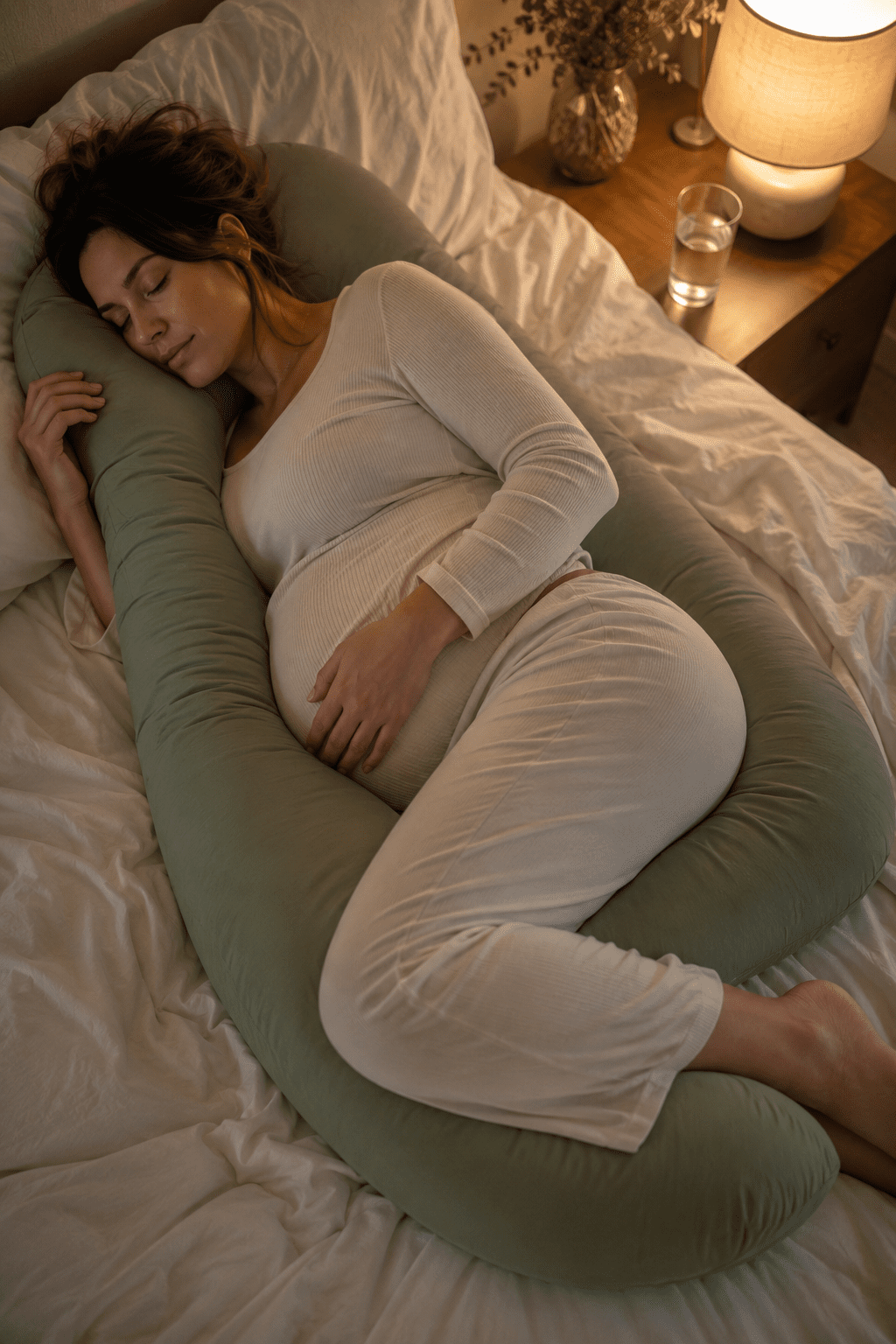
Sleeping on your left side is the most consistently recommended position during pregnancy, and there’s a clear physiological reason for it. The left-side position improves blood flow through the inferior vena cava – the large vein that returns blood from your lower body to your heart – which benefits both you and the baby [7].
It also reduces pressure on your liver (which sits on the right side) and can ease heartburn symptoms.
Practical adjustments that actually help:
- Use a full-length pregnancy pillow between your knees and under your belly. This single change makes a bigger difference than most people expect. It reduces hip and lower back strain significantly.
- If you wake up on your back, don’t panic. Gently roll back to your left side. The risk associated with back-sleeping is primarily about sustained, prolonged positioning – not brief shifts during the night.
- Elevate the head of your bed slightly if heartburn is waking you up. A wedge pillow under your upper body works better than stacking regular pillows.
- Keep a glass of water nearby for when you wake up to use the bathroom. The trip back to sleep is easier when you’re not also thirsty.
How Much Sleep Do You Need When Pregnant?
Pregnant women need at least 7 to 9 hours of sleep per night – the same recommendation as non-pregnant adults – but the quality requirement is arguably higher because your body is doing significantly more repair and growth work overnight.
The challenge is that pregnancy itself makes reaching that target harder. This is why daytime naps, when possible, are not laziness – they’re a legitimate compensatory strategy. A 20-30 minute nap in the early afternoon can help offset nighttime deficits without making nighttime sleep harder to achieve.
What doesn’t help: lying in bed for 10 hours hoping to accumulate sleep through sheer time. If you’re spending more than 30 minutes awake in bed, get up, do something quiet and low-stimulation, and return when you feel sleepy again. This is a core principle of building a sleep routine that actually calms your brain – and it applies during pregnancy too.
Pregnancy Insomnia vs Regular Insomnia – Key Differences
The mechanics of insomnia are similar whether you’re pregnant or not – difficulty falling asleep, staying asleep, or waking too early – but the causes and treatment options differ in important ways.
Regular insomnia is most often driven by stress, anxiety, poor sleep habits, or underlying conditions. Pregnancy insomnia has all of those potential causes plus a layer of unavoidable physical factors: hormonal changes, growing belly, fetal movement, and physiological discomfort that no amount of relaxation technique will fully eliminate.
The other key difference is treatment. Many standard insomnia interventions – certain supplements, medications, even some herbal teas – are not appropriate during pregnancy. This narrows your options but doesn’t eliminate them. Cognitive behavioral therapy for insomnia (CBT-I) is considered safe and effective during pregnancy, and behavioral changes remain your most powerful tool.
If you’ve tried the usual sleep hygiene advice and it hasn’t worked, this guide to insomnia tips that actually work when nothing else has covers some less obvious approaches that don’t rely on supplements.
Safe Sleep Aids and Natural Remedies for Pregnancy Sleep Problems
Most over-the-counter sleep aids are not recommended during pregnancy. This includes diphenhydramine (the active ingredient in most OTC sleep products), melatonin at high doses, and most herbal supplements including valerian root. The evidence on their safety during pregnancy is either insufficient or actively concerning [6].
Here’s what the research actually says is safer:
Behavioral and environmental approaches:
- Consistent sleep and wake times – your circadian rhythm responds to regularity
- Cool, dark bedroom – body temperature drops naturally before sleep, and a warm room fights that process
- Limiting fluids in the two hours before bed to reduce nighttime bathroom trips (while staying hydrated during the day)
- Avoiding large meals, caffeine, and spicy foods in the evening to reduce heartburn [8]
Low-risk physical supports:
- Magnesium glycinate has some evidence for reducing restless legs symptoms and improving sleep quality. Talk to your OB before adding any supplement, even one considered low-risk.
- Warm (not hot) baths before bed can help lower core body temperature and signal sleep onset
- Gentle prenatal yoga or stretching in the evening
Medical disclaimer: Always consult your healthcare provider before starting any supplement or sleep aid during pregnancy.
For a broader look at falling asleep without relying on pills, this guide on how to fall asleep naturally without pills or supplements covers the behavioral science behind it.

Best Bedtime Routine for Pregnant Women
A structured wind-down routine is one of the most underused tools for pregnancy insomnia – and one of the safest. Your nervous system needs a transition period between “awake and functional” and “ready to sleep,” and pregnancy often makes that transition harder because there’s more to process physically and mentally.
A practical 45-minute wind-down that works:
- 60-90 minutes before bed: Finish eating. Dim the lights in your home. This is not about screens specifically – it’s about light exposure broadly.
- 45 minutes before bed: Warm bath or shower. The subsequent drop in body temperature after you get out is a genuine sleep trigger.
- 30 minutes before bed: Gentle stretching or prenatal yoga. Five minutes is enough.
- 20 minutes before bed: Write down anything that’s on your mind – worries, to-do lists, birth plan questions. Getting it out of your head and onto paper reduces the mental load at lights-out.
- Lights out: Left-side position, pregnancy pillow in place. You don’t have to fall asleep – you just have to rest.
This approach pairs well with the bedtime routine guide for adults who struggle to wind down – most of the principles translate directly to pregnancy.
Does Pregnancy Insomnia Mean Labor Is Coming Soon?
A sudden increase in insomnia or wakefulness in the final weeks of pregnancy is common, but it’s not a reliable predictor of imminent labor. Some women report a burst of energy and disrupted sleep in the days before labor begins – sometimes called the “nesting instinct” – but this is anecdotal and not clinically predictive.
The honest version is: late-pregnancy insomnia is almost always just late-pregnancy insomnia. Your body is uncomfortable, your mind is active, and sleep is hard. It doesn’t necessarily mean anything is about to happen.
If you’re experiencing insomnia alongside other symptoms – regular contractions, significant pelvic pressure, or your water breaking – those are the signs to pay attention to, not the sleeplessness itself.
When Should You See a Doctor About Pregnancy Insomnia?
See your doctor or midwife if your insomnia is severe enough to affect your daily functioning, if you’re experiencing symptoms of depression or anxiety alongside poor sleep, or if you suspect sleep apnea (loud snoring, gasping, waking with headaches).
A 2025 study found that insomnia and depressive symptoms during pregnancy follow a closely linked trajectory from early pregnancy through six months postpartum [5]. If you’re struggling with both, that’s not coincidence – and treating one often helps the other.
If you suffer from persistent sleep problems and want to understand their severity, this free anonymous test can help you evaluate your symptoms:
Take the free insomnia test here
Also flag it if you’re waking up with numbness or tingling, if restless legs are significantly disrupting your sleep, or if you’re getting fewer than five hours most nights. These aren’t things to push through alone.
How to Fall Asleep Faster When Pregnant
The fastest route to sleep when you’re pregnant is usually through physical comfort first, mental deactivation second. Most people try it the other way around – they try to relax their mind while still physically uncomfortable, which rarely works.
Start with your body: position, temperature, pillow support. Then address your mind. The military sleep method – progressive muscle relaxation starting from the face downward – works well during pregnancy because it gives your mind something concrete to focus on while your body settles.
It’s not just you – most people who struggle with sleep find that trying harder to fall asleep makes it worse. The goal isn’t to force sleep. It’s to create conditions where sleep can arrive on its own.
One thing I’ve found personally, having dealt with a sleep disorder for years: the nights I stop caring whether I fall asleep are almost always the nights I fall asleep fastest. That’s not a platitude – it’s a real neurological pattern. Anxiety about sleep activates your arousal system, which is the exact opposite of what you need.

Can Pregnancy Insomnia Harm the Baby?
Mild, intermittent insomnia is unlikely to cause direct harm to the baby. Chronic, severe sleep deprivation is a different matter. Research links persistent poor sleep during pregnancy to a higher risk of preeclampsia, gestational diabetes, and complications during delivery [3].
The most direct fetal risk comes not from insomnia itself but from untreated obstructive sleep apnea, where maternal oxygen drops during sleep have been shown to correlate with drops in fetal oxygen levels [4]. If you snore heavily or wake gasping, that’s worth investigating.
For most women, the primary concern with pregnancy insomnia is the impact on the mother – her immune function, mood, pain tolerance, and ability to cope with the physical demands of late pregnancy and labor. Taking it seriously is worth it for your own wellbeing, not just for abstract risk reduction.
Conclusion
Insomnia during pregnancy is one of the most common and least-talked-about challenges of the experience. It affects close to half of all pregnant women, gets worse as the pregnancy progresses, and has real consequences when it goes unaddressed. But it’s also genuinely responsive to practical changes – not magic, not supplements, just consistent adjustments to how you position yourself, when you eat, how you wind down, and what you do when you wake at 3am.
Start here:
- Switch to left-side sleeping with a full-length pregnancy pillow tonight
- Cut fluids two hours before bed to reduce bathroom trips
- Build a 45-minute wind-down routine and stick to it for two weeks
- If restless legs or heartburn are the main culprits, address those specifically with your doctor
- If depression or anxiety is layered on top, don’t try to separate them – get support for both
Take the free insomnia test here if you’re unsure how severe your symptoms are. It’s anonymous, free, and takes less than five minutes.
You don’t have to fall asleep. You just have to rest – and give your body the conditions it needs to do the rest on its own.
For more on building sleep habits that actually hold, see our guide to 15 ways to fall asleep faster tonight – most of the strategies there are safe and relevant during pregnancy.
FAQ
Q: Is it normal to have insomnia in early pregnancy?
Yes. Insomnia affects roughly 25% of women in the first trimester, often driven by nausea, frequent urination, and anxiety. It’s one of the earliest and most common pregnancy symptoms [2].
Q: What sleeping position is safest during pregnancy?
Left-side sleeping is recommended because it improves blood flow to the fetus and reduces pressure on major blood vessels. A pregnancy pillow between the knees helps maintain this position comfortably [7].
Q: Can I take melatonin for insomnia during pregnancy?
Melatonin is not currently recommended during pregnancy due to insufficient safety data. Speak to your OB before using any sleep supplement, including melatonin [6].
Q: Why does insomnia get worse in the third trimester?
Physical discomfort, heartburn, increased fetal movement, more frequent urination, and anxiety about labor all peak in the third trimester. Insomnia rates rise to 39.7% in this stage compared to 25.3% in the first trimester [2].
Q: Does pregnancy insomnia affect the baby directly?
Mild insomnia is unlikely to harm the baby directly. Chronic severe sleep deprivation is linked to complications like preeclampsia and gestational diabetes. Untreated sleep apnea poses a more direct fetal risk through oxygen fluctuations [3][4].
Q: What’s the safest way to treat pregnancy insomnia?
Behavioral approaches – consistent sleep schedule, left-side positioning, a wind-down routine, and dietary adjustments to reduce heartburn – are the safest and most evidence-supported options. CBT-I is also considered safe during pregnancy [3].
Q: Should I nap during the day if I’m not sleeping at night?
A short nap (20-30 minutes) in the early afternoon can help offset nighttime deficits without significantly disrupting nighttime sleep. Avoid napping after 3pm.
Q: When does pregnancy insomnia go away?
For many women, sleep improves after delivery, though new-parent sleep disruption replaces it. Some women continue to experience insomnia postpartum, particularly those with depressive symptoms, which often co-occur with pregnancy sleep problems [5].
References
[1] PubMed – Meta-analysis on insomnia prevalence during pregnancy – https://pubmed.ncbi.nlm.nih.gov/39193579/?utm_source=openai
[2] Wiley Online Library – Trimester-specific insomnia rates meta-analysis – https://onlinelibrary.wiley.com/doi/10.1111/jsr.13207?utm_source=openai
[3] Get A Good Nights Sleep During Pregnancy – https://www.hopkinsmedicine.org/health/conditions-and-diseases/staying-healthy-during-pregnancy/get-a-good-nights-sleep-during-pregnancy?utm_source=openai
[4] arXiv – Maternal OSA and fetal hypoxia study – https://arxiv.org/abs/2504.13010?utm_source=openai
[5] Springer – Insomnia and depressive symptoms trajectory study – https://link.springer.com/article/10.1186/s12884-025-07649-2?utm_source=openai
[6] Pregnancy Insomnia – Cleveland Clinic – https://my.clevelandclinic.org/health/diseases/pregnancy-insomnia?utm_source=openai
[7] MedlinePlus – Sleep position during pregnancy – https://medlineplus.gov/ency/patientinstructions/000559.htm?utm_source=openai
[8] Early Insomnia – Healthline – https://www.healthline.com/health/pregnancy/early-insomnia?utm_source=openai