Post Disclaimer
This post contains affiliate links. If you buy something through these links, I may earn a small commission at no extra cost to you. Full disclosure.
This article is for informational purposes only and does not constitute medical advice. Always consult a healthcare professional for personal health concerns. Full disclaimer.
Last updated: June 11, 2026
Quick Answer: Learning how to fall asleep naturally comes down to working with your body’s existing sleep systems – not fighting them. The most effective drug-free approaches include consistent sleep timing, controlled breathing techniques, a cooler bedroom, and managing the mental spiral that keeps you awake. None of these are instant fixes, but used consistently, they produce real results for most people.
Key Takeaways
- Your body has a built-in sleep drive and circadian rhythm – natural sleep methods work by supporting these systems, not overriding them
- Keeping your sleep and wake time within a one-hour window, at least five nights a week, is one of the highest-impact changes you can make [1]
- Breathing exercises like the 4-7-8 method can reduce physiological arousal and help you fall asleep faster [2]
- A bedroom temperature between 60°F and 67°F supports your body’s natural temperature drop at sleep onset [3]
- Caffeine after noon and screens within an hour of bed are two of the most common – and most underestimated – sleep disruptors [4]
- Cognitive Behavioral Therapy for Insomnia (CBT-I) is the most evidence-backed non-medication treatment for chronic insomnia [8]
- Racing thoughts and anxiety at bedtime are physiological, not personal failures – and they respond to specific techniques
- If you’ve been struggling for more than a few weeks, that’s worth taking seriously – not just pushing through
What Causes Trouble Falling Asleep at Night
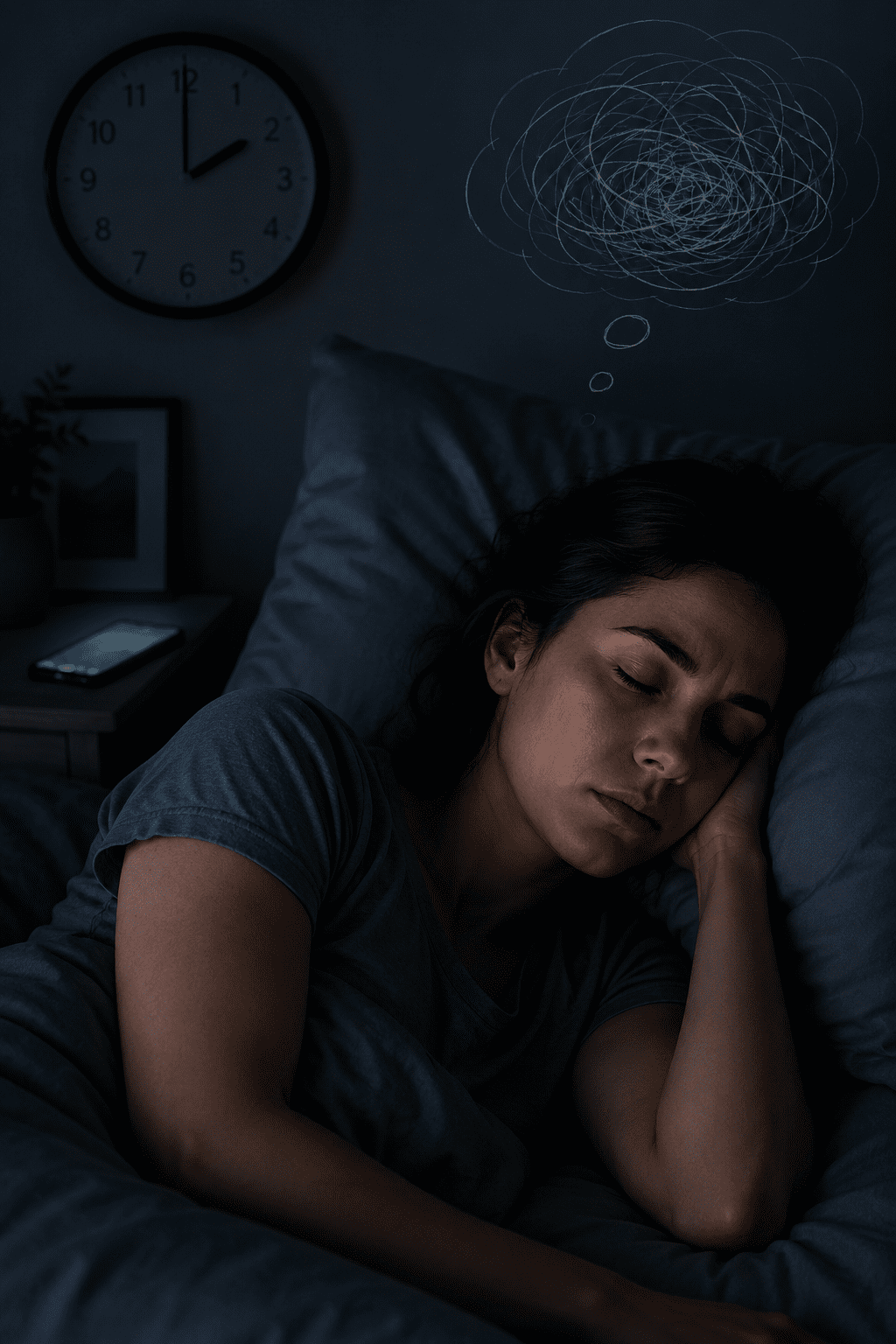
Trouble falling asleep usually comes from one of three things: a disrupted circadian rhythm, a hyperactive stress response, or learned behaviors that have accidentally trained your brain to associate bed with wakefulness. Often it’s all three at once.
Most people who struggle with sleep aren’t broken. Their nervous system is doing exactly what it’s designed to do — staying alert when it detects a threat. The problem is that modern life gives it a lot of material to work with.
Here are the most common underlying causes:
- Irregular sleep timing — shifting your bedtime by even 90 minutes confuses your circadian clock
- Chronic stress or anxiety — elevated cortisol at night directly suppresses melatonin [4]
- Conditioned arousal — lying awake in bed repeatedly teaches your brain that bed equals wakefulness
- Stimulant use — caffeine has a half-life of 5–7 hours, meaning a 3pm coffee is still half-active at 8pm [4]
- Blue light exposure — evening screen use delays melatonin onset, sometimes by up to two hours [4]
- Underlying conditions — sleep apnea, restless leg syndrome, depression, and anxiety disorders all directly disrupt sleep onset
If you want to dig deeper into what might specifically be driving your sleep problems, this breakdown of why you can’t sleep even when you’re tired covers a lot of ground that most basic sleep advice skips.
Why Do Some People Fall Asleep Easily While Others Can’t
Some people genuinely have a biological advantage when it comes to sleep. Research points to genetic differences in circadian rhythm regulation, stress hormone sensitivity, and sleep drive accumulation. It’s not just you — and it’s not a willpower issue.
People who fall asleep easily tend to have lower baseline arousal, meaning their nervous system quiets down faster when environmental cues say “it’s time to sleep.” People with insomnia or anxiety often have a chronically elevated arousal baseline — their brain stays in a low-level alert state even when they’re exhausted.
The honest version is: some people are just wired for lighter, more disrupted sleep. That doesn’t mean nothing helps. It means you may need to be more deliberate about the conditions you create.
How Long Does It Take a Normal Person to Fall Asleep
For most adults without sleep problems, falling asleep takes between 10 and 20 minutes. Sleep researchers call this “sleep latency.” Consistently falling asleep in under five minutes is actually a sign of sleep deprivation — your body is so exhausted it crashes immediately.
If it regularly takes you longer than 30 minutes to fall asleep, that’s clinically significant and worth addressing. Occasional long sleep latency from stress or a disrupted schedule is normal. Chronic difficulty is not something you just have to live with.
How Stress and Anxiety Impact Your Ability to Fall Asleep
Stress and anxiety activate the sympathetic nervous system — the same system responsible for the fight-or-flight response. When that system is active, your heart rate rises, your muscles stay tense, and your brain stays alert. None of that is compatible with sleep onset.
The reason this matters is that anxiety about sleep itself becomes its own problem. You lie down, your brain notices you’re anxious about not sleeping, and that anxiety becomes the very thing keeping you awake. It’s a feedback loop, and it’s one of the hardest parts of chronic insomnia to break.
If this sounds familiar, understanding why you have insomnia in the first place is often the first useful step — because treating anxiety-driven insomnia looks different from treating circadian-driven insomnia.
Best Natural Techniques to Help You Fall Asleep Faster
The most effective natural sleep techniques work by either reducing physiological arousal or interrupting the mental loop that keeps you awake. Here’s what the research actually says works.
Controlled Breathing
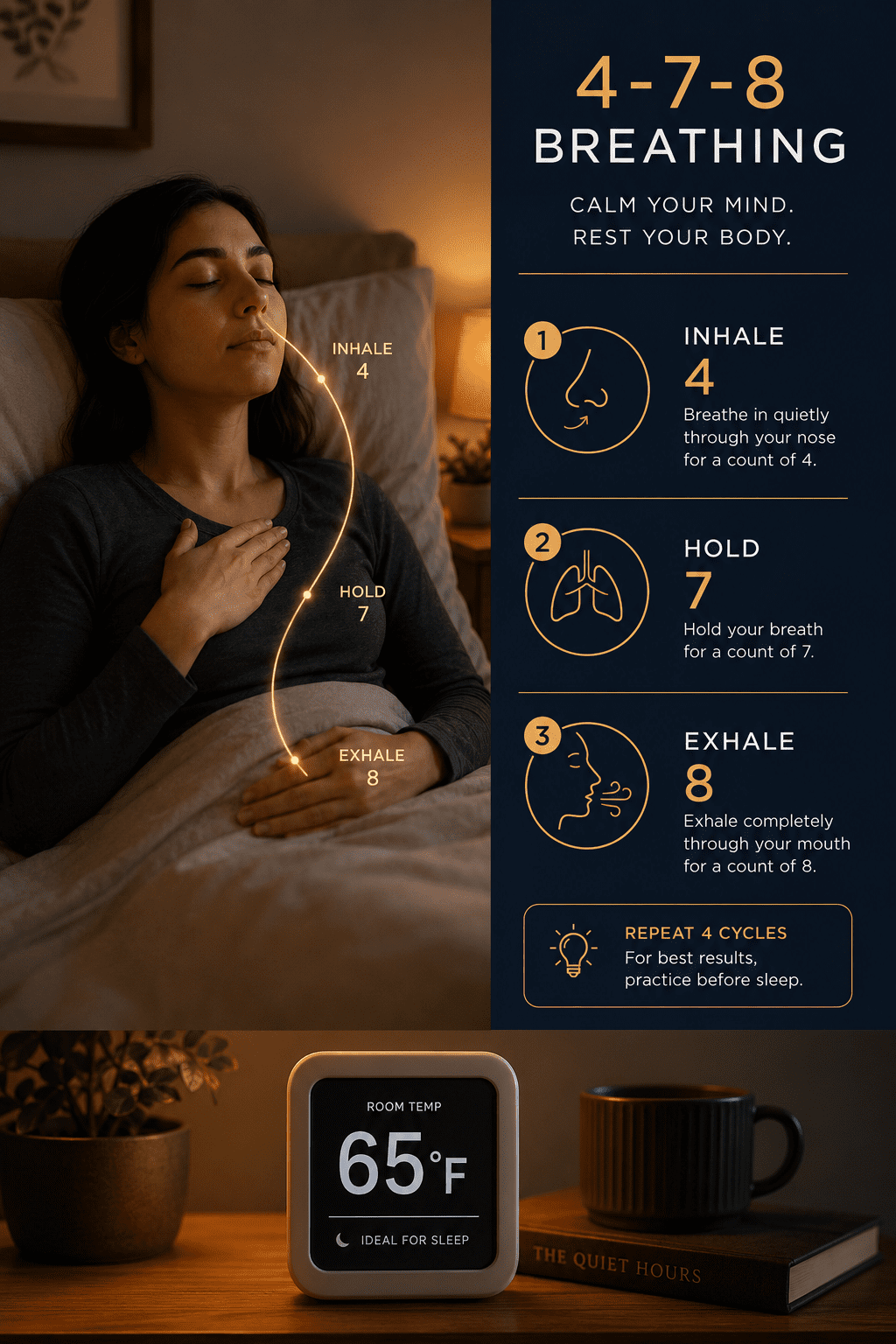
The 4-7-8 breathing method — inhale for 4 counts, hold for 7, exhale for 8 — activates the parasympathetic nervous system and can meaningfully reduce the time it takes to fall asleep [2]. It works because the extended exhale triggers a calming reflex.
In practice this means: lie down, close your eyes, and do four to six cycles before you even try to sleep. Don’t force it. Just breathe.
For a faster version, the military sleep method uses a combination of body relaxation and mental imagery that some people find works within two minutes.
Progressive Muscle Relaxation
Tense each muscle group for five seconds, then release. Start at your feet and work upward. The contrast between tension and release signals your nervous system that the threat has passed [6]. This is worth trying if you carry physical tension at bedtime — tight shoulders, clenched jaw, that kind of thing.
Sleep Restriction and Stimulus Control
These are the two core behavioral techniques in CBT-I. Sleep restriction means temporarily limiting time in bed to match actual sleep time, which rebuilds sleep drive. Stimulus control means only using bed for sleep — no scrolling, no worrying, no lying awake for long stretches [8].
I’ve used stimulus control myself during bad patches, and it’s genuinely uncomfortable at first. But it works. The idea is simple: you’re re-teaching your brain that bed means sleep.
The “You Don’t Have to Fall Asleep” Reframe
This one sounds almost too simple. But telling yourself you don’t have to fall asleep — you just have to rest removes the performance pressure that keeps many people awake. Paradoxically, releasing the goal of sleep often makes it arrive faster.
If you’re not sure whether what you’re experiencing qualifies as insomnia or something more, it’s worth taking a proper assessment. This free, anonymous insomnia test takes only a few minutes and asks you to evaluate how you’ve felt over the past two weeks. It won’t diagnose you, but it can help clarify whether what you’re dealing with goes beyond occasional bad nights.
Can Breathing Exercises Really Help You Fall Asleep
Yes — and the evidence is solid enough to take seriously. Controlled breathing exercises reduce heart rate, lower cortisol, and shift the nervous system from sympathetic (alert) to parasympathetic (calm) activation [2][6]. This creates the physiological conditions sleep requires.
The 4-7-8 method is the most studied for sleep onset. Box breathing (4 counts in, 4 hold, 4 out, 4 hold) is another option that some people find easier to maintain.
Worth trying if you tend to lie awake with a racing heart or a mind that won’t stop. These techniques don’t knock you out — they lower the threshold your body needs to cross to get there.
What Lifestyle Changes Improve Sleep Quality Naturally
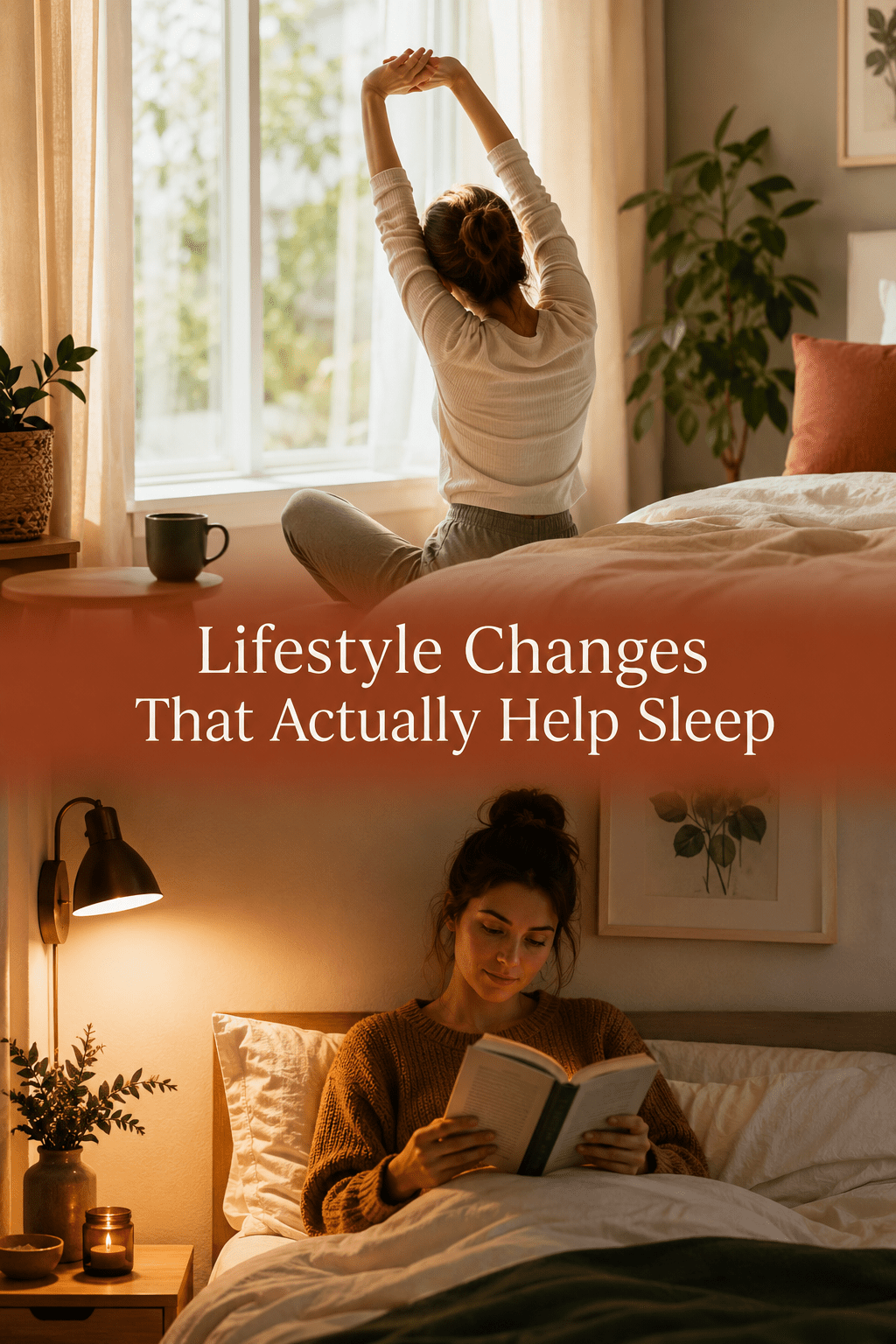
Lifestyle changes work slowly, but they work at a deeper level than any quick fix. The biggest levers are timing, light, temperature, and movement.
Sleep timing consistency is probably the single highest-impact change most people can make. Sticking to the same wake time — even on weekends — anchors your circadian rhythm. Research on what’s been called the “7:1 sleep rule” (seven or more hours, consistent timing within a one-hour window, at least five nights a week) found meaningful improvements in sleep quality and broader health outcomes [1].
Light exposure matters in both directions. Morning sunlight (even 10 minutes outside) helps set your circadian clock. Evening blue light from screens delays it. Avoiding screens for at least an hour before bed is one of the most consistently recommended changes across sleep research [4].
Room temperature is underrated. Your core body temperature needs to drop slightly for sleep to begin. A bedroom between 60°F and 67°F supports that process [3]. If you run warm, this alone can make a noticeable difference.
Exercise improves sleep quality — but timing matters. Morning or early afternoon exercise tends to help. Vigorous exercise within two to three hours of bedtime can delay sleep onset for some people [5].
What Foods or Drinks Should You Avoid Before Bedtime
Caffeine and alcohol are the two biggest dietary sleep disruptors — and both are widely underestimated.
Caffeine blocks adenosine receptors, which are the receptors responsible for building sleep pressure throughout the day. With a half-life of 5–7 hours, a 4pm coffee can still be meaningfully active at 10pm [4]. Cutting caffeine after noon is the standard recommendation, and for people who are sensitive to it, even earlier.
Alcohol is trickier because it initially feels sedating. But it fragments sleep in the second half of the night, suppresses REM sleep, and often causes early waking. It’s not a sleep aid — it’s a sleep disruptor with a delayed effect.
Other things worth avoiding in the two hours before bed:
- Large, heavy meals (digestion raises core body temperature)
- High-sugar foods (blood sugar spikes and drops can cause waking)
- Spicy foods if you’re prone to acid reflux
Light, tryptophan-containing snacks — like a small amount of turkey, cheese, or a banana — may mildly support sleep onset, though the effect is modest [5].
Common Mistakes People Make That Prevent Good Sleep
Most people who struggle with sleep are accidentally making it worse in ways they don’t realize.
Spending too long in bed. Lying awake for hours trying to force sleep weakens the association between bed and sleep. It also reduces sleep pressure, making the next night harder.
Napping too late or too long. A nap after 3pm or longer than 20–30 minutes can significantly reduce sleep drive by bedtime.
Clock-watching. Checking the time repeatedly during the night activates the prefrontal cortex — the part of your brain that calculates and worries. Turn the clock away.
Using the bedroom for everything. Working in bed, watching TV in bed, scrolling in bed — all of these train your brain that bed is a stimulating environment, not a sleep one.
Trying harder. Sleep is one of the few biological processes that gets worse the more you try to force it. The effort itself is the problem.
For a broader look at what might be driving your specific situation, this list of common causes of poor sleep covers some less obvious culprits.
Differences Between Sleep Meditation and Sleep Hypnosis
Sleep meditation and sleep hypnosis are related but distinct. Sleep meditation — mindfulness or body scan practices — works by training attention away from anxious thought loops and toward present-moment sensory experience. It’s a skill that improves with practice [6].
Sleep hypnosis uses guided suggestion to shift the brain into a more receptive, relaxed state, often targeting specific thought patterns or fears around sleep. It’s closer to CBT-I in its mechanism — it’s trying to change the associations your brain has formed around sleep.
Both have research support for reducing sleep onset time and improving sleep quality in people with anxiety-related insomnia [6][8]. Neither is magic. Both require consistency.
Worth trying if: you have a racing mind at bedtime and find breathing exercises too active or too effortful. Guided audio (apps, YouTube) makes both accessible without any cost.
Natural Ways to Deal With Insomnia Without Medication
The most effective non-medication treatment for insomnia isn’t a supplement or a gadget — it’s CBT-I, Cognitive Behavioral Therapy for Insomnia. It’s structured, evidence-based, and produces longer-lasting results than sleep medication for most people with chronic insomnia [8].
CBT-I typically includes sleep restriction, stimulus control, cognitive restructuring (addressing the thoughts that fuel sleep anxiety), and relaxation training. It can be done with a therapist, through a digital program, or via self-guided workbooks.
If you’ve been dealing with this for a while and basic sleep hygiene hasn’t moved the needle, CBT-I is the next logical step — not more supplements.
How Much Sleep Do Adults Really Need Each Night
Most adults need between 7 and 9 hours of sleep per night, according to consistent guidance from the CDC and sleep research bodies. The 7-hour floor is meaningful — chronic sleep below that threshold is associated with increased risk of cardiovascular disease, metabolic problems, and impaired cognitive function.
That said, sleep need is genuinely individual. Some people function well on 7 hours. Others need closer to 9. What matters more than hitting a specific number is how you feel — whether you wake refreshed, whether you need an alarm, and whether you’re cognitively sharp through the day.
If you’ve been dealing with this for a while and consistently feel unrefreshed regardless of hours slept, that’s a signal worth paying attention to. It may point to sleep quality issues rather than quantity — fragmented sleep, undiagnosed apnea, or poor sleep architecture.
Signs That Your Sleep Problems Might Need Professional Help
Not everything responds to self-help strategies — and recognizing when to get professional support is important.
Consider speaking to a doctor or sleep specialist if:
- You’ve had difficulty sleeping for more than three months, most nights
- You snore loudly or wake gasping (possible sleep apnea)
- You feel an irresistible urge to move your legs at night (possible restless leg syndrome)
- Your sleep problems are significantly affecting your mood, work, or relationships
- You’ve tried CBT-I techniques consistently for several weeks without improvement
- You’re relying on alcohol to fall asleep
If you’re unsure where your symptoms fall, this free insomnia assessment is a good starting point. It’s anonymous and takes about five minutes. It evaluates how you’ve been feeling over the past two weeks and can help you decide whether professional support makes sense.
There’s no prize for managing this alone. If you’ve been dealing with this for a while and it’s affecting your quality of life, that’s enough reason to ask for help.
Conclusion: Where to Actually Start
If you’re reading this at 2am, frustrated and exhausted, here’s the most honest thing I can tell you: you don’t need to implement all of this tonight.
Pick one thing. The most accessible starting points are:
- Fix your wake time first — same time every morning, no exceptions, for two weeks
- Do four cycles of 4-7-8 breathing before you try to sleep
- Drop your bedroom temperature if you haven’t already
- Stop clock-watching — turn it away or remove it
If you’ve already tried the basics and they haven’t worked, the next step is CBT-I — not more supplements, not a new mattress. And if you’re not sure how serious your situation is, take the free insomnia test to get a clearer picture.
For more specific techniques, these 15 ways to fall asleep faster includes several you can try in the next five minutes. And if you want to go deeper on fast-acting methods, the 10-second and 2-minute sleep methods are worth understanding — even if they don’t work that fast for everyone.
It’s not just you. Sleep problems are genuinely hard. But they’re also genuinely treatable — and most of what works doesn’t come in a bottle.
Frequently Asked Questions
Q: Can you train yourself to fall asleep faster?
Yes. Sleep is a skill with a behavioral component. Techniques like stimulus control, sleep restriction, and consistent sleep timing can meaningfully reduce how long it takes you to fall asleep — but it takes weeks of consistency, not days.
Q: Does the 4-7-8 breathing method actually work?
For many people, yes — especially those whose sleep problems are driven by anxiety or physical tension. It activates the parasympathetic nervous system, which creates the physiological conditions for sleep. It doesn’t work for everyone, and it works better with practice [2].
Q: Is it normal to wake up in the middle of the night?
Brief awakenings between sleep cycles are normal and most people don’t remember them. Waking fully and struggling to return to sleep — especially in the early morning hours — is a common insomnia pattern worth addressing.
Q: Should I get out of bed if I can’t sleep?
Yes, if you’ve been lying awake for more than 20 minutes. This is a core principle of CBT-I called stimulus control. Get up, do something calm in dim light, and return to bed only when you feel sleepy. It feels counterintuitive but it works [8].
Q: Does melatonin count as a natural sleep aid?
Melatonin is a hormone your body produces naturally, but supplemental melatonin works differently from what most people expect. It’s most effective for circadian rhythm issues (jet lag, shift work) rather than general insomnia. This article focuses on behavioral and environmental approaches that work without any supplements.
Q: How long does it take for natural sleep methods to work?
Most behavioral techniques — consistent sleep timing, stimulus control, sleep restriction — show meaningful results within two to four weeks of consistent use. Breathing and relaxation techniques can help the same night, though they improve with practice.
Q: What’s the difference between insomnia and just being a bad sleeper?
Insomnia is defined clinically as difficulty falling or staying asleep at least three nights per week for three months or more, with daytime impairment. “Bad sleeper” often describes the same thing — just without the label. Both respond to the same treatments.
Q: Can anxiety cause permanent insomnia?
Anxiety can create a self-reinforcing sleep problem that feels permanent — but it rarely is. The anxiety-insomnia loop responds well to CBT-I and, where needed, treatment for the underlying anxiety. If you’re not sure what you’re dealing with, a structured assessment is a useful first step.
References
[1] I Tried The 7 1 Sleep Rule Doctors Rate As The Best Way To Stop 3 A M Wake Ups Heres Why It Works – https://www.tomsguide.com/wellness/sleep/i-tried-the-7-1-sleep-rule-doctors-rate-as-the-best-way-to-stop-3-a-m-wake-ups-heres-why-it-works
[2] What Do When You Cant Sleep – https://www.sleepfoundation.org/insomnia/treatment/what-do-when-you-cant-sleep
[3] Ways To Fall Asleep – https://www.healthline.com/nutrition/ways-to-fall-asleep
[4] Sleep Aids – https://www.hopkinsmedicine.org/health/wellness-and-prevention/sleep-aids
[5] How To Fall Asleep Fast – https://www.sleepfoundation.org/sleep-hygiene/how-to-fall-asleep-fast
[6] Relaxation Exercises To Help Fall Asleep – https://www.sleepfoundation.org/sleep-hygiene/relaxation-exercises-to-help-fall-asleep
[7] Medical News Today: How to fall asleep fast – https://www.medicalnewstoday.com/articles/322928
[8] Natural Cures For Insomnia – https://www.sleepfoundation.org/insomnia/treatment/natural-cures-for-insomnia