Post Disclaimer
This post contains affiliate links. If you buy something through these links, I may earn a small commission at no extra cost to you. Full disclosure.
This article is for informational purposes only and does not constitute medical advice. Always consult a healthcare professional for personal health concerns. Full disclaimer.
Last updated: June 27, 2026
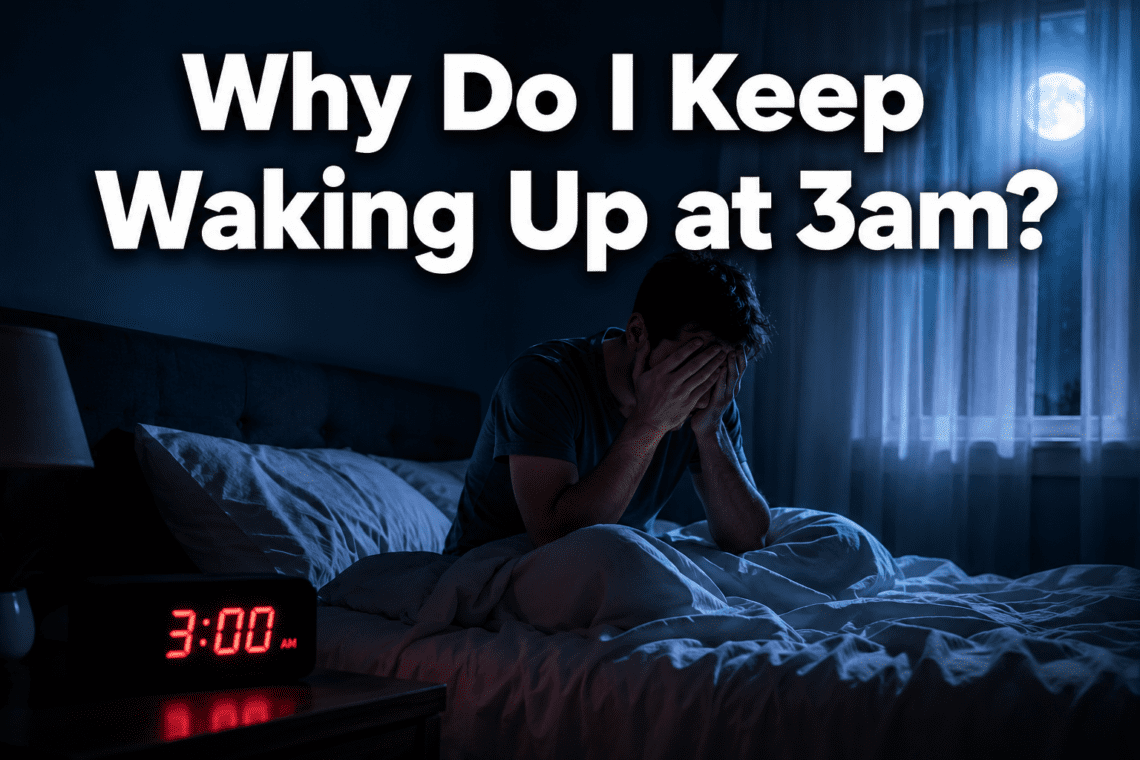
Quick Answer: Waking up at 3am regularly is usually caused by a combination of sleep cycle biology, elevated cortisol, stress or anxiety, and evening habits that disrupt your sleep architecture. It’s rarely random. Your body is doing something specific – and once you understand what, you can actually do something about it.
Key Takeaways
- Sleep naturally gets lighter in the early morning hours, making 3am a common wake-up window for most people
- Elevated cortisol – your stress hormone – starts rising around 3am, which can pull you out of sleep if you’re already running high on anxiety
- Alcohol, caffeine, and late-night screen use all fragment sleep in the second half of the night
- Waking at the same time every night is often a conditioned response, not a coincidence
- Age changes your sleep architecture, making middle-of-the-night waking more common after 40
- A bedroom that’s too warm, too noisy, or too bright can trigger wake-ups you’d otherwise sleep through
- If it’s been happening for more than three weeks and is affecting your daytime function, it’s worth talking to a doctor
- The worst thing you can do at 3am is check your phone – it signals your brain that the day has started
What Causes Waking Up at 3am Every Night
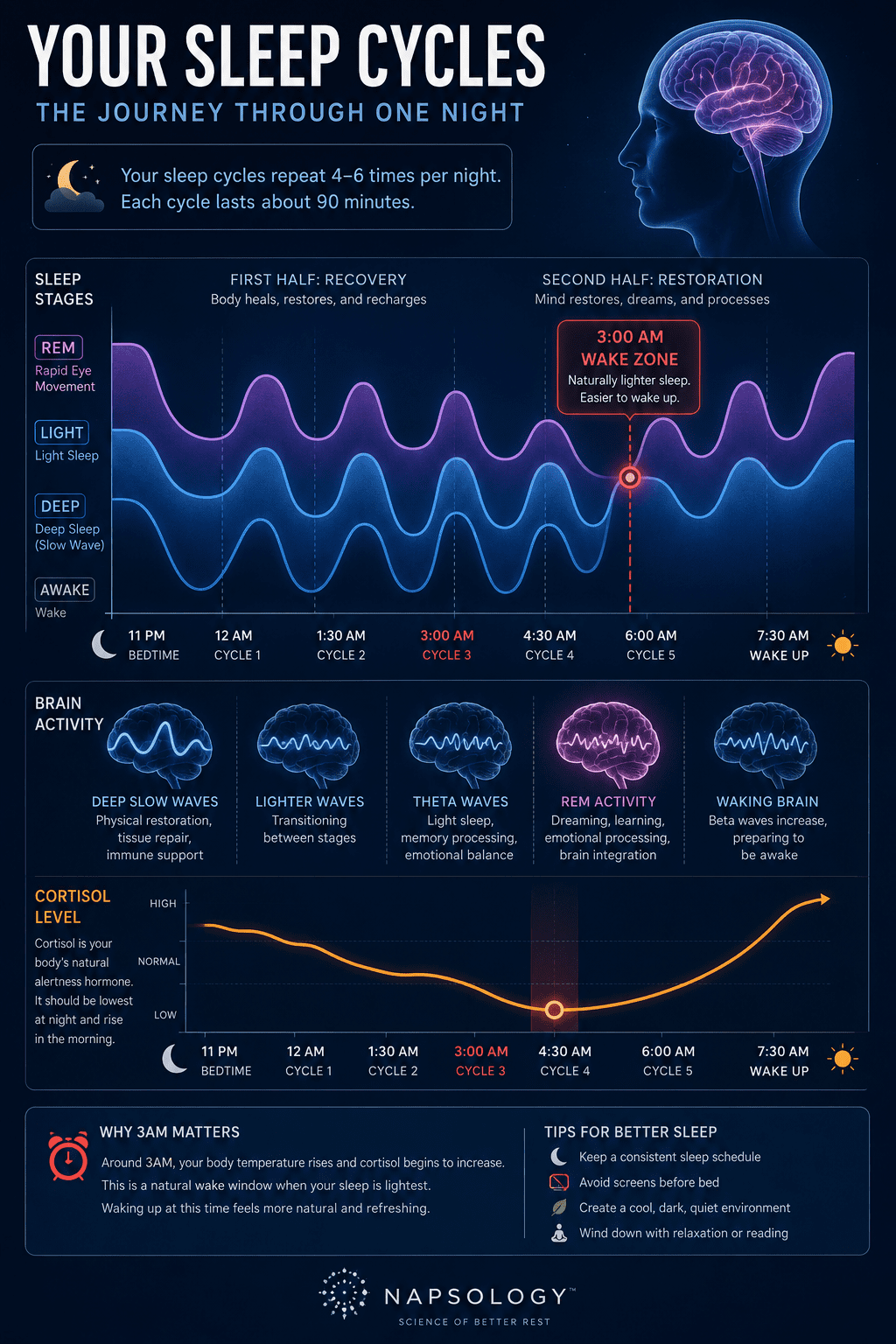
The most common reason you keep waking up at 3am comes down to where you are in your sleep cycle. By around 3am, most people have already completed their deepest sleep stages. What’s left is lighter, REM-heavy sleep – and that’s when the brain is much easier to pull out of unconsciousness [5].
On top of that, cortisol – the hormone that wakes you up and prepares you for the day – begins rising in the early morning hours. If you’re stressed or anxious, your baseline cortisol is already elevated, so that natural rise hits harder and earlier [6].
Here’s what the research actually says: it’s rarely just one thing. It’s usually a combination of where you are in your sleep cycle, what you did the evening before, and what’s happening in your nervous system. Most people who struggle with sleep find that the 3am wake-up is a symptom, not the root problem.
Common contributing causes include:
- Sleep cycle timing – lighter sleep stages dominate the second half of the night
- Elevated cortisol or adrenaline from stress, anxiety, or unresolved tension
- Alcohol metabolizing – it sedates you early but fragments sleep after a few hours
- Blood sugar dips – especially if you ate dinner early
- Environmental triggers – noise, light, or temperature changes that occur around that time
- Conditioned arousal – your brain has learned to wake up at this time and now does it automatically [5][6]
Is Waking Up at 3am Normal or a Sign of a Problem
Waking briefly at 3am occasionally is completely normal. Waking up at 3am every single night, lying there for an hour or more, and dragging through the next day is not something you just have to accept.
Brief awakenings happen throughout the night for everyone – most people just don’t remember them. The issue is when you wake up fully, can’t get back to sleep, and it starts affecting how you function [5].
The honest version is: if it’s happening a few times a week, lasting more than 20-30 minutes, and you’ve been dealing with this for more than a month, that’s a pattern worth taking seriously. It’s not just you – this is one of the most common sleep complaints, and it has real, identifiable causes.
Why Do I Wake Up at the Same Time Every Night
Waking at the exact same time every night – especially 3am – is often a conditioned response. Your brain is pattern-driven. Once it wakes at 3am a few times, it starts anticipating it. That anticipation itself can become the trigger [6].
This is sometimes called “conditioned arousal,” and it’s the same mechanism behind why you sometimes wake up just before your alarm. Your brain learned the pattern and started preparing for it.
In practice this means: even after you fix the original cause, the habit of waking at 3am can persist for a while. That’s frustrating, but it’s also reassuring – it means the waking isn’t necessarily a sign that something is still wrong. It may just be a learned behavior that needs time to unlearn.
If you’ve been dealing with this for a while, check out this guide on why you can’t sleep even when you’re tired – conditioned arousal plays a big role there too.
Can Anxiety or Stress Cause 3am Wake-Ups
Yes – and this is one of the most underestimated drivers. Stress activates the sympathetic nervous system, raising heart rate and blood pressure. When cortisol starts its natural early-morning rise, an already-activated nervous system can tip you right out of sleep [6].
I’ve noticed this in my own sleep. The nights when something stressful is unresolved – a difficult conversation I haven’t had, a deadline I’m avoiding – I wake up at almost exactly 3am, heart already going. It’s not a coincidence.
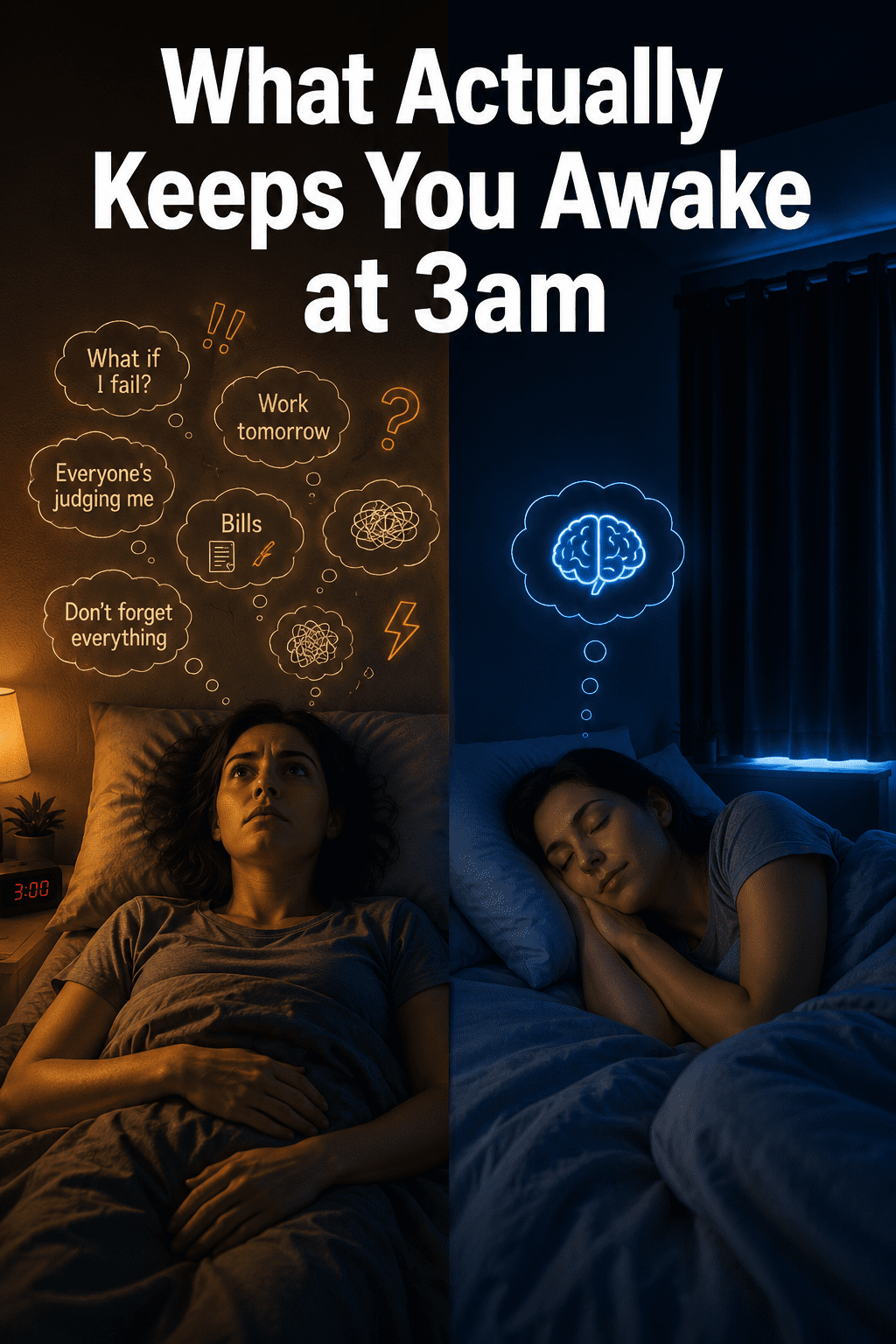
Anxiety also creates a feedback loop. You wake up, your mind immediately starts running through worries, and now you’re fully alert. The more you dread the 3am wake-up, the more likely it is to happen.
If you suspect anxiety is the main driver, it’s worth taking a proper assessment. This free, anonymous insomnia and anxiety test can help you understand what you’re dealing with before you start trying to fix it:
Take the free insomnia test here – Evaluate how you’ve felt over the past two weeks. It takes a few minutes and gives you a clearer picture of whether anxiety is at the root of your sleep disruption.
For more on the anxiety-sleep connection, the insomnia overthinking guide covers practical ways to quiet a racing mind at night.
Does Age Matter When It Comes to Middle-of-the-Night Waking
It does, and significantly. As you get older, your sleep architecture changes. You spend less time in deep, slow-wave sleep and more time in lighter stages. That shift makes you easier to wake – and harder to get back to sleep once you are [5].
This tends to become noticeable in your 40s and gets more pronounced from there. It doesn’t mean you’re doomed to broken sleep forever, but it does mean that strategies that worked in your 20s may need updating.
If you’re over 40 and wondering why your sleep suddenly seems worse than it used to be, this is a big part of the answer. It’s biology, not failure.
What’s the Difference Between Insomnia and Just Waking Up at 3am
Not every 3am wake-up is insomnia. Insomnia is a clinical pattern defined by persistent difficulty falling or staying asleep, combined with daytime impairment – fatigue, difficulty concentrating, mood changes – occurring at least three nights a week for at least three months [5].
Waking at 3am occasionally, or even regularly but falling back asleep within a few minutes, doesn’t necessarily meet that threshold.
The distinction matters because insomnia often requires a different approach – specifically Cognitive Behavioral Therapy for Insomnia (CBT-I), which is the gold-standard treatment. Simple sleep hygiene tweaks often aren’t enough for true insomnia. If you’re not sure which category you fall into, the why do I have insomnia guide can help you identify your actual trigger.
How Much Sleep Am I Actually Getting If I Wake Up at 3am
If you go to bed at 11pm and wake at 3am, that’s four hours of consolidated sleep – but it’s not the whole picture. What matters is whether you fall back asleep, and for how long.
Four hours of sleep followed by two more hours of light, fragmented sleep is meaningfully different from six hours of solid sleep. The second half of the night is when most of your REM sleep happens, and REM is critical for memory, emotional regulation, and mood [5].
This is why 3am wake-ups feel so disproportionately bad. You’re not just losing sleep time – you’re losing the type of sleep that makes you feel human the next day. For a deeper look at this, the how to improve REM sleep guide is worth reading.
Does Caffeine or Alcohol Affect 3am Wake-Ups
Both do – in different ways, and both are more disruptive than most people realize.
Caffeine has a half-life of around 5-6 hours in most adults. A 3pm coffee means half of it is still active at 9pm. That residual stimulation can make it harder to stay in deep sleep during the first half of the night, pushing you into lighter stages earlier [5].
Alcohol is more counterintuitive. It helps you fall asleep faster, which fools people into thinking it’s helping. But as your body metabolizes it – usually 3-4 hours after your last drink – it causes a rebound effect that fragments sleep and suppresses REM. That timing often lands right around 3am [6].
If you drink in the evening and regularly wake at 3am, that’s not a coincidence worth ignoring.
Could My Bedroom Temperature or Noise Be Waking Me at 3am
Yes, and this is one of the most fixable causes. Your body temperature drops during sleep as part of the sleep process. If your room is too warm, your body can’t complete that drop properly, leading to restless, fragmented sleep [6].
The research-backed sweet spot for bedroom temperature is around 65-68°F (18-20°C) for most adults.
Noise is similar. You don’t have to consciously hear something for it to pull you out of sleep – sounds that occur regularly around 3am (early morning traffic, a partner’s alarm, heating systems cycling on) can become reliable wake-up triggers without you ever connecting the dots.
Worth trying if you haven’t already: a white noise machine or fan to mask variable sounds, and checking whether your room temperature rises in the early morning hours.
Is There a Spiritual Meaning to Waking Up at 3am
Some traditions associate 3am with spiritual significance – the “witching hour,” a time of heightened spiritual activity, or a signal from the universe. The honest version is that there’s no scientific evidence for a spiritual cause of 3am wake-ups.
What there is evidence for is that 3am is a biologically vulnerable time in the sleep cycle. The fact that so many people wake at this specific hour isn’t mystical – it’s a reflection of shared human sleep architecture. If you find meaning in the spiritual framing and it helps you feel less anxious about waking, that’s fine. But it’s not a substitute for addressing the actual causes.
Should I See a Doctor If I Keep Waking Up at 3am
See a doctor if: the waking has been happening for more than a month, you can’t fall back asleep for an hour or more, it’s affecting your work or mood, or you have other symptoms like loud snoring, gasping, or excessive daytime sleepiness.
That last cluster of symptoms – snoring, gasping, unrefreshing sleep – can point to sleep apnea, which requires proper diagnosis and treatment. Sleep apnea is significantly underdiagnosed, particularly in women [6].
If you’re not sure whether what you’re experiencing crosses the clinical threshold, this free anonymous test is a good starting point:
Take the free insomnia and sleep assessment here – It only takes a few minutes and can help you understand whether what you’re dealing with warrants professional support.
How to Stop Waking Up in the Middle of the Night
There’s no single fix – but there are several evidence-backed approaches that, combined, make a real difference.
Evening habits to change:
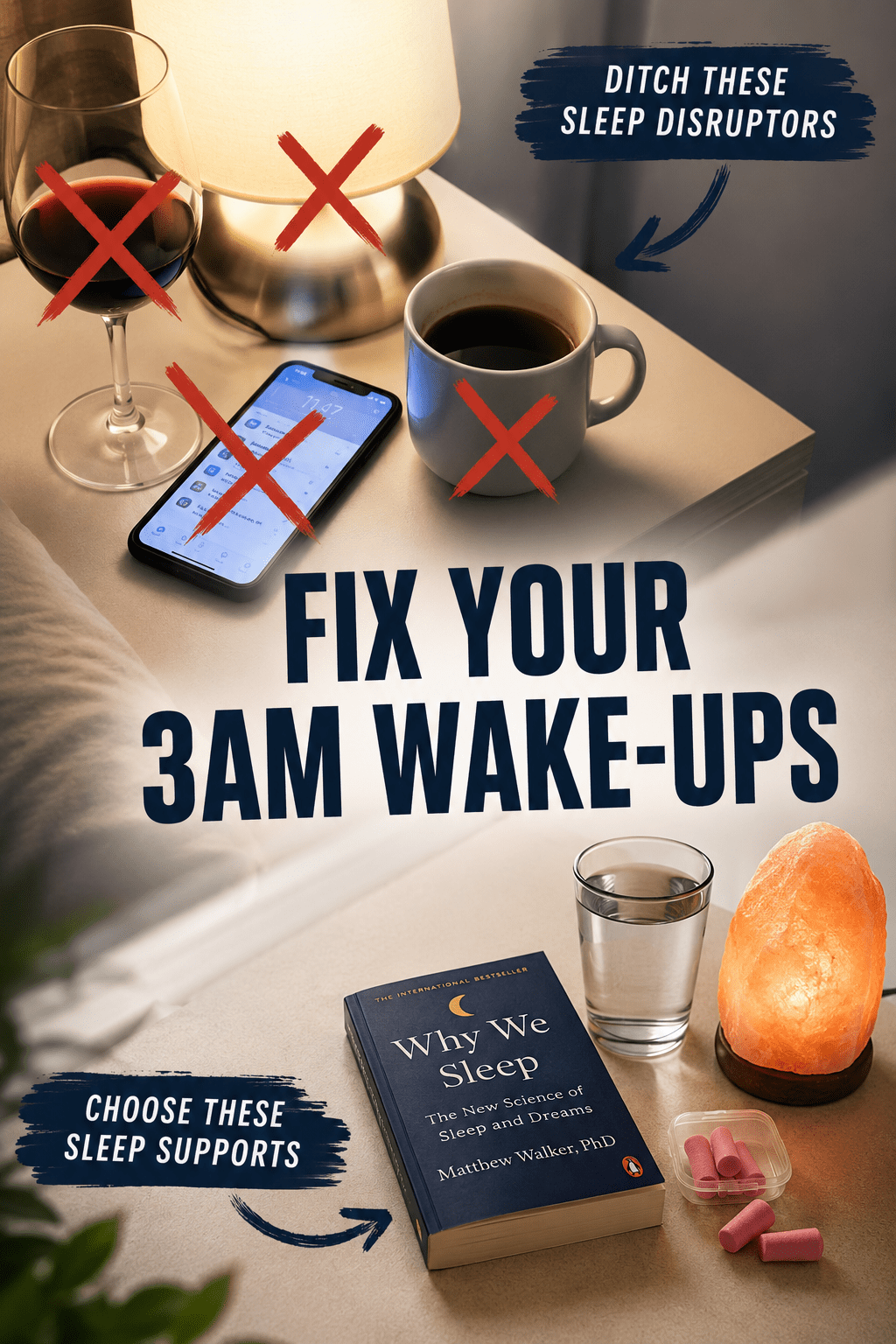
- Cut caffeine by 1-2pm if you’re sensitive to it
- Stop alcohol at least 3-4 hours before bed
- Reduce screen use in the hour before sleep – the stimulation raises cortisol [1][3]
- Don’t go to bed significantly earlier than your normal time to “catch up” – this misaligns your circadian rhythm and can cause early morning waking [2]
What to do when you actually wake at 3am:
- Don’t check your phone. This is the single most common mistake. The light and stimulation signal your brain that the day has started [3]
- Try cognitive shuffling – mentally listing random, unconnected words (apple, umbrella, Tuesday, carpet) to interrupt anxious thought loops [4]
- You don’t have to fall asleep – you just have to rest. Removing the pressure to sleep often makes sleep more likely
- If you’ve been awake for more than 20 minutes, get up, do something quiet in dim light, and return when you feel sleepy
For a structured approach to fixing the habits that cause this, the 10 tips for sleeping through the night guide covers the practical steps in detail.
If you want to address the bedtime side of things too, the bedtime routine for adults who struggle to wind down is one of the most useful things I’ve put together on this site.
How Long Does It Take to Fall Back Asleep After Waking at 3am
Most people take 20-30 minutes to fall back asleep after a middle-of-the-night waking, assuming they don’t do anything that activates their brain further. Checking your phone, turning on lights, or starting to problem-solve can extend that to an hour or more.
The cognitive shuffling technique mentioned above has been endorsed by sleep experts specifically for this window – it works by giving your brain something to process that isn’t emotionally loaded, allowing the sleep drive to take over [4].
This is what worked for me during the worst stretch of my own sleep problems: accepting that I was awake, not fighting it, and giving my mind something boring to chew on. Not every night. But enough nights that it changed the pattern.
FAQ
Q: Why do I always wake up at exactly 3am?
Your brain has likely learned the pattern and now anticipates it. This is called conditioned arousal. It can persist even after the original cause is resolved, but it does fade over time with consistent sleep habits.
Q: Is waking up at 3am a sign of depression?
Early morning waking – particularly waking at 3-4am and being unable to return to sleep – is a recognized symptom of depression. If this is accompanied by low mood, loss of interest, or fatigue, it’s worth speaking to a doctor.
Q: Can a bad mattress cause 3am wake-ups?
Yes. Discomfort from an unsupportive mattress can cause micro-arousals that become full wake-ups, especially in the lighter sleep stages of the early morning.
Q: Does melatonin help with 3am waking?
Melatonin is most effective for circadian rhythm issues – like jet lag or shift work. It’s less effective for middle-of-the-night waking caused by anxiety or sleep fragmentation. It won’t hurt to try, but it’s not a reliable fix for this specific problem.
Q: Should I get out of bed if I wake up at 3am?
If you’ve been awake for more than 20 minutes and feel frustrated or anxious, yes – getting up briefly can actually help. Lying in bed awake for long periods trains your brain to associate the bed with wakefulness.
Q: Can eating late cause 3am wake-ups?
It can. A large meal close to bedtime keeps your digestive system active during sleep. Blood sugar fluctuations from late eating can also trigger cortisol release in the early morning hours.
Q: Is 3am waking linked to thyroid problems?
In some cases, yes. Hyperthyroidism can cause elevated heart rate and anxiety that disrupts sleep. If you have other thyroid symptoms – unexplained weight changes, heart palpitations, excessive sweating – it’s worth getting checked.
Q: Why do I wake up at 3am anxious for no reason?
The cortisol rise that naturally occurs in the early morning can amplify existing anxiety, even when there’s no conscious trigger. Your nervous system is preparing your body for the day – if it’s already in a heightened state, that process can feel like panic.
Conclusion
If you keep waking up at 3am, you’re not broken and you’re not alone. The honest version is that it’s almost always explainable – sleep cycle biology, cortisol, evening habits, anxiety, or some combination of all of them.
Start with the most fixable things first: cut the alcohol and late caffeine, protect the hour before bed from screens and stimulation, and stop going to bed earlier than usual to try to catch up. These changes won’t fix everything overnight, but they address the most common drivers.
If anxiety is at the root of it, that deserves its own attention. This free, anonymous sleep and insomnia assessment takes a few minutes and can help you understand whether anxiety is the main thread to pull.
And if you’ve been dealing with this for months and nothing has shifted, please talk to a doctor. Sleep apnea, depression, and thyroid issues are all real possibilities that need proper diagnosis – not just better bedtime habits.
For your next steps, the how to stop insomnia guide and the 15 insomnia tips that actually work are both worth bookmarking. They’re written for people who have already tried the basics – which, if you’ve read this far, you probably have.
References
[1] I Tried The Invisible Day Method To Stop Waking Up 3 A M And It Worked Doctors Explain Why – https://www.tomsguide.com/wellness/sleep/i-tried-the-invisible-day-method-to-stop-waking-up-3-a-m-and-it-worked-doctors-explain-why
[2] I Kept Waking Up At 3 A M Until I Ditched This Healthy Sleep Habit An Expert Explains Why – https://www.tomsguide.com/wellness/sleep/i-kept-waking-up-at-3-a-m-until-i-ditched-this-healthy-sleep-habit-an-expert-explains-why
[3] I Kept Waking Up At 3 A M Until A Doctor Told Me To Stop Making This Common Evening Mistake – https://www.tomsguide.com/wellness/sleep/i-kept-waking-up-at-3-a-m-until-a-doctor-told-me-to-stop-making-this-common-evening-mistake-and-61-percent-of-us-do-it
[4] I Tried A Chief Medical Officers Hack To Fall Asleep Fast After Waking Up At 3 A M And It Worked – https://www.tomsguide.com/wellness/sleep/i-tried-a-chief-medical-officers-hack-to-fall-asleep-fast-after-waking-up-at-3-a-m-and-it-worked-heres-why
[5] Why Do I Keep Waking Up At 3 Am – Healthline – https://www.healthline.com/health/sleep/why-do-i-keep-waking-up-at-3-am
[6] Why Do You Always Wake Up At 3 A M – Cleveland Clinic – https://health.clevelandclinic.org/why-do-you-always-wake-up-at-3-a-m