Post Disclaimer
This post contains affiliate links. If you buy something through these links, I may earn a small commission at no extra cost to you. Full disclosure.
This article is for informational purposes only and does not constitute medical advice. Always consult a healthcare professional for personal health concerns. Full disclaimer.
Last updated: June 23, 2026
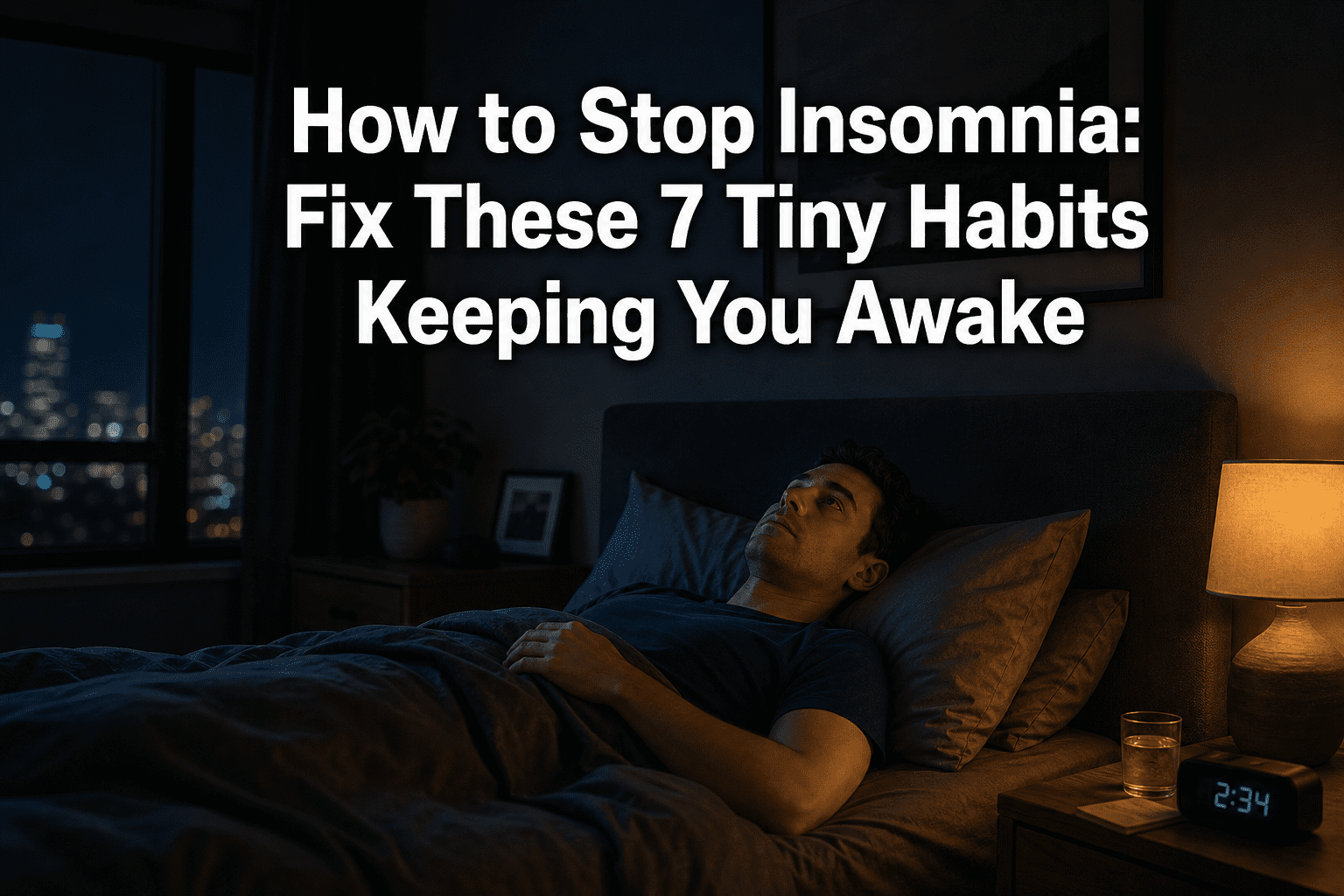
Quick Answer: Most people who struggle with sleep are not broken – they have small, specific habits that signal their brain to stay alert at night. Learning how to stop insomnia often comes down to identifying and adjusting those habits, not overhauling your entire life. The seven habits below are the ones that research consistently links to chronic sleeplessness, and they are more fixable than you probably think.
Key Takeaways
- An irregular sleep schedule disrupts your circadian rhythm more than almost anything else [4]
- Evening screen use suppresses melatonin and delays sleep onset [2]
- Watching the clock in bed creates a conditioned anxiety response that makes insomnia worse [9]
- Alcohol might help you fall asleep faster but it fragments the second half of your night [3]
- A bedroom that is too warm actively prevents the core body temperature drop needed for deep sleep [7]
- Late exercise is not universally bad – timing and intensity both matter
- Catastrophic thinking about sleep (“I’ll never function tomorrow”) is itself a driver of insomnia [10]
- You don’t have to fall asleep – you just have to rest. Removing the pressure changes everything
Why Small Habits Drive Big Sleep Problems
Most people arrive at insomnia advice after trying the obvious stuff. You’ve heard “put your phone away” and “go to bed earlier.” You’ve tried it. It didn’t stick, or it didn’t work, or it worked for three days and then stopped.
The honest version is that insomnia rarely has one cause. It usually has several small habits that stack on top of each other – each one individually manageable, but together they create a brain that treats bedtime like a threat rather than a signal to rest.
If you’ve been dealing with this for a while, you already know the frustration of advice that sounds right but doesn’t land. So let’s skip the generic and get specific.
Habit 1: Your Sleep Schedule Is All Over the Place
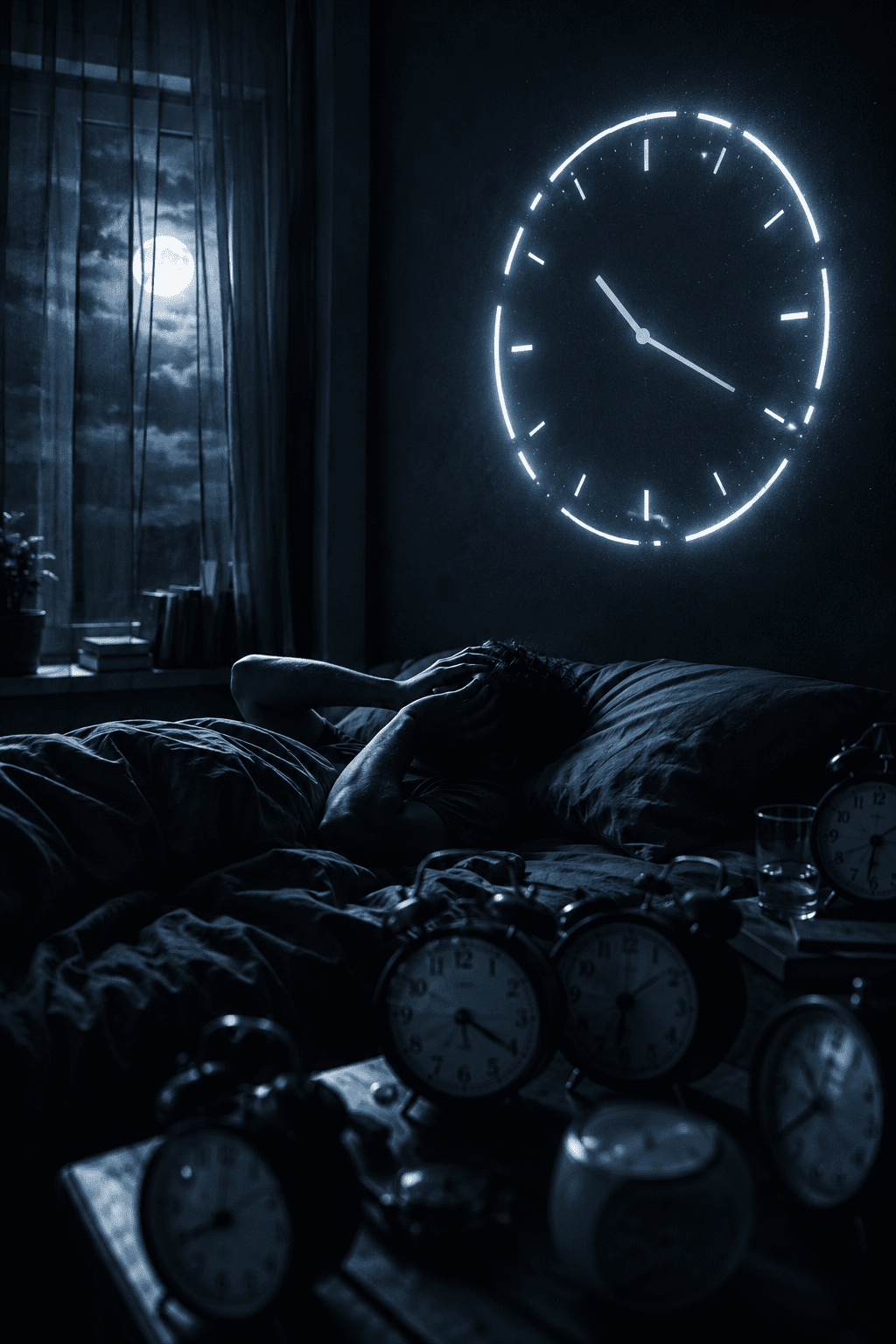
Going to bed at 10 PM one night and 1 AM the next is one of the most underestimated drivers of chronic insomnia. Your body runs on a circadian rhythm – a roughly 24-hour internal clock that regulates when you feel sleepy and when you feel alert. When your sleep and wake times shift constantly, that clock never knows when to fire [4].
In practice this means your brain is not getting a reliable “time to wind down” signal. It stays in a kind of low-grade alertness because it cannot predict what you need from it.
What to do instead: Pick a wake time and protect it, even on weekends. The wake time anchors your rhythm more than the bedtime does. If you go to bed at different times, that is less damaging than waking up at wildly different times. Start there.
Worth trying if you notice your sleepiness comes in waves – feeling exhausted at 9 PM but wired by 11 PM is a classic sign of a drifting circadian rhythm.
Habit 2: Evening Screens and Bright Light After Dark
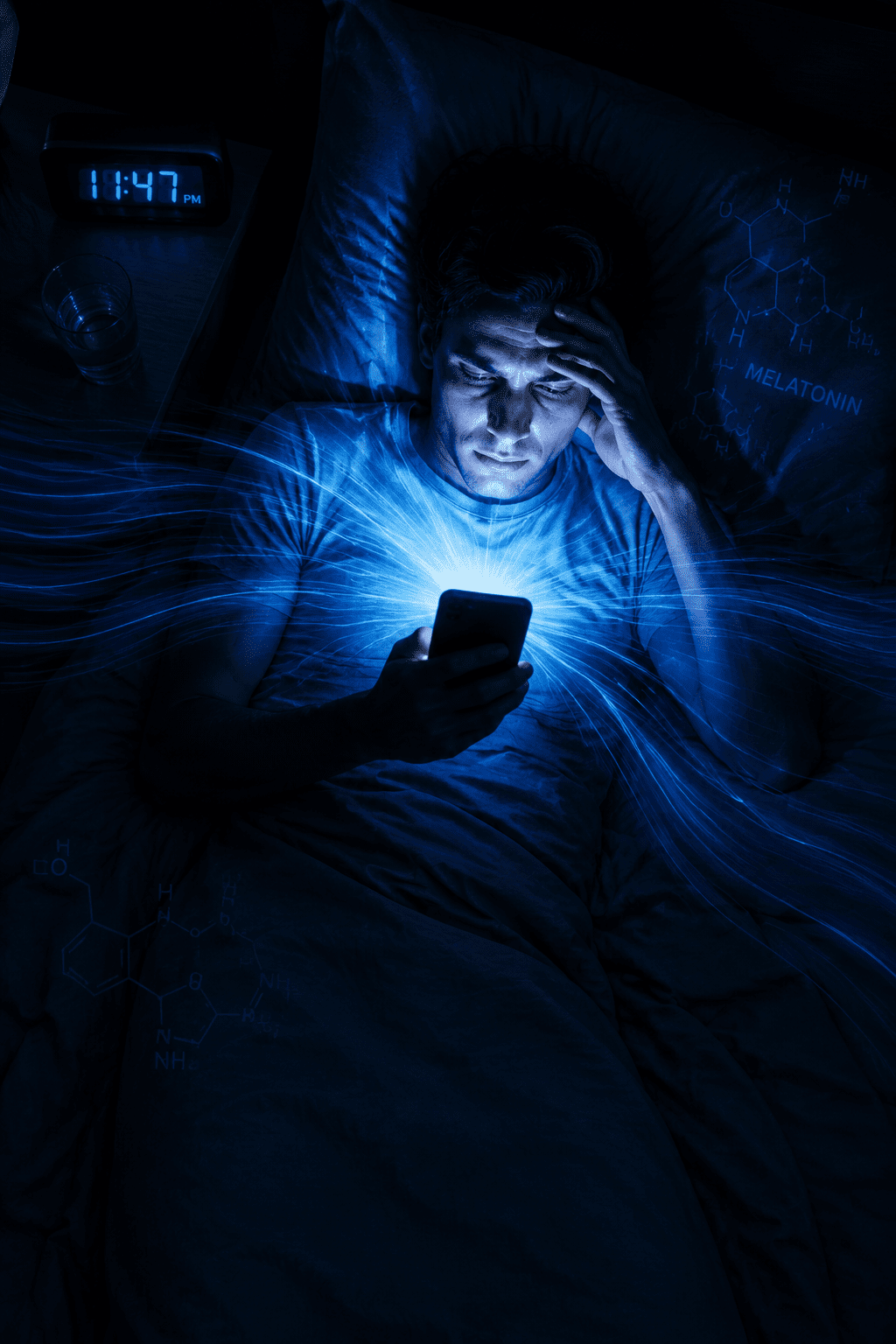
Here’s what the research actually says: light – especially the blue-spectrum light from phones, laptops, and overhead LEDs – suppresses melatonin production and pushes your sleep timing later [2]. This is not opinion. It is a well-documented physiological response.
I know you’ve heard this before. And I know most people read it, nod, and keep scrolling. I did the same thing for years.
But the mechanism matters. Your brain uses light as its primary signal that it is daytime. Bright light at 10 PM tells your brain it is still afternoon. Melatonin release gets delayed. You don’t feel sleepy when you should. You lie in bed awake. You check your phone because you’re awake. The cycle continues.
What actually helps:
- Dim your overhead lights after 8 PM – not just your phone
- Use warm-toned bulbs (2700K or lower) in the rooms you use in the evening
- If you cannot avoid screens, blue-light blocking glasses do have some supporting evidence, though the effect is modest [2]
- The 90 minutes before bed matters most – that window is when melatonin should be rising
This is what worked for me: switching to a single lamp with a warm bulb in the evenings made a more noticeable difference than any app timer I ever set on my phone.
If you want more detail on building an evening routine around this, the bedtime routine for adults who struggle to wind down covers the full picture.
Habit 3: Watching the Clock and Staying in Bed Awake
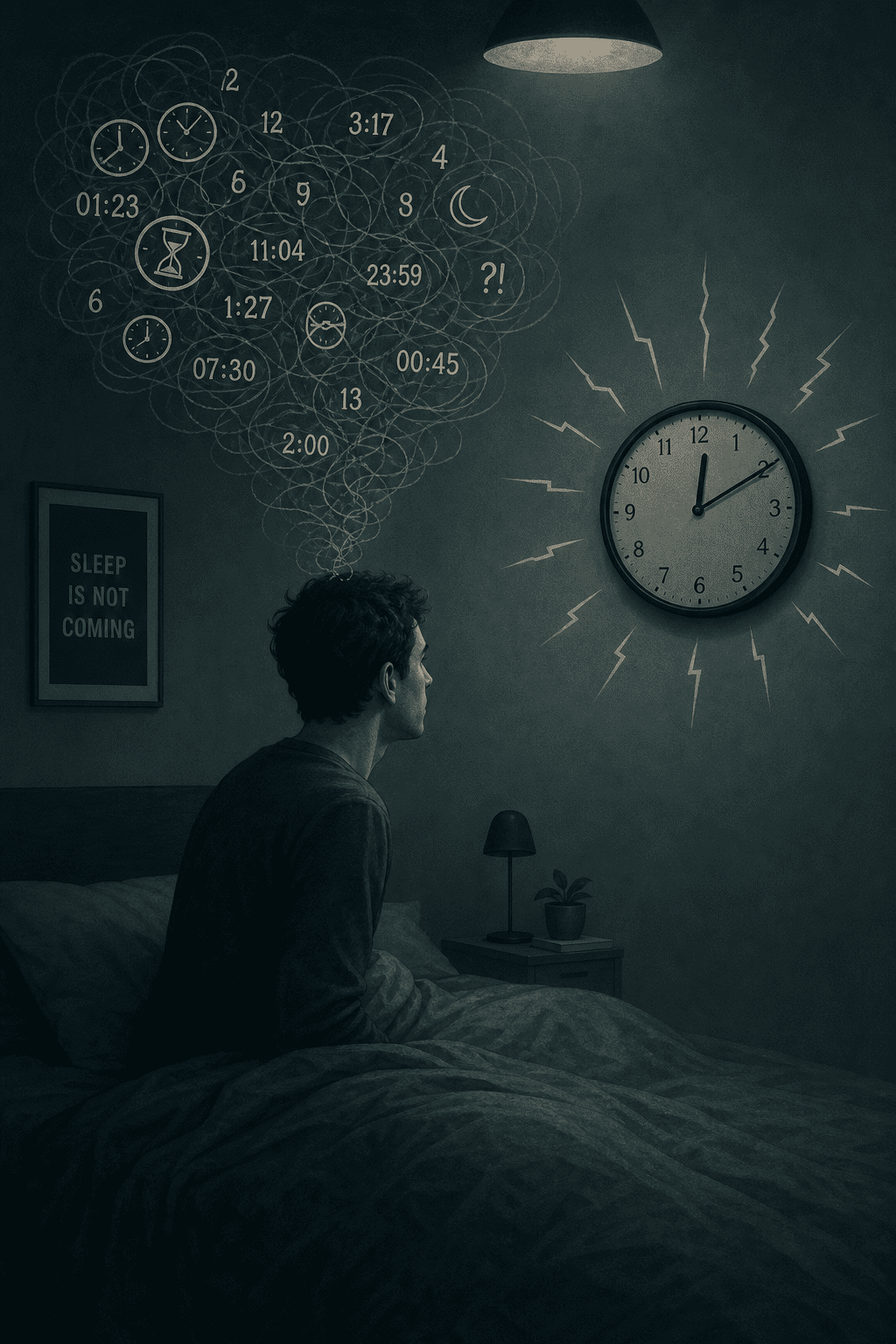
This one is quiet but destructive. Most people who struggle with sleep develop a habit of checking the time when they wake at night – then doing the math. “It’s 3 AM. I have four hours left. If I fall asleep right now I’ll get…”
That calculation is not neutral. It is a stress response dressed up as arithmetic.
The reason this matters is that your brain is highly associative. If you spend enough nights lying in bed anxious and awake, your bed becomes a cue for anxiety rather than sleep [9]. This is called conditioned arousal, and it is one of the core mechanisms behind chronic insomnia.
Two things that help:
- Turn your clock away or remove it from the room entirely. Not seeing the time removes the trigger.
- If you have been awake for more than 20 minutes and feel frustrated, get up. Go to a dim, quiet room. Do something low-stimulation until you feel sleepy, then return. This is stimulus control therapy – one of the most evidence-backed behavioral approaches to insomnia [10].
It feels counterintuitive. Getting out of bed when you want to sleep seems like giving up. It is actually the opposite – it is retraining your brain to associate your bed with sleep rather than wakefulness.
For more on this, why you can’t sleep at night even when you’re tired goes deeper into the conditioned arousal piece.
Habit 4: Alcohol as a Sleep Aid
A glass of wine to wind down. A beer to take the edge off. It works – until it doesn’t.
Alcohol does reduce the time it takes to fall asleep. That part is real. But here’s what the research actually says about what happens next: alcohol disrupts REM sleep and causes sleep fragmentation in the second half of the night [3]. You fall asleep faster and then wake up at 3 AM, restless and unable to get back to sleep.
The more regularly you use alcohol to fall asleep, the more your brain starts to depend on it – and the worse your sleep becomes without it.
The honest version is: if you are having one drink with dinner and sleeping fine, this probably is not your issue. But if you are using alcohol specifically to manage sleep anxiety or racing thoughts at bedtime, it is worth knowing it is making the underlying problem worse, not better.
Worth trying if you cut it out: give it two weeks, not two nights. The first few nights without alcohol can actually be harder as your brain recalibrates.
Habit 5: A Bedroom That Is Too Warm
Your core body temperature needs to drop by about 1-2 degrees Fahrenheit to initiate and maintain sleep [7]. If your bedroom is too warm, that process is disrupted.
Most sleep research points to a bedroom temperature of around 65-68°F (18-20°C) as the range where most people sleep best [7]. That feels cool to a lot of people – cooler than most keep their homes during the day.
Simple adjustments:
- Lower your thermostat an hour before bed, not right at bedtime
- Use breathable bedding (cotton or bamboo over synthetic materials)
- A warm shower or bath 60-90 minutes before bed actually helps – it raises your surface temperature temporarily, which then triggers a compensatory drop in core temperature as you cool down afterward [3]
- If you run hot, a cooling mattress pad is one of the few sleep products with a legitimate physiological rationale behind it
Habit 6: Caffeine Timing and Hidden Sources
Most people know not to drink coffee at midnight. Fewer people know that caffeine has a half-life of roughly five to seven hours in most adults [5]. That means a 3 PM coffee still has half its caffeine circulating in your system at 8 PM.
And it’s not just coffee. Tea, energy drinks, pre-workout supplements, some headache medications, and even certain chocolate products contain meaningful amounts of caffeine.
A practical rule: if you are struggling with sleep, cut off caffeine by noon for two weeks and see what changes. It is a short experiment with a clear result. If your sleep improves noticeably, you have found a lever.
It’s not you being sensitive – caffeine sensitivity varies significantly between people based on genetics, liver enzyme activity, and tolerance [5]. Some people can drink espresso at 6 PM and sleep fine. Others are still feeling a 10 AM cup at midnight. Neither is wrong. You just need to know which one you are.
Habit 7: Catastrophic Thinking About Sleep
This is the one that does not get enough attention.
Most people who have dealt with insomnia for more than a few months develop a secondary problem: they start to fear sleep, or more specifically, they fear not sleeping. The anxiety about lying awake becomes its own arousal trigger [10].
Thoughts like “I can’t function on bad sleep,” “I’m going to ruin tomorrow,” or “I’ve always been a bad sleeper” are not just frustrating – they are physiologically activating. They raise cortisol. They increase heart rate. They keep you awake.
The cognitive piece of insomnia is real, and it is often what keeps people stuck even after they fix the behavioral habits. Cognitive Behavioral Therapy for Insomnia (CBT-I) is the most evidence-supported long-term treatment for chronic insomnia – more effective than medication in most studies [10].
You don’t have to fall asleep – you just have to rest. That reframe sounds small. For a lot of people, it genuinely changes the experience of lying in bed.
If you’re not sure whether your sleep issues have crossed into something that needs more support, it’s worth taking a proper assessment.
Not sure how serious your insomnia is?
Take this free, anonymous insomnia test – evaluate how you’ve felt over the past two weeks and get a clearer picture of what you’re dealing with. It takes a few minutes and costs nothing.
How to Stop Insomnia: Putting the Habits Together
The habits above do not exist in isolation. Most people with chronic insomnia have three or four of them running simultaneously – irregular schedule, clock-watching, some anxiety about sleep, and maybe a warm bedroom on top of that.
The good news is you do not have to fix all seven at once. In fact, trying to overhaul everything overnight is its own form of sleep-related pressure, which tends to backfire.
A practical starting sequence:
| Priority | Habit to Fix | Why First |
|---|---|---|
| 1 | Consistent wake time | Anchors your circadian rhythm fast |
| 2 | Clock removal from bedroom | Breaks the anxiety-arousal cycle |
| 3 | Caffeine cutoff by noon | Quick, testable, clear results |
| 4 | Bedroom temperature | Low effort, high impact |
| 5 | Evening light reduction | Builds on the routine you are creating |
| 6 | Alcohol reassessment | Only if relevant to your situation |
| 7 | Cognitive reframe / CBT-I | Addresses the layer underneath everything else |
Start with the first two. Give it a week. Add the next one. You are not trying to fix sleep in a night – you are trying to stop reinforcing the patterns that broke it.
For a deeper look at what might be driving your specific sleep problems, why do I have insomnia – how to find your trigger is a good next read.
And if you want more behavioral strategies beyond what’s covered here, 15 insomnia tips that actually work when nothing else has goes into the less obvious ones.
How to Stop Insomnia When You’ve Already Tried Everything
It’s not just you. A lot of people reading this have already done the basics – the sleep hygiene checklist, the melatonin, the white noise machine. And they are still awake at 3 AM.
If that is where you are, the issue is usually one of two things: either the behavioral habits are mostly fixed but the cognitive layer (the sleep anxiety, the hyperarousal) has not been addressed, or there is an underlying condition – anxiety disorder, sleep apnea, restless legs, depression – that is driving the insomnia and will not respond to habit changes alone [1].
Both of those are solvable, but they need different approaches.
If you’ve been struggling for more than three months and nothing has helped, consider taking the free insomnia assessment here. It’s anonymous, takes a few minutes, and can help you figure out whether what you’re dealing with is situational or something that warrants more support.
A few things worth knowing:
- CBT-I is available online and has strong evidence behind it [10]
- A sleep study is worth requesting if you snore, wake gasping, or feel unrefreshed regardless of how many hours you sleep
- Short-term sleep medication is not a failure – it can break a cycle long enough for behavioral changes to take hold [1]
For more on what to do when the standard advice has not worked, how to fall asleep naturally without pills or supplements covers the next tier of approaches.
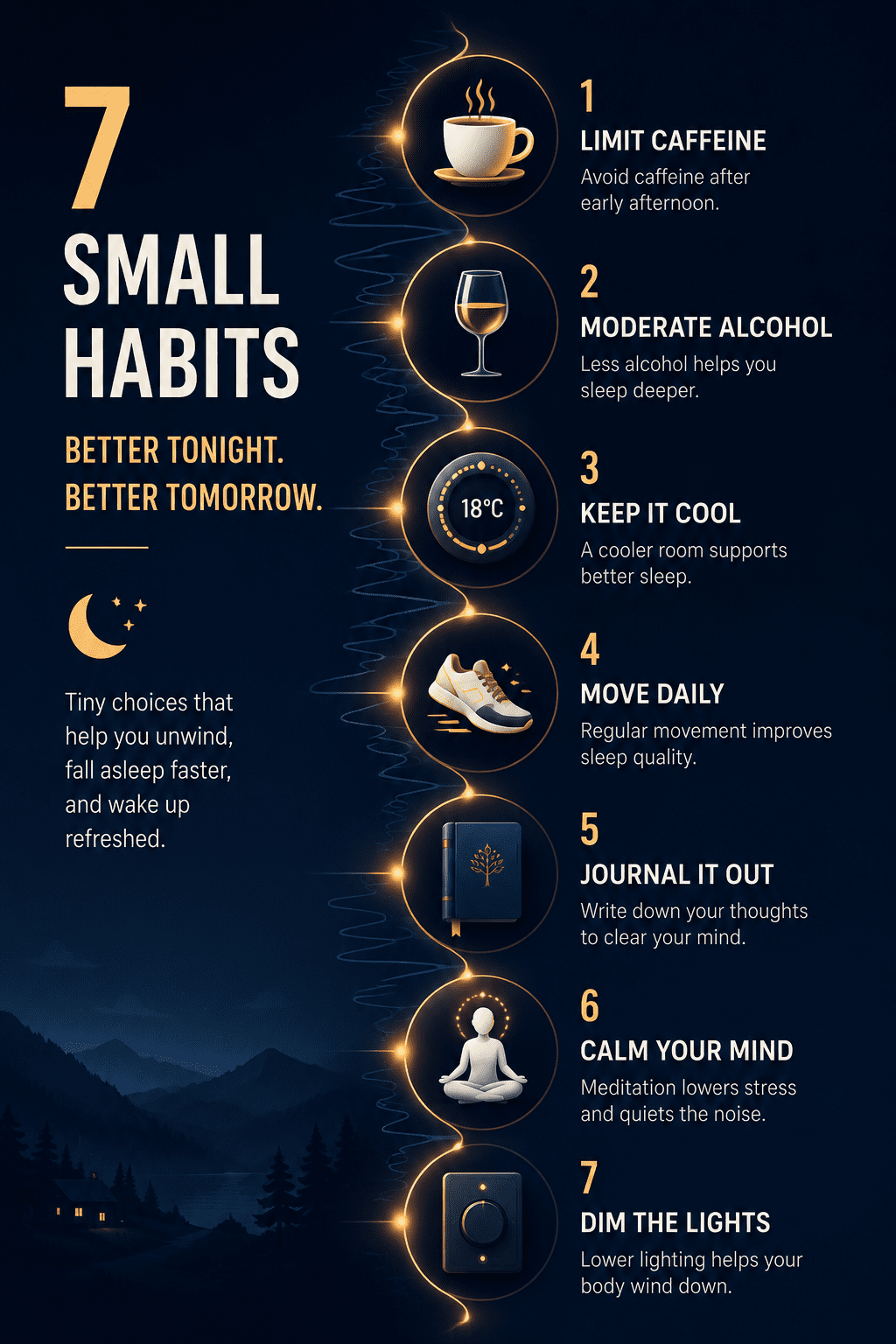
FAQ
How long does it take to stop insomnia by changing habits?
Most people see some improvement within one to two weeks of consistently changing behavioral habits like sleep timing and clock-watching. The cognitive layer – sleep anxiety and conditioned arousal – can take four to eight weeks to shift, especially with CBT-I.
Is insomnia a mental health problem?
Not always, but there is a strong bidirectional link. Anxiety and depression both cause and worsen insomnia, and chronic insomnia increases the risk of both [1]. Treating only the sleep without addressing underlying mental health, or vice versa, often produces incomplete results.
Does melatonin actually help with insomnia?
Melatonin is most useful for circadian rhythm problems – jet lag, shift work, or a delayed sleep phase. For chronic insomnia driven by anxiety or conditioned arousal, the evidence is much weaker. It is not harmful in low doses, but it is not a fix for most types of insomnia.
Can exercise help with insomnia?
Yes, regular exercise is associated with better sleep quality [3]. The timing debate is more nuanced than most advice suggests – vigorous exercise within an hour of bed can delay sleep for some people, but for others it has no effect. Pay attention to your own response rather than following a blanket rule.
What is the fastest way to stop insomnia tonight?
There is no single-night fix for chronic insomnia. For acute sleeplessness, the most evidence-backed immediate strategies are: get out of bed if you have been awake more than 20 minutes, keep the room cool and dark, and stop trying to force sleep. You don’t have to fall asleep – you just have to rest. Removing the pressure is often the fastest way to stop the cycle.
Is it normal to wake up at 3 AM every night?
Waking briefly during the night is biologically normal – most people cycle through lighter sleep stages every 90 minutes or so. The problem is when you cannot return to sleep, which is usually driven by conditioned arousal or anxiety. See 10 tips for sleeping through the night without waking up for targeted strategies.
Should I take sleeping pills for insomnia?
Short-term use under medical supervision can be appropriate, particularly to break a cycle of severe insomnia [1]. Long-term reliance on sleep medication without addressing behavioral drivers tends to maintain rather than resolve insomnia. Talk to a doctor about what is right for your situation.
What makes insomnia worse without you realizing it?
Clock-watching, staying in bed awake for long periods, irregular wake times, and catastrophic thinking about sleep are the four most common hidden drivers. Most people focus on what they do before bed and miss what they do while they are in bed.
Conclusion
If you’ve been dealing with insomnia for a while, you know it is not just tiredness. It is the frustration of lying awake when everyone else seems to sleep fine. It is the dread that starts at 9 PM. It is the way bad nights stack up and start to feel like your permanent state.
The seven habits in this article are not a cure-all. But they are specific, they are fixable, and they are the ones that research consistently links to chronic sleeplessness. Start with your wake time and the clock in your bedroom. Add one change per week. Give your nervous system time to recalibrate.
And if you have been at this for months and nothing is shifting, please do not assume you are just someone who cannot sleep. That belief is often the last habit keeping you stuck.
Take the free insomnia assessment if you want a clearer picture of what you’re dealing with – it’s anonymous, takes a few minutes, and might point you toward the right next step.
For more on building the behavioral foundation around sleep, the sleep hygiene guide for adults and how to build a sleep routine that calms your brain are the two I’d start with.
References
[1] Insomnia FAQ – https://www.mayoclinic.org/diseases-conditions/insomnia/expert-answers/insomnia/faq-20057824
[2] PMC6715137 – https://pmc.ncbi.nlm.nih.gov/articles/PMC6715137/
[3] Seven Ways To Get A Healthier Night’s Sleep – https://www.hopkinsmedicine.org/health/wellness-and-prevention/seven-ways-to-get-a-healthier-nights-sleep
[4] NBK279320 – https://www.ncbi.nlm.nih.gov/books/NBK279320/
[5] Sleep Hygiene – Cleveland Clinic – https://health.clevelandclinic.org/sleep-hygiene
[6] Changing Your Sleep Habits – UF Health – https://ufhealth.org/care-sheets/changing-your-sleep-habits
[7] Sleep Hygiene – Sleep Foundation – https://www.sleepfoundation.org/sleep-hygiene
[9] Sleep Problems and Insomnia Self-Help Guide – NHS Inform – https://www.nhsinform.scot/illnesses-and-conditions/mental-health/mental-health-self-help-guides/sleep-problems-and-insomnia-self-help-guide/
[10] How To Cure Insomnia – Stanford Lifestyle Medicine – https://lifestylemedicine.stanford.edu/how-to-cure-insomnia/