

Post Disclaimer
This post contains affiliate links. If you buy something through these links, I may earn a small commission at no extra cost to you. Full disclosure.
This article is for informational purposes only and does not constitute medical advice. Always consult a healthcare professional for personal health concerns. Full disclaimer.

Last updated: June 14, 2026
Quick Answer: To improve REM sleep, the most effective strategies are keeping a consistent wake time, reducing alcohol, managing stress before bed, and timing exercise appropriately. REM sleep happens in cycles throughout the night – mostly in the final hours – so anything that cuts your sleep short or fragments it will disproportionately rob you of dream sleep. Most people need 90-120 minutes of REM per night, and small, consistent habit changes can meaningfully increase it within a few weeks.
Key Takeaways
- REM sleep makes up roughly 20-25% of total sleep time in healthy adults, according to the Sleep Foundation
- Alcohol is one of the most underestimated REM suppressants – even moderate amounts reduce REM in the first half of the night
- Your final 1-2 hours of sleep contain the most REM – cutting sleep short by even 60 minutes has an outsized impact
- Consistent wake times (not just bedtimes) are the single most reliable way to stabilize your sleep architecture
- Magnesium glycinate and low-dose melatonin have the most evidence behind them for supporting sleep cycles naturally
- Stress and anxiety are the leading causes of REM disruption in adults under 45
- Sleep trackers can estimate REM but are not clinically accurate – use them for trends, not exact minutes
- Exercise improves REM sleep, but intense workouts within 2-3 hours of bedtime can delay it
- Age reduces REM sleep naturally – this is normal, but lifestyle factors can slow the decline
What Exactly Is REM Sleep and Why Does It Matter
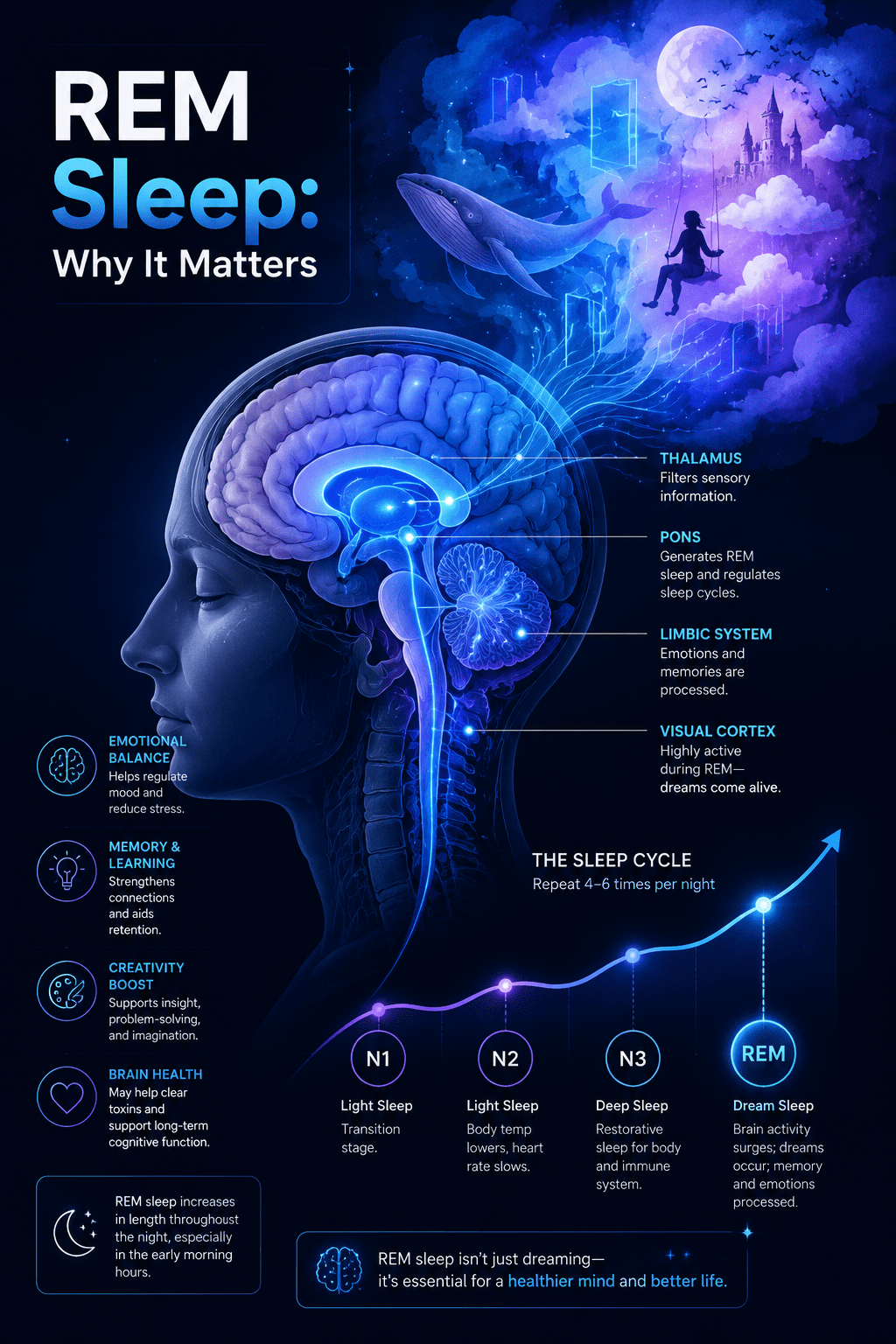
REM – rapid eye movement – sleep is the stage where most dreaming happens, and it plays a central role in memory consolidation, emotional regulation, and learning. Your brain during REM is almost as active as when you’re awake, which is why this stage is so different from the deep, slow-wave sleep that comes earlier in the night.
Here’s what the research actually says: REM sleep is not just about dreams. A 2017 study published in Science found that REM sleep is critical for processing emotional memories – essentially helping your brain take the edge off difficult experiences. If you wake up feeling emotionally raw or mentally foggy despite sleeping 7-8 hours, disrupted REM is often part of the explanation.
REM also supports:
- Procedural memory – skills you’ve practiced, from typing to playing an instrument
- Creative thinking – the brain makes unusual connections during REM that it doesn’t during wakefulness
- Mood regulation – consistent REM deprivation is strongly linked to anxiety and depression
The reason this matters is that most people focus on total sleep hours without realizing that the quality of those hours – specifically how much time is spent in each stage – is just as important.
How Much REM Sleep Do Adults Actually Need Each Night
Most adults need 90-120 minutes of REM sleep per night, which works out to roughly 20-25% of a 7-8 hour sleep period. The Sleep Foundation puts the typical range at 20-25% of total sleep time for healthy adults.
REM sleep doesn’t arrive in one block. It comes in cycles, each lasting roughly 90 minutes, with each successive cycle containing more REM and less deep sleep. This is why the last two hours of your night are disproportionately REM-rich. If you’re sleeping six hours instead of eight, you’re not just losing two hours of sleep – you’re losing the hours that were most likely to be REM.
If you’ve been dealing with this for a while, you may have noticed that you feel worse after six hours than the math would suggest. That’s exactly why.
Signs That You’re Not Getting Enough REM Sleep
You don’t need a sleep tracker to suspect your REM is suffering. The signs show up during the day, not just at night.
Common signs of REM deficiency:
- Waking up feeling emotionally flat or irritable, even after a full night
- Difficulty remembering dreams (not everyone remembers them, but a complete absence can be a signal)
- Struggling to retain new information or skills
- Heightened anxiety or emotional reactivity during the day
- Brain fog that doesn’t lift until mid-morning
- Vivid, intense dreams when you finally do sleep in – this is REM rebound, your brain catching up
It’s not just you if you’ve been told your sleep looks “fine” on paper but you still feel wrecked. Total hours don’t tell the whole story. If any of this sounds familiar, it may be worth looking at what’s actually disrupting your sleep architecture.
If you’re experiencing persistent sleep problems, consider taking this free, anonymous assessment: Take this insomnia test – evaluate how you’ve been feeling over the past two weeks. It’s free and takes only a few minutes.
How Alcohol Impacts REM Sleep Stages
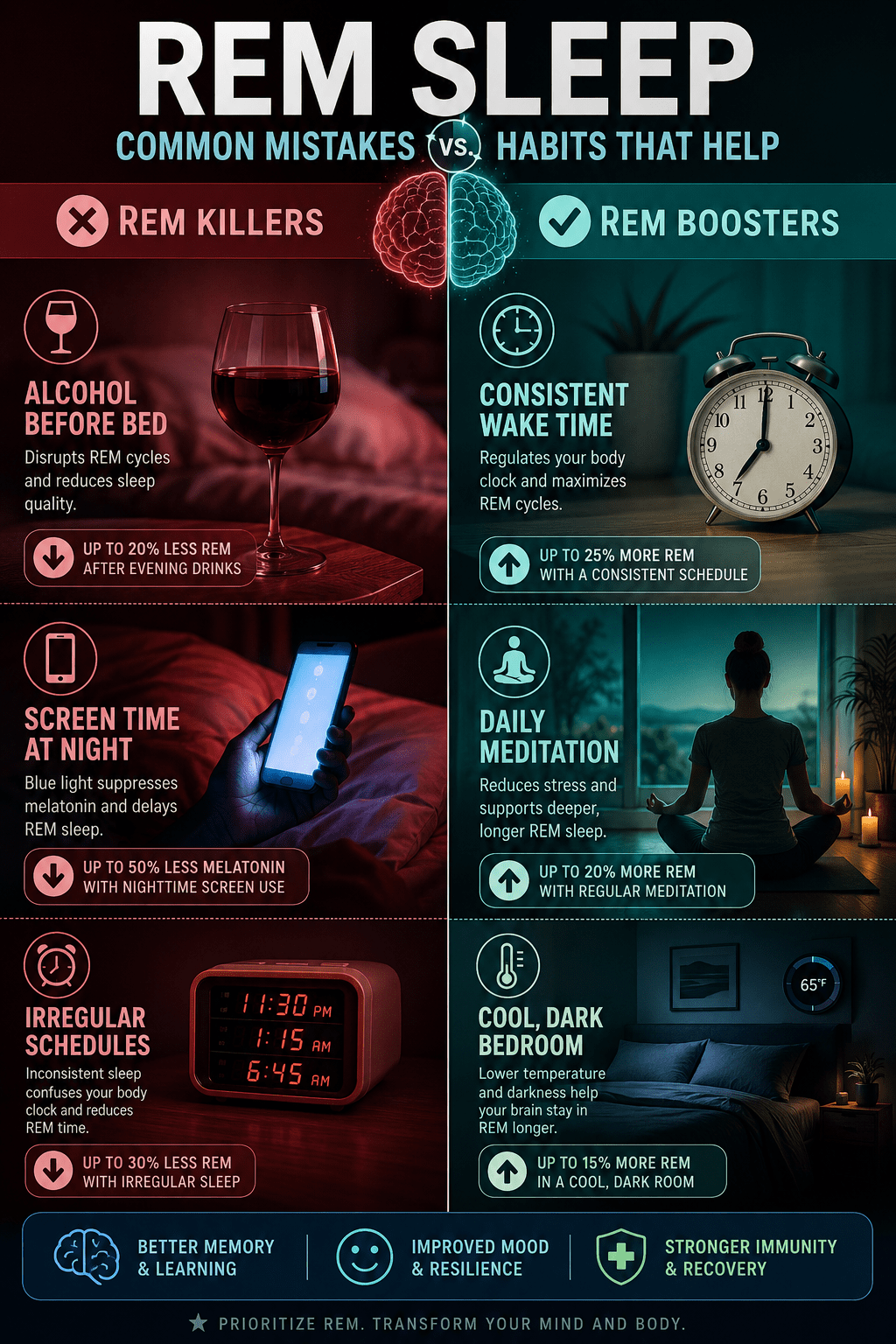
Alcohol is one of the most effective REM suppressants available without a prescription – and most people don’t realize it. Even one or two drinks in the evening can reduce REM sleep in the first half of the night by a significant margin.
Here’s what happens: alcohol increases slow-wave sleep early in the night, which can make you feel like you fell asleep faster and slept more deeply. But as your body metabolizes the alcohol in the second half of the night, sleep becomes fragmented and REM is suppressed. A 2013 review in Alcoholism: Clinical and Experimental Research found that alcohol reduced REM sleep in a dose-dependent way – more drinks, more suppression.
The honest version is that a glass of wine to “wind down” is trading short-term sedation for worse sleep quality overall. If you’re serious about how to improve REM sleep, reducing or eliminating evening alcohol is one of the highest-impact changes you can make.
Common Mistakes People Make That Reduce REM Sleep
Most people who struggle with sleep are already doing the basics – dark room, no caffeine after 2pm, maybe some melatonin. The mistakes that actually cost you REM are less obvious.
The biggest ones:
- Irregular wake times. Sleeping in on weekends feels like recovery, but it shifts your circadian rhythm and disrupts the timing of your REM cycles. Your wake time anchors your entire sleep architecture. Keep it consistent, even on days off.
- Cutting sleep short chronically. Six hours might feel manageable, but you’re consistently losing the most REM-dense portion of your night.
- Using sleep aids that suppress REM. Many prescription sleep medications – particularly benzodiazepines and some antihistamines – reduce REM sleep even while increasing total sleep time. If you’re on a sleep medication and still waking unrefreshed, this is worth discussing with your doctor.
- Stress carried into bed. Elevated cortisol and an activated nervous system at bedtime fragment sleep and reduce REM. This isn’t about “relaxing more” – it’s a physiological issue that needs a real strategy.
- Eating large meals late. Digestion raises core body temperature, which works against the drop in temperature your body needs to enter and maintain REM.
For more on what’s actually disrupting your sleep, this breakdown of common sleep problem causes is worth reading.
Can Meditation or Breathing Exercises Help Increase REM Sleep
Yes – and this is one of the more well-supported natural approaches. Meditation and slow breathing exercises reduce cortisol and activate the parasympathetic nervous system, which creates conditions that support deeper, more stable sleep cycles including REM.
A 2015 study published in JAMA Internal Medicine found that mindfulness meditation significantly improved sleep quality in older adults with moderate sleep disturbances. The mechanism isn’t magic – lower arousal at bedtime means fewer micro-awakenings during the night, which means your sleep cycles can complete more fully.
In practice this means: a 10-15 minute breathing or body scan practice before bed, done consistently, can improve REM over weeks. The 4-7-8 breathing method (inhale 4 counts, hold 7, exhale 8) is worth trying if you haven’t. It’s not a quick fix, but it works by addressing the nervous system activation that fragments sleep in the first place.
If overthinking is the main thing keeping you awake, this guide to quieting a racing mind at night covers specific techniques that go beyond basic breathing.

Are There Specific Foods That Naturally Boost REM Sleep Quality
Certain foods support the neurotransmitters and hormones involved in sleep cycling, though food alone won’t fix a fragmented sleep pattern. The most relevant ones are those that support serotonin and melatonin production.
Foods with evidence behind them:
- Tart cherries – one of the few natural food sources of melatonin. A small study in the European Journal of Nutrition (2012) found tart cherry juice increased sleep time and efficiency.
- Kiwi fruit – two kiwis an hour before bed was associated with improved sleep onset and duration in a 2011 study from Asia Pacific Journal of Clinical Nutrition.
- Walnuts – contain tryptophan, melatonin, and serotonin precursors
- Fatty fish – high in vitamin D and omega-3s, both linked to serotonin regulation
- Magnesium-rich foods – dark leafy greens, pumpkin seeds, dark chocolate – magnesium supports GABA activity, which calms the nervous system
What doesn’t help: large meals, high-sugar foods, or anything that spikes blood sugar before bed. Blood sugar crashes during the night are a common and underappreciated cause of 3am wake-ups.
Best Supplements for Improving REM Sleep Cycles
The supplement market for sleep is enormous and mostly overpromised. A few have actual evidence behind them for supporting sleep architecture specifically.
Worth considering:
- Magnesium glycinate (200-400mg before bed) – supports GABA, reduces cortisol, and has a good safety profile. This is the one I’ve found most consistently helpful personally. Start low.
- Low-dose melatonin (0.5-1mg, not 5-10mg) – most people take too much. Low doses signal your circadian rhythm without suppressing your natural melatonin production. Best used for timing issues, not as a sedative.
- L-theanine (100-200mg) – an amino acid found in green tea that promotes calm without sedation. Some evidence for improving sleep quality without affecting REM negatively.
- Ashwagandha – adaptogen with some evidence for reducing cortisol and improving sleep quality in stressed adults. A 2019 study in Medicine found it improved sleep quality and mental alertness in adults with insomnia.
Medical disclaimer: Supplements are not regulated the same way as medications. Talk to your doctor before adding any supplement, especially if you take prescription medications or have underlying health conditions.
If you’re unsure whether your sleep issues go beyond what supplements can address, this free insomnia test can help you evaluate what you’ve been experiencing over the past two weeks. It’s anonymous and takes only a few minutes.
Can Exercise Timing Impact REM Sleep Duration
Exercise improves sleep quality overall, including REM sleep – but timing matters more than most people realize. Regular aerobic exercise has been shown to increase slow-wave sleep and, over time, improve REM sleep quality.
The issue is intensity and timing. Vigorous exercise within 2-3 hours of bedtime raises core body temperature and elevates cortisol and adrenaline, which can delay sleep onset and fragment early sleep cycles. A 2019 meta-analysis in Sports Medicine found that late-night high-intensity exercise did delay sleep onset in some individuals, though the effect varied.
The practical rule: morning or early afternoon exercise is best for sleep. If evening is your only option, keep it moderate – a walk, yoga, or light strength work – rather than high-intensity cardio.
This is what worked for me: shifting my runs from 8pm to 6am made a noticeable difference in how rested I felt, even before I changed anything else.
How Do Age and Gender Affect REM Sleep Patterns
REM sleep naturally decreases with age. Infants spend about 50% of sleep in REM. Adults average 20-25%. By age 65-70, that figure drops further, and the cycles become shorter and more fragmented. This is a normal part of aging, not a disorder.
Gender also plays a role. Research suggests women tend to get slightly more REM sleep than men on average, though women are also more likely to report insomnia and sleep disturbances – particularly around hormonal shifts like menstruation, pregnancy, and menopause. Hormonal changes can significantly disrupt sleep architecture, and this is often underdiagnosed.
For younger adults, the main driver of REM reduction isn’t age – it’s lifestyle. Stress, alcohol, irregular schedules, and chronic sleep restriction are doing far more damage than the natural aging process at 30 or 35.
Do Sleep Tracking Devices Accurately Measure REM Sleep
Sleep trackers can estimate REM sleep but are not clinically accurate. Consumer devices like Fitbit, Oura Ring, and Apple Watch use heart rate variability, movement, and sometimes skin temperature to infer sleep stages. They’re not measuring brain activity, which is what a clinical polysomnography test actually does.
A 2017 study in the Journal of Clinical Sleep Medicine found that consumer wearables had reasonable accuracy for distinguishing sleep from wakefulness, but were much less reliable at identifying specific sleep stages including REM.
That said, trackers are useful for spotting trends. If your tracker consistently shows low REM on nights you drank alcohol or went to bed late, that’s a real signal worth paying attention to – even if the exact minutes are off. Use them as a rough guide, not a medical measurement.
Natural Ways to Remember More of Your REM Dreams
Dream recall is a rough proxy for REM sleep quality – though not a perfect one. Some people naturally remember fewer dreams even with healthy REM.
To improve dream recall:
- Keep a notebook by your bed and write down anything you remember immediately on waking, before you check your phone
- Set your alarm 30 minutes earlier than usual a few times a week – you’ll often wake during a REM cycle
- Avoid alcohol, which suppresses REM and makes dream recall worse
- Stay still for a minute when you first wake up – movement and distraction quickly erase dream memory
This is less about the dreams themselves and more about what consistent recall tells you: that you’re completing REM cycles and waking from them naturally.
The 11 Habits That Actually Help Improve REM Sleep
Here’s the consolidated list – ranked roughly by impact:
- Keep a consistent wake time – even on weekends. This is the foundation.
- Protect your final 2 hours of sleep – don’t set an early alarm unless necessary.
- Cut or eliminate evening alcohol – especially within 3 hours of bed.
- Build a wind-down routine that lowers cortisol before sleep.
- Try magnesium glycinate (200-400mg) before bed.
- Exercise regularly – but finish intense workouts by early evening.
- Eat sleep-supporting foods – tart cherries, kiwi, walnuts, fatty fish.
- Use low-dose melatonin (0.5-1mg) if your circadian timing is off.
- Practice slow breathing or meditation for 10-15 minutes before bed.
- Avoid large meals and blood sugar spikes in the 2 hours before sleep.
- Address stress and anxiety directly – not just at bedtime, but during the day.
For a deeper look at the full picture of sleep hygiene, this guide to night habits that make falling asleep easier covers the foundational layer that makes all of the above work better.
And if you’re still lying awake despite doing everything right, understanding why you can’t sleep even when you’re tired might point to something more specific going on.
FAQ
Can you make up for lost REM sleep?
Partially. Your brain will prioritize REM on recovery nights – this is called REM rebound. But chronic REM deprivation over weeks or months isn’t fully reversible through a single long sleep. Consistent improvement matters more than occasional catch-up.
Does napping increase REM sleep?
Short naps (20-30 minutes) mostly contain light sleep. Longer naps of 90 minutes can include a full sleep cycle with REM. If you’re severely REM-deprived, a longer nap may help – but it can also make nighttime sleep harder to initiate.
Is it normal to not remember dreams?
Yes. Dream recall varies widely between individuals and doesn’t directly indicate REM quality. Some people with healthy REM simply don’t remember dreams consistently.
Can anxiety cause low REM sleep?
Yes. Anxiety elevates cortisol and keeps the nervous system in a state of arousal that fragments sleep cycles and reduces REM. Treating anxiety – through therapy, stress management, or medication if needed – often improves sleep architecture.
How long does it take to improve REM sleep with lifestyle changes?
Most people see measurable improvement in sleep quality within 2-4 weeks of consistent changes. Sleep architecture responds relatively quickly to behavioral shifts, especially around wake time consistency and alcohol reduction.
Does melatonin directly increase REM sleep?
No – melatonin primarily helps regulate circadian timing, not sleep stage composition. Low doses (0.5-1mg) can help shift your sleep window, which indirectly protects REM by ensuring you complete your full sleep cycle.
Can sleep medications reduce REM?
Yes. Benzodiazepines, some antihistamines (like diphenhydramine), and certain antidepressants can suppress REM sleep. If you’re using a sleep aid and waking unrefreshed, this is worth discussing with your doctor.
Is REM sleep the most important sleep stage?
All stages serve different functions. Deep slow-wave sleep is critical for physical recovery and immune function. REM is critical for emotional regulation, memory, and learning. You need both – they’re not competing.
Conclusion
If you’ve been trying to figure out how to improve REM sleep and hitting a wall, the honest version is that it usually comes down to a few high-impact factors: alcohol, sleep timing, stress, and whether you’re actually giving yourself enough total sleep to reach the REM-rich final hours of the night.
Start with wake time consistency and alcohol reduction. Add a wind-down practice. Consider magnesium glycinate if you haven’t. These aren’t exciting answers, but they’re the ones with the most evidence behind them – and they compound over time.
You don’t have to overhaul everything at once. Pick one change, run it for two weeks, and see what shifts. Sleep responds to consistency more than perfection.
If you’re still struggling after making these changes, it may be time to look at whether anxiety, a sleep disorder, or an underlying health issue is driving the problem. Understanding why you can’t sleep is sometimes the most important first step.
And if you want to get a clearer picture of what you’re dealing with, this free anonymous insomnia test is a good place to start. It takes a few minutes and asks you to reflect on how you’ve been feeling over the past two weeks – no signup required.
References
- Walker, M. (2017). Why We Sleep: Unlocking the Power of Sleep and Dreams. Scribner.
- Vandekerckhove, M., & Cluydts, R. (2010). The emotional brain and sleep: An intimate relationship. Sleep Medicine Reviews, 14(4), 219-226. https://pubmed.ncbi.nlm.nih.gov/20359916/
- Ebrahim, I. O., Shapiro, C. M., Williams, A. J., & Fenwick, P. B. (2013). Alcohol and sleep I: Effects on normal sleep. Alcoholism: Clinical and Experimental Research, 37(4), 539-549. https://pubmed.ncbi.nlm.nih.gov/23347102/
- Black, D. S., O’Reilly, G. A., Olmstead, R., Breen, E. C., & Irwin, M. R. (2015). Mindfulness meditation and improvement in sleep quality and daytime impairment among older adults with sleep disturbances. JAMA Internal Medicine, 175(4), 494-501. https://pubmed.ncbi.nlm.nih.gov/25686304/
- Howatson, G., Bell, P. G., Tallent, J., Middleton, B., McHugh, M. P., & Ellis, J. (2012). Effect of tart cherry juice on melatonin levels and enhanced sleep quality. European Journal of Nutrition, 51(8), 909-916. https://pubmed.ncbi.nlm.nih.gov/22038497/
- Cheah, K. L., Norhayati, M. N., Husniati Yaacob, L., & Abdul Rahman, R. (2021). Effect of Ashwagandha (Withania somnifera) extract on sleep: A systematic review and meta-analysis. PLOS ONE, 16(9). https://pubmed.ncbi.nlm.nih.gov/34559859/
- Stutz, J., Eiholzer, R., & Spengler, C. M. (2019). Effects of evening exercise on sleep in healthy participants. Sports Medicine, 49(2), 269-287. https://pubmed.ncbi.nlm.nih.gov/30374942/
- Kahawage, P., Jumabhoy, R., Hamill, K., de Zambotti, M., & Drummond, S. P. A. (2020). Validity, potential clinical utility, and comparison of consumer and research-grade activity trackers in insomnia disorder. Journal of Sleep Research, 29(1). https://pubmed.ncbi.nlm.nih.gov/31131964/
- Sleep Foundation. (2023). REM Sleep: What It Is and Why It Matters. https://www.sleepfoundation.org/stages-of-sleep/rem-sleep



![7 Best Sleep Positions That Finally End Morning Back & Neck Pain Last updated: July 12, 2026 Quick Answer: The best sleep positions for back and neck pain are side sleeping with a pillow between your knees and back sleeping with a pillow under your knees. Both keep your spine in a neutral alignment, which reduces pressure on muscles and joints overnight. Stomach sleeping is the one position most consistently linked to worsening pain, and it's worth avoiding if you can. Key Takeaways Side sleeping with knee support is the most widely recommended position for lower back pain [1] Back sleeping with a pillow under the knees maintains the spine's natural curve [1] Stomach sleeping strains the neck and lumbar spine - it's the position to avoid [1] Your pillow height matters as much as your position - wrong pillow height causes neck pain regardless of how you sleep [2] Left-side sleeping is the best position during pregnancy and also helps with acid reflux Snoring and sleep apnea improve significantly with side sleeping compared to back sleeping It takes most people 2-4 weeks to adjust to a new sleep position consistently Mattress firmness should match your sleep position - side sleepers need softer, back sleepers need medium-firm Waking up with neck pain is almost always a pillow problem, not just a position problem [3] You can train yourself to stay in a new position using body pillows or rolled towels as physical barriers What Are the Best Sleep Positions for Back Pain? Side sleeping with a pillow between your knees is the single most recommended position for back pain, followed closely by back sleeping with a pillow under your knees. Both positions reduce spinal compression and help your muscles actually relax overnight instead of working to compensate for poor alignment. Here's what the research actually says: according to the Mayo Clinic, sleeping on your side with your legs slightly drawn toward your chest and a pillow between your knees helps align the spine, pelvis, and hips, taking pressure off the lower back [1]. Back sleeping with a pillow under the knees maintains the natural lumbar curve and lets the back muscles decompress [1]. The honest version is that there's no single "perfect" position for everyone. Back pain has different causes - disc issues, muscle tightness, SI joint problems - and what helps one person may not help another. But these two positions are the safest starting point for most people. The 7 positions, ranked from most to least back-friendly: Side sleeping with pillow between knees - best for most lower back pain Back sleeping with pillow under knees - best for maintaining lumbar curve Fetal position (side sleeping, knees drawn up) - good for disc herniation Side sleeping with full body pillow - reduces hip and shoulder pressure Back sleeping flat - neutral but less effective than with knee support Reclined back sleeping (adjustable base or wedge) - helpful for spinal stenosis Stomach sleeping with hip pillow - last resort if you can't change positions [1] Side Sleeping vs Back Sleeping - Which Is Actually Better? For most people, side sleeping wins - but back sleeping is better for specific conditions like sleep apnea or facial pressure issues. Side sleeping is the most common position worldwide, and it has real advantages: it reduces snoring, is the safest option during pregnancy, and keeps the airway more open. The downside is that it can create shoulder and hip pressure if your mattress is too firm, and it can cause neck pain if your pillow isn't the right height. Back sleeping is better for keeping your face and neck in neutral alignment, which is why some physical therapists prefer it for neck pain specifically [3]. The problem is that it worsens snoring and is actively dangerous for people with untreated sleep apnea. In practice this means: if you snore, have acid reflux, or are pregnant, side sleeping is the better choice. If you have chronic neck pain and don't snore, back sleeping with proper pillow support may serve you better. How Do I Know If My Sleep Position Is Causing Neck Pain? If your neck pain is worse in the morning and improves within an hour of getting up, your sleep position - or your pillow - is almost certainly the cause. The pattern matters here. Pain that's worst right after waking and fades during the day points directly to something happening during sleep. Pain that builds throughout the day is more likely posture or tension-related. Signs your position is the problem: Stiffness on one side only (usually the side you sleep on) Pain that's worse after longer sleep, not less Headaches at the base of the skull in the morning Numbness or tingling in your arm or hand when you wake up Harvard Health notes that the wrong pillow is one of the most overlooked causes of chronic neck pain - specifically, a pillow that's too high or too low forces your neck into a bent position for hours [2]. Even a good sleep position won't help if your pillow is working against you. If you've been dealing with this for a while and nothing seems to fix it, the pillow is usually where I'd look first. I spent months adjusting my sleep position before realizing my pillow was the actual problem. What's the Best Pillow for Side Sleepers? Side sleepers need a firmer, higher pillow that fills the gap between the shoulder and the head - typically 4 to 6 inches, depending on shoulder width. The reason this matters is that when you lie on your side, your shoulder pushes your head upward. A pillow that's too flat lets your head drop, straining the neck muscles on the upper side. A pillow that's too thick pushes your head up and strains the opposite side. What to look for: Height: Should keep your head level with your spine - not tilted up or down Firmness: Medium-firm to firm so it doesn't compress flat under your head's weight Material: Memory foam or latex holds its shape better than down or polyester fill Width: Wide enough that shifting slightly doesn't take you off the pillow The Sleep Foundation recommends that side sleepers also consider a body pillow between the knees to prevent the hips from rotating and pulling the spine out of alignment [3]. This is one of those small changes that makes a noticeable difference faster than you'd expect. Can Sleeping on Your Stomach Cause Problems? Yes - stomach sleeping is the most problematic position for both neck and back health. It forces your neck to rotate to one side for hours, compresses the lumbar spine, and puts your back muscles in a shortened, strained position all night [1]. Most people who struggle with morning stiffness and can't figure out why are stomach sleepers. It's not just you - this position is genuinely hard on the body. If you can't break the habit, the Mayo Clinic suggests placing a pillow under your hips and lower abdomen - not under your head - to reduce the arch in your lower back [1]. Skip the head pillow entirely if you're a stomach sleeper, or use a very thin one, to reduce how far your neck has to rotate. Worth trying if you're a committed stomach sleeper: a body pillow placed along your side can give you the pressure sensation you're used to while gradually shifting you toward a side-sleeping position. What Sleep Position Is Best for Snoring? Side sleeping is the most effective position for reducing snoring. Back sleeping causes the tongue and soft palate to fall backward into the airway, which is what creates the snoring sound. The difference can be significant. For people with mild to moderate snoring, switching to side sleeping alone sometimes eliminates it entirely. For people with obstructive sleep apnea, it reduces severity but isn't a substitute for a CPAP or other treatment. If you keep rolling onto your back at night: Sew a tennis ball into the back of a sleep shirt (old trick, but it works) Use a body pillow behind your back as a barrier Try a wedge pillow that elevates your upper body slightly Consider a positional sleep device designed specifically for this If snoring is affecting your sleep quality or your partner's, it's worth checking out the silent signs of a sleep disorder - snoring is sometimes the first visible sign of something that needs medical attention. Best Sleep Position for Pregnancy Left-side sleeping is the recommended position during pregnancy, particularly in the second and third trimesters. It improves circulation to the fetus, reduces pressure on the liver, and helps with kidney function. The reason left side specifically matters is that the inferior vena cava - the large vein that returns blood to the heart - runs along the right side of the spine. Lying on the left side keeps the uterus from compressing it as pregnancy progresses. A full-length body pillow or a pregnancy pillow that supports both the belly and the back makes left-side sleeping significantly more comfortable. If you're struggling with sleep during pregnancy more broadly, the insomnia during pregnancy guide covers what actually helps beyond just position. Sleep Positions to Avoid If You Have Arthritis For arthritis, the position to avoid depends on which joints are affected - but stomach sleeping is almost universally problematic, and sleeping with joints in a bent, compressed position worsens morning stiffness. General rules by joint: Hip arthritis: Avoid side sleeping on the affected hip - use a pillow between knees to reduce joint compression Knee arthritis: Avoid sleeping with knees fully bent - a small pillow under the knees in back sleeping helps Shoulder arthritis: Avoid sleeping on the affected shoulder - back sleeping or opposite-side sleeping is better Spinal arthritis (spondylitis): Back sleeping with minimal pillow height keeps the spine in the most neutral position The goal with arthritis is to keep affected joints in a mid-range, unloaded position overnight. Joints that are compressed or held at end-range for hours will be stiffer and more painful in the morning. What Sleep Position Helps With Acid Reflux? Left-side sleeping is the best position for acid reflux. It keeps the stomach below the esophagus, which makes it physically harder for stomach acid to travel upward. Back sleeping with the head elevated (using a wedge pillow, not just stacking pillows) is the second-best option. Elevating the upper body by 6 to 8 inches reduces reflux episodes significantly for most people. Right-side sleeping is the worst position for reflux - it relaxes the lower esophageal sphincter and makes reflux more likely. If you're waking up with a burning sensation in your chest or throat, your sleep position is worth examining before anything else. How Long Does It Take to Adjust to a New Sleep Position? Most people need 2 to 4 weeks to feel comfortable in a new sleep position, and up to 8 weeks before it becomes their default. The first few nights are usually the hardest - you'll wake up having rolled back to your old position, which is normal. The adjustment is partly physical (your body adapting to different pressure points) and partly habitual. Using a body pillow or a rolled towel as a physical barrier speeds up the process by making it uncomfortable to roll back. If you're also struggling to fall asleep during the transition, it's worth reading through these science-backed fixes for feeling tired but unable to sleep - position changes sometimes temporarily disrupt sleep onset before things improve. How to Train Yourself to Sleep on Your Back Back sleeping is one of the harder positions to adopt if you're a natural side or stomach sleeper, but it's trainable with the right setup. Step-by-step approach: Place a pillow under your knees before you get in bed - this makes back sleeping immediately more comfortable Use two body pillows, one on each side, to prevent rolling Keep your arms at your sides or on your chest - not above your head, which strains the shoulders [3] Start by trying to fall asleep on your back, even if you end up moving during the night Gradually, your body will spend more time in the position as it becomes familiar It's not just about willpower. The physical setup matters more than the intention. Best Mattress Firmness for Different Sleep Positions Your mattress firmness should match your primary sleep position. Using the wrong firmness is one of the most common reasons people wake up with pain even when their position is technically correct. Sleep Position Recommended Firmness Why Side sleeper Soft to medium (3-5/10) Allows shoulder and hip to sink in, keeping spine level Back sleeper Medium to medium-firm (5-7/10) Supports lumbar curve without excessive sinking Stomach sleeper Firm (7-8/10) Prevents hips from sinking and arching the spine Combination sleeper Medium (5/10) Balances needs across positions The reason this matters is simple: a side sleeper on a very firm mattress has their spine bowing upward because the shoulder and hip can't sink in. A back sleeper on a very soft mattress has their hips sinking too deep, which exaggerates the lumbar curve. Is It Bad to Sleep in the Same Position Every Night? Sleeping in the same position every night isn't inherently bad - as long as it's a good position. The problems arise when that position is stomach sleeping, or when you're sleeping on a surface that creates consistent pressure on the same joints. If you're a committed side sleeper, alternating sides periodically helps prevent shoulder and hip imbalances. Some people develop one-sided neck or shoulder tightness from always sleeping on the same side. For people who wake up stiff and sore, the issue is usually not the position itself but the combination of position, pillow, and mattress firmness. Fixing one without the others often doesn't solve the problem. 🔎 If you're waking up exhausted regardless of how you sleep, it may be worth looking deeper. Take this free, anonymous insomnia test to evaluate your symptoms over the past two weeks - it only takes a few minutes and can help you understand what's actually going on. Why Do I Wake Up With Neck Pain? Morning neck pain is almost always caused by one of three things: a pillow that's the wrong height, sleeping on your stomach, or sleeping with your arm under your head. The pillow height issue is the most common and the most overlooked. Harvard Health specifically notes that a pillow that doesn't support the natural curve of the neck - whether too high or too flat - puts the neck in a strained position for the entire night [2]. For back sleepers, a rounded, contoured pillow under the neck with a flatter section for the head works better than a standard flat pillow [2]. For side sleepers, the pillow needs to be thick enough to keep the head level with the spine. Most standard pillows are too thin for side sleeping, which is why so many side sleepers end up with one-sided neck pain. The Sleep Foundation also points out that back sleepers should keep their hands at their sides or on their chest - not raised above the head, which rotates and strains the neck and upper back [3]. If you've sorted out your pillow and position and still wake up with neck pain, applying heat or cold to the neck for 10 to 15 minutes before bed can help reduce existing tension before it compounds overnight [3]. Conclusion Morning back and neck pain isn't something you just have to accept. Most of the time, it comes down to a few specific, fixable things: your sleep position, your pillow height, and your mattress firmness. The most practical starting points: Switch to side sleeping with a pillow between your knees, or back sleeping with a pillow under your knees Check your pillow height - it should keep your head level with your spine, not tilted in either direction If you're a stomach sleeper, place a pillow under your hips and work gradually toward side sleeping Give any new position at least 3 to 4 weeks before deciding it doesn't work This is what worked for me: fixing the pillow height made more difference than any position change I tried. I'd been adjusting everything else for months before I realized the pillow I'd been using for years was too flat for side sleeping. If you're dealing with pain that doesn't improve with position changes, it's worth looking at the bigger picture. Poor sleep quality overall - not just position - affects how much pain you feel. You might find it useful to look at how to improve deep sleep or work through a proper bedtime routine for adults that helps your nervous system actually wind down before bed. And if you're not sure whether what you're experiencing goes beyond position-related discomfort, these 15 insomnia tips cover the situations where sleep problems run deeper than any single fix. You don't have to fall asleep perfectly every night. You just have to rest - and making your sleep position work for your body instead of against it is one of the more reliable ways to get there. 🔎 Still waking up exhausted no matter what you try? Take this free anonymous insomnia test - it evaluates your symptoms over the past two weeks and takes only a few minutes. It's a useful first step in understanding what's actually driving your sleep problems. Medical disclaimer: The information in this article is for educational purposes only and does not constitute medical advice. If you have chronic pain, a diagnosed sleep disorder, or symptoms that aren't improving, please consult a qualified healthcare provider. FAQ Q: What is the single best sleep position for lower back pain?Side sleeping with a pillow between the knees is the most consistently recommended position for lower back pain. It aligns the spine, hips, and pelvis and reduces pressure on the lumbar region [1]. Q: Is it okay to sleep on your back every night?Yes, back sleeping is one of the healthiest positions for spinal alignment. The key is using a pillow under the knees to maintain the natural lumbar curve. It's not recommended for people with untreated sleep apnea or heavy snorers [1]. Q: Why does my neck hurt more on the side I sleep on?This usually means your pillow is too thin. When side sleeping, the pillow needs to fill the space between your shoulder and your head. If it's too flat, your head drops toward the mattress, straining the neck muscles on the upper side [2]. Q: Can the wrong mattress cause back pain even with a good sleep position?Yes. A mattress that's too soft allows the hips to sink too far, misaligning the spine regardless of position. A mattress that's too firm creates pressure points on the hips and shoulders. Matching firmness to your sleep position matters [3]. Q: What's the best sleep position for people with acid reflux?Left-side sleeping is best for acid reflux. It keeps the stomach positioned below the esophagus, making it harder for acid to travel upward. Right-side sleeping is the worst position for reflux. Q: How do I stop rolling onto my back when I'm trying to side sleep?Use a body pillow behind your back as a physical barrier. You can also try the tennis ball method - sewing a tennis ball into the back of a sleep shirt makes rolling uncomfortable enough to disrupt the habit within a few weeks. Q: Is stomach sleeping always bad?It's the most problematic position for most people, particularly for neck and lower back health. If you can't change the habit, placing a pillow under the hips and lower abdomen reduces the strain significantly [1]. Q: What pillow is best for back sleepers with neck pain?A contoured or cervical pillow that supports the neck's natural curve while keeping the head relatively flat. Harvard Health recommends a rounded pillow under the neck with a flatter section for the head, rather than a single thick pillow that pushes the head forward [2]. Q: Does sleep position affect snoring?Yes, significantly. Back sleeping causes the tongue and soft palate to fall backward into the airway. Side sleeping keeps the airway more open and reduces snoring for most people. Q: How long before a new sleep position stops feeling uncomfortable?Most people adjust within 2 to 4 weeks. The first few nights are the hardest. Using pillows as physical barriers and being consistent about starting in the new position speeds up the process. References [1] Sleeping Positions for Back Pain - https://www.mayoclinic.org/diseases-conditions/back-pain/in-depth/sleeping-positions/art-20546852 [2] Say Good Night to Neck Pain - https://www.health.harvard.edu/pain/say-good-night-to-neck-pain [3] Best Sleeping Position for Neck Pain - https://www.sleepfoundation.org/sleeping-positions/best-sleeping-position-for-neck-pain 🔎 Not sure if your sleep issues go beyond position? Take this free, anonymous insomnia test - evaluate how you've felt over the past two weeks and get a clearer picture of what might be keeping you from real rest. Meta Title: 7 Best Sleep Positions to End Back & Neck Pain (2026) Meta Description: Waking up stiff and sore? These 7 best sleep positions are backed by research and fix the real causes of morning back and neck pain. Find out which works for you. Tags: best sleep positions, sleep positions for back pain, neck pain sleep position, side sleeping benefits, back sleeping tips, sleep posture, pillow for side sleepers, acid reflux sleep position, pregnancy sleep position, snoring sleep position, mattress firmness, insomnia tips](https://napsology.com/wp-content/uploads/2026/07/slot-0-1783848052926-500x330.png)