Post Disclaimer
This post contains affiliate links. If you buy something through these links, I may earn a small commission at no extra cost to you. Full disclosure.
This article is for informational purposes only and does not constitute medical advice. Always consult a healthcare professional for personal health concerns. Full disclaimer.
Last updated: July 14, 2026
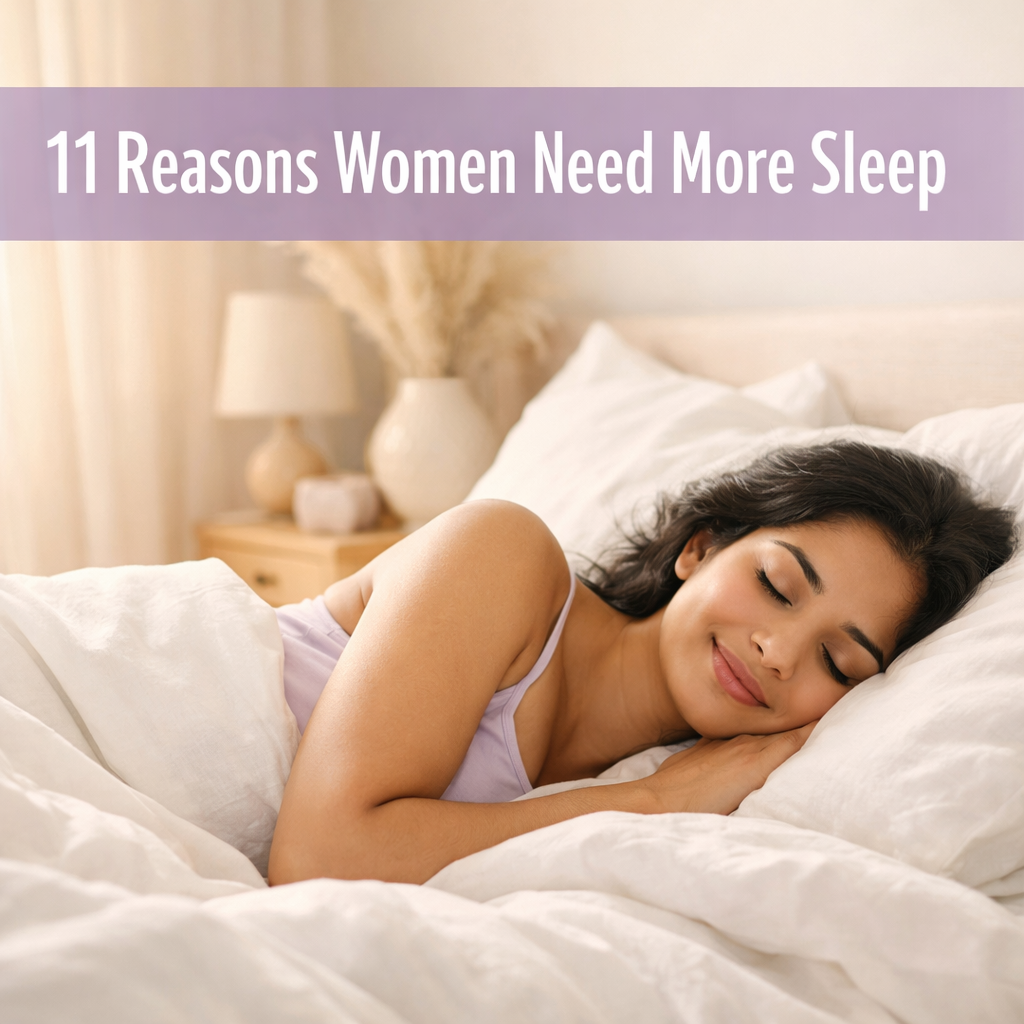
Quick Answer: Women need more sleep than men primarily because of hormonal fluctuations, higher rates of anxiety and depression, greater cognitive load from multitasking, and a significantly higher risk of sleep disorders like insomnia and restless leg syndrome. The official recommendation is 7-9 hours for adults, but many women genuinely function better closer to 8-9 hours – and that’s not laziness, that’s biology [1][3].
Key Takeaways
- Women are 58% more likely to experience insomnia than men [2]
- Hormones like estrogen and progesterone directly alter sleep architecture throughout the month [6]
- Pregnancy, the menstrual cycle, and menopause each create distinct sleep disruptions
- Women average about 11 minutes more sleep per night than men – partly to compensate for worse sleep quality [4]
- Chronic sleep deprivation in women raises the risk of heart disease, depression, and immune dysfunction [3]
- Needing 9 hours as a woman is not abnormal – it can be a legitimate biological need
- Most sleep advice is based on research done primarily on men, which is part of why generic tips often fail women
Do Women Actually Need More Sleep Than Men, or Is That a Myth?
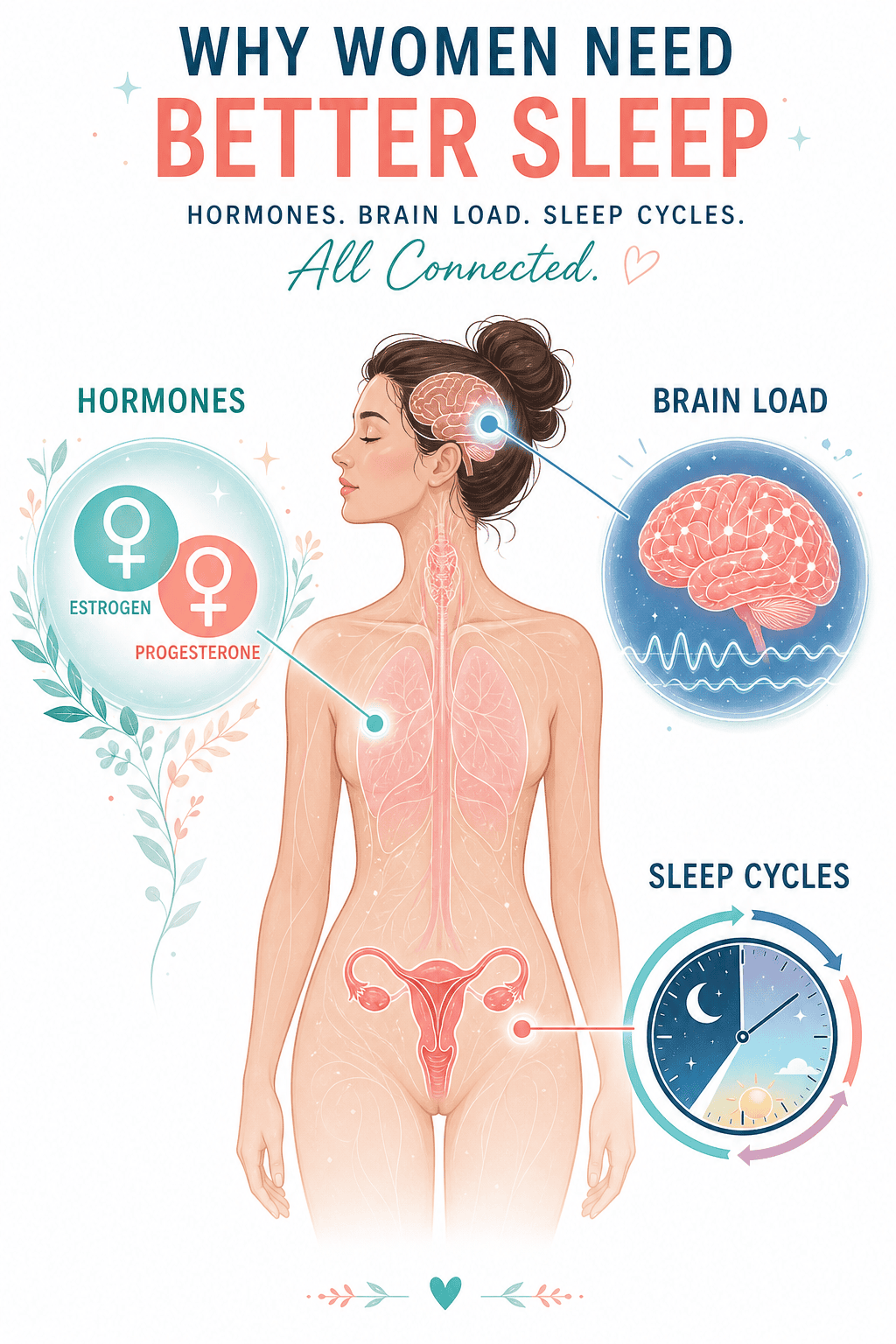
It’s not a myth – but it’s more nuanced than the headlines suggest. Women don’t need dramatically more sleep, but the evidence does point to a genuine difference in sleep need and sleep quality. On average, women sleep about 11 minutes longer per night than men, which sounds minor until you realize that extra time is often compensating for more fragmented, less restorative sleep [4].
Here’s what the research actually says: women experience more interruptions to their sleep architecture across their lifetime – from monthly hormonal shifts to pregnancy to menopause – and they’re nearly twice as likely to report insomnia symptoms [2]. So even when a woman gets the same number of hours as a man, she may be getting less actual restorative sleep within those hours.
The honest version is that “more sleep” isn’t always the answer. Better sleep quality often matters more than raw duration. But understanding why women’s sleep is disrupted more frequently is the first step to fixing it.
Why Do Women Need More Sleep – Hormones and Biology Explained
Estrogen and progesterone don’t just regulate reproduction – they directly influence how you sleep. Estrogen increases REM sleep and can shorten how long it takes to fall asleep. Progesterone has mild sedative properties, which sounds helpful, but it can also cause sleep fragmentation when levels drop [6].
These hormones fluctuate constantly – across a single month, across pregnancy, and across the transition into menopause. Each shift creates a different sleep challenge.
In practice this means your sleep isn’t just affected by stress or screen time. It’s being actively shaped by your hormonal environment, which changes week to week. That’s a layer of complexity that most generic sleep advice completely ignores.
The reason this matters is that if you’re tracking your sleep and noticing it gets worse at predictable points in the month, that’s not random. That’s your biology.
Does the Menstrual Cycle Affect How Much Sleep Women Need?
Yes – and significantly. About one in three women report sleep disturbances tied directly to their menstrual cycle, including trouble falling asleep, more nighttime waking, and less restorative sleep overall [1].
In the days before your period, progesterone drops sharply. That drop – combined with physical symptoms like cramps, bloating, and headaches – creates a perfect storm for broken sleep. Body temperature also rises slightly in the luteal phase (the two weeks before your period), which makes it harder to reach the deeper sleep stages your body needs most.
If you’ve been dealing with this for a while and haven’t connected the dots, try keeping a simple sleep log alongside your cycle. The pattern usually becomes obvious within two months.
Worth trying if your sleep worsens premenstrually: cooling your bedroom by 1-2 degrees, avoiding alcohol in the week before your period (it worsens sleep fragmentation), and being realistic that you may genuinely need an extra hour of rest during those days.
Do Pregnant Women Need More Sleep and Why?
Pregnancy is one of the most sleep-disruptive experiences a body can go through – and yes, the need for sleep increases, especially in the first and third trimesters.
In the first trimester, rising progesterone levels cause intense fatigue and a strong drive to sleep more. That’s not weakness – it’s your body allocating energy to rapid fetal development. By the third trimester, physical discomfort, frequent urination, restless leg syndrome (which spikes during pregnancy), and anxiety about birth all conspire to make sleep genuinely difficult to get even when you desperately need it [1].
I’ve spoken with enough people dealing with pregnancy insomnia to know that the standard advice – “sleep when the baby sleeps” – doesn’t help when you can’t actually fall asleep in the first place. If that’s where you are, the insomnia during pregnancy guide on this site covers specific, practical approaches that go beyond the basics.
Struggling with pregnancy-related sleep problems? Take this free, anonymous insomnia test to better understand what’s driving your sleep disruption. It takes about 2 minutes and evaluates how you’ve felt over the past two weeks.
How Does Menopause Affect Sleep Needs in Women?
Menopause is one of the most underreported causes of serious sleep disruption in women over 45. Hot flashes and night sweats are the obvious culprits – they can wake you up multiple times a night, fragmenting your sleep cycle so thoroughly that even 8 hours leaves you exhausted. But that’s not the whole picture.
Post-menopausal women have a 67% prevalence of obstructive sleep apnea – a rate that rivals men, despite sleep apnea being widely considered a “male” condition [3]. Estrogen and progesterone had been providing some protection against airway collapse during sleep. Once those hormones drop, that protection disappears.
The result is that many women in their 50s and 60s are walking around chronically sleep-deprived and being told it’s just aging. It’s not just aging. If you’re waking up unrefreshed, snoring more than you used to, or your partner has noticed you stopping breathing during sleep, that’s worth investigating with a sleep study – not dismissing.
Why Am I So Tired All the Time as a Woman?
If you’re exhausted despite getting enough hours, the issue is usually sleep quality, not quantity. Women are more prone to several conditions that destroy sleep quality without obviously interrupting it.
The most common culprits:
- Restless leg syndrome (RLS) – affects women more than men, causes an irresistible urge to move the legs at night
- Anxiety and depression – women are twice as likely as men to experience both, and roughly 80% of people with depression experience insomnia [3]
- Subclinical sleep apnea – often missed in women because the symptoms present differently (fatigue and depression rather than loud snoring)
- Iron deficiency – common in women of reproductive age, directly worsens sleep quality and RLS
- Cognitive overload – research suggests women tend to engage in more simultaneous mental task-switching, which may require more restorative sleep to process [4]
If you’ve been dealing with this for a while and nothing obvious explains it, it’s worth reading about what causes too much sleep and persistent tiredness – because sometimes “tired all the time” is a symptom of something fixable.
What Happens If Women Don’t Get Enough Sleep?
Sleep deprivation hits women harder than men in several specific ways. Women who consistently get less than 7 hours show higher markers of inflammation, greater cardiovascular risk, and more pronounced mood disruption than men with the same sleep deficit [3].
The mental health connection is particularly significant. Sleep deprivation worsens anxiety and depression – and since women are already twice as likely to experience both, chronic poor sleep creates a feedback loop that’s genuinely hard to break. Poor sleep worsens mood. Worse mood makes sleep harder. Repeat.
Physically, the consequences include weakened immune function, disrupted blood sugar regulation, increased cortisol (which further disrupts sleep), and – over the long term – elevated risk of cardiovascular disease.
You don’t have to fall asleep perfectly every night to avoid all of this. But consistently cutting yourself short by even 60-90 minutes accumulates into real physiological debt faster than most people realize. For a more detailed look at what this does to your brain specifically, the signs of sleep deprivation rewiring your brain article is worth reading.
How Much Sleep Do Women Need Per Night Compared to Men?
The official recommendation from the CDC and sleep researchers is 7-9 hours for all adults. But within that range, women tend to need the higher end – and many legitimately need 8.5-9 hours to function at their best [3][5].
Here’s a simple way to think about it:
| Sleep Duration | What It Means for Most Women |
|---|---|
| Less than 6 hours | Chronic deprivation territory – real health risk |
| 6-7 hours | Technically possible, but most women report worse mood and cognition |
| 7-8 hours | The functional minimum for many women |
| 8-9 hours | Where most women feel genuinely rested |
| 9+ hours consistently | Worth investigating – could signal depression, illness, or a sleep disorder |
Is it normal to need 9 hours as a woman? Yes – especially during hormonal transitions, high-stress periods, or if you’re recovering from chronic sleep debt. It becomes a concern only if you’re sleeping 9+ hours and still waking exhausted, which can indicate a sleep quality problem rather than a duration problem.
For a deeper look at individual sleep needs, how much sleep you actually need breaks down the factors that matter beyond just age.
Does Birth Control Affect How Much Sleep You Need?
This one doesn’t get nearly enough attention. Hormonal contraceptives alter the natural estrogen and progesterone fluctuations that influence sleep architecture. Some women report sleeping better on hormonal birth control – the stabilized hormone levels can reduce premenstrual sleep disruption. Others report the opposite.
Specifically, some progestin-based contraceptives can suppress REM sleep, which affects memory consolidation and emotional regulation. If you switched birth control methods and your sleep changed noticeably around the same time, that’s not coincidence – that’s pharmacology.
The honest version is that the research here is still limited. If you suspect your contraception is affecting your sleep, it’s a legitimate conversation to have with your doctor – not something to dismiss.
Best Ways to Improve Sleep Quality for Women
Generic sleep hygiene advice – no screens before bed, keep a consistent schedule – isn’t wrong, it’s just incomplete for women dealing with hormone-driven sleep disruption. Here’s what actually makes a difference:
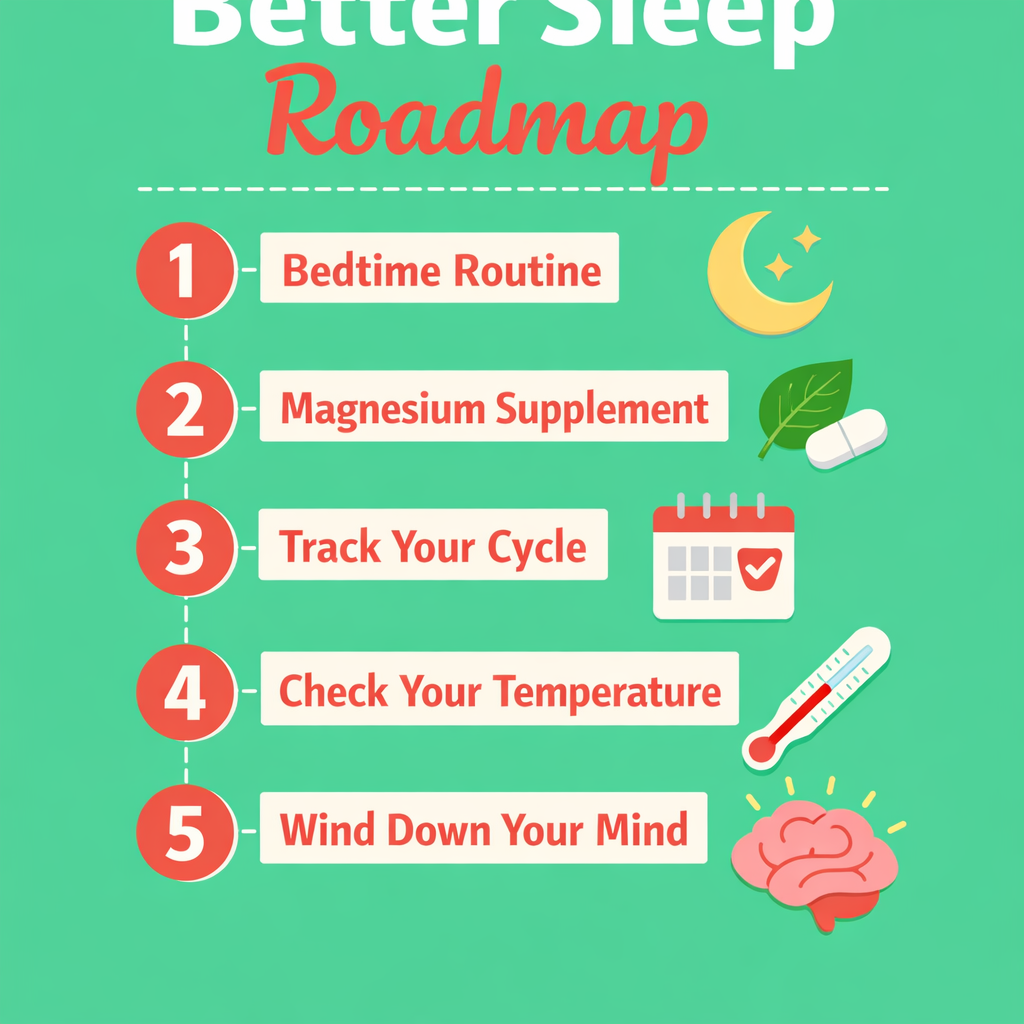
Track your cycle alongside your sleep. Once you see the pattern, you can prepare for the harder nights instead of being blindsided by them.
Cool your bedroom down. Core body temperature needs to drop to initiate sleep. Women in the luteal phase and perimenopause have elevated baseline temperatures that make this harder – a cooler room (around 65-68°F / 18-20°C) helps compensate.
Address anxiety directly. If a racing mind is keeping you awake, calming your mind for sleep covers techniques that go beyond “just relax.”
Look at your iron levels. If you’re premenopausal and exhausted, ask your doctor to check ferritin specifically – not just standard hemoglobin. Low ferritin worsens sleep quality and drives RLS even when you’re not technically anemic.
Consider magnesium glycinate. It’s one of the more evidence-supported supplements for sleep, particularly for women dealing with premenstrual sleep disruption. It’s not a cure, but it’s worth trying if other approaches haven’t moved the needle. For a broader look at what actually works, sleep supplements that don’t leave you groggy is a useful starting point.
Medical disclaimer: Supplements can interact with medications. Check with your doctor before starting any new supplement, especially if you’re pregnant or on hormonal contraceptives.
Build a wind-down routine that actually works for your brain. Not a rigid 10-step ritual – just a consistent signal to your nervous system that the day is ending. The bedtime routine guide for adults who struggle to wind down has practical, non-obvious approaches.
If you’ve been dealing with this for a while and nothing is working, it’s worth taking a proper look at whether what you’re experiencing is clinical insomnia rather than just poor sleep habits.
👉 Take this free, anonymous insomnia test – it evaluates symptoms from the past two weeks and can help clarify whether what you’re experiencing goes beyond typical sleep struggles. Takes about 2 minutes.
How to Fall Asleep Faster and Sleep Deeper as a Woman
Falling asleep faster is partly about lowering arousal – physical and mental – before you even get into bed. The problem is that women dealing with hormonal fluctuations, anxiety, or caregiving stress often carry a physiological activation level that standard wind-down routines don’t touch.
A few things that actually shift this:
- Progressive muscle relaxation – systematically tensing and releasing muscle groups. It works because it gives your nervous system something concrete to do instead of ruminating.
- Lowering your room temperature before bed, not just at bedtime
- Avoiding alcohol – it may help you fall asleep but it fragments the second half of your night badly, reducing REM sleep significantly
- Consistent wake time – more important than consistent bedtime. Your body anchors to when it wakes up, not when it goes to sleep.
You don’t have to fall asleep – you just have to rest. That reframe genuinely helps some people. The pressure to “fall asleep” activates the exact arousal response that prevents it. Removing the goal sometimes removes the obstacle.
For specific techniques, how to fall asleep fast – methods that actually work covers approaches ranked by evidence, not popularity.
Conclusion
Why do women need more sleep comes down to this: biology, hormones, and a higher burden of sleep-disrupting conditions that most sleep research has historically underweighted. It’s not a character flaw or a weakness. It’s a physiological reality that deserves to be taken seriously.
If you’re a woman who has tried the basics and is still struggling, the answer probably isn’t “try harder.” It’s understanding which specific factor is driving your sleep disruption – whether that’s hormonal timing, undiagnosed anxiety, iron deficiency, or something like sleep apnea that presents differently in women.
Actionable next steps:
- Track your sleep alongside your menstrual cycle for 4-6 weeks – patterns become visible quickly
- Get ferritin levels checked at your next blood test, not just standard iron
- If menopause or perimenopause is a factor, ask specifically about sleep apnea screening
- Address the anxiety piece directly – it’s often the biggest lever
- If you suspect clinical insomnia, take the free insomnia test here – it’s anonymous, takes 2 minutes, and evaluates your symptoms from the past two weeks
It’s not just you. Sleep is genuinely harder for women, for real biological reasons. And that means the solutions need to be more targeted, not just more disciplined.
FAQ
Q: Do women need more sleep than men every night?
Not necessarily every night, but across their lifetime women tend to need more total sleep due to hormonal fluctuations, higher rates of insomnia, and more fragmented sleep architecture. The difference is real but modest – roughly 11 minutes more per night on average, with larger gaps during hormonal transitions [4].
Q: Is needing 9 hours of sleep as a woman normal?
Yes, for many women – especially during the luteal phase of the menstrual cycle, pregnancy, perimenopause, or periods of high stress. It becomes worth investigating only if 9 hours of sleep still leaves you exhausted, which can signal a sleep quality problem or underlying condition.
Q: Why do women have more insomnia than men?
Women are 58% more likely to experience insomnia, driven by hormonal fluctuations, higher rates of anxiety and depression, and life-stage transitions like pregnancy and menopause that directly disrupt sleep [2].
Q: Does the menstrual cycle really affect sleep quality?
Yes. About one in three women report sleep disturbances tied to their cycle, particularly in the days before menstruation when progesterone drops and body temperature rises [1].
Q: Can hormonal birth control improve sleep?
For some women, yes – stabilized hormone levels can reduce premenstrual sleep disruption. For others, certain progestins may suppress REM sleep. The effect varies by individual and contraceptive type.
Q: What’s the biggest sleep mistake women make?
Treating sleep problems as a discipline issue rather than a biological one. Most women who struggle with sleep have already tried the basics. The issue is usually hormonal timing, anxiety, iron deficiency, or an undiagnosed sleep disorder – not a lack of effort.
Q: Does menopause cause sleep apnea in women?
Yes – post-menopausal women have a 67% prevalence of obstructive sleep apnea, comparable to men. Estrogen and progesterone had been providing airway protection; once they decline, that protection goes with them [3].
Q: What sleep supplements actually help women sleep better?
Magnesium glycinate has reasonable evidence behind it, particularly for premenstrual sleep disruption. Low-dose melatonin can help with sleep onset but doesn’t address sleep quality. Iron supplementation helps significantly if ferritin is low. Always check with a doctor before starting supplements.
Q: Why am I always tired even after 8 hours of sleep?
Likely a sleep quality issue rather than a duration problem. Common causes in women include subclinical sleep apnea, restless leg syndrome, iron deficiency, anxiety causing light fragmented sleep, or spending too little time in deep and REM sleep stages.
Q: How does pregnancy affect sleep needs?
Significantly. The first trimester brings intense fatigue driven by rising progesterone. The third trimester disrupts sleep through physical discomfort, frequent urination, and RLS. Sleep need increases, but the ability to get quality sleep often decreases simultaneously.
References
[1] Women Sleep – https://www.sleepfoundation.org/women-sleep?utm_source=openai
[2] Do Women Need More Sleep – https://www.healthline.com/health/healthy-sleep/do-women-need-more-sleep?utm_source=openai
[3] Why Women Need More Sleep – https://health.clevelandclinic.org/why-women-need-more-sleep?utm_source=openai
[4] Why Women Need More Sleep Hormones And Brain Science – https://scienceinsights.org/why-women-need-more-sleep-hormones-and-brain-science/?utm_source=openai
[5] How Much Sleep Do Women Need – https://www.tomsguide.com/wellness/sleep/how-much-sleep-do-women-need?utm_source=openai
[6] Why Do Females Need More Sleep Than Males Hormones – https://scienceinsights.org/why-do-females-need-more-sleep-than-males-hormones/?utm_source=openai