Post Disclaimer
This post contains affiliate links. If you buy something through these links, I may earn a small commission at no extra cost to you. Full disclosure.
This article is for informational purposes only and does not constitute medical advice. Always consult a healthcare professional for personal health concerns. Full disclaimer.
Last updated: July 3, 2026
Quick Answer: To calm your mind for sleep, the most effective approaches target your nervous system directly – through controlled breathing, progressive muscle relaxation, cognitive techniques like worry journaling, and structured pre-sleep routines. These aren’t generic tips. They work by interrupting the physiological stress response that keeps your brain in alert mode long after you’ve gotten into bed.
Key Takeaways
- Racing thoughts at night are often driven by a hyperactive stress response, not a personal failing
- The 4-7-8 breathing technique can activate your parasympathetic nervous system within minutes [1]
- Cognitive shuffling – mentally listing random, unconnected images – can interrupt anxious thought loops [1]
- Writing worries down before bed reduces mental load and shortens sleep onset time [6]
- White noise and guided meditation serve different purposes – choosing the wrong one can backfire
- Melatonin affects sleep timing, not mental quieting – it won’t stop a racing mind on its own
- Exercise during the day measurably reduces nighttime anxiety, but timing matters
- Apps like Calm and Headspace are worth trying, but only if you use them consistently
- If you have ADHD or an anxiety disorder, standard sleep advice often needs to be adapted
- You don’t have to fall asleep – you just have to rest. That shift in goal reduces performance anxiety significantly
What Causes Racing Thoughts at Night When Trying to Sleep
Racing thoughts at night are usually the result of your brain staying in a problem-solving state when it should be downshifting. During the day, tasks and distractions suppress anxious thinking. At night, with no external input, your brain fills the silence with unfinished business.
The clinical term is “cognitive hyperarousal” – your nervous system is running at a higher baseline than it should be at bedtime. This is common in people with anxiety, but it also happens to people who are simply chronically stressed or overstimulated throughout the day [3].
There’s also a feedback loop at play. The more you try to force sleep, the more alert your brain becomes. Monitoring whether you’re falling asleep is itself an activating behavior. This is why most people who struggle with sleep find that the harder they try, the worse it gets.
If this sounds familiar, you’re not broken. It’s a well-documented pattern. See also: why you can’t sleep even when you’re tired.
Why Does My Mind Race More When I Try to Relax
This is one of the more frustrating parts of having a racing mind at night – and it’s not just you.
When you remove all stimulation and lie still, your brain interprets the quiet as an opportunity to process everything it deferred during the day. Unresolved thoughts, emotional residue, low-level anxiety – it all surfaces the moment you stop distracting yourself. Researchers call this “default mode network” activation: the brain’s background processing system kicks in when there’s nothing else competing for attention [3].
In practice this means that “just relax” is genuinely bad advice. Relaxation without a structured mental anchor – something low-stakes to focus on – often makes things worse, not better.
The fix isn’t to try harder to clear your mind. It’s to give your mind something boring and non-threatening to do instead.

Best Techniques to Stop Overthinking Before Bed
The most effective techniques for stopping overthinking before bed work by redirecting mental activity rather than suppressing it. Here are the ones with the strongest evidence and real-world usability.
1. Cognitive Shuffling
Dr. Carlos Nunez, Chief Medical Officer at ResMed, recommends a technique called cognitive shuffling. You pick a random word – say, “window” – then slowly visualize unrelated images for each letter: a walrus, an igloo, a needle, a doorbell, an orange, a wave [1].
The point is to keep your brain mildly occupied with something completely meaningless. It’s too boring to be stimulating, but just engaging enough to stop your mind from returning to the worry loop. This is what worked for me when I first started trying it – it felt ridiculous, and then I woke up six hours later.
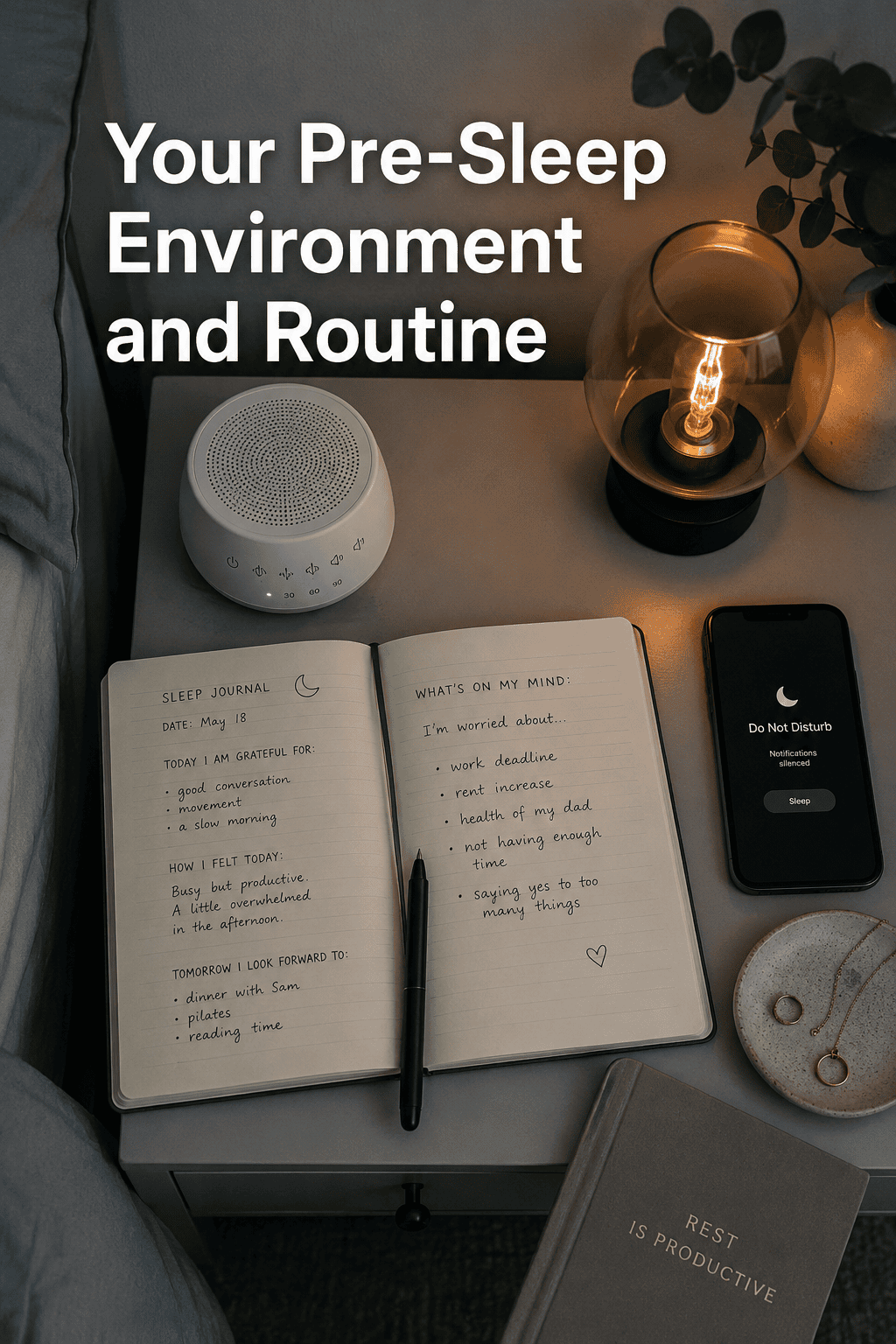
2. The Written Worry Dump
Spend five minutes before bed writing down everything on your mind – not to solve it, just to get it out of your head and onto paper. The Cleveland Clinic notes that this kind of pre-sleep journaling can reduce the mental burden that delays sleep onset [6].
The key detail: close the notebook after. The act of writing signals to your brain that these thoughts have been “filed” and don’t need to be held in active memory.
3. Scheduled Worry Time
Set aside 15 minutes earlier in the evening – not right before bed – specifically for worrying. Write down your concerns and any partial solutions. When intrusive thoughts appear at bedtime, you can tell yourself: “I already dealt with that at 8pm.” It sounds almost too simple. But it works by giving your brain permission to let go [7].
How to Calm Your Mind for Sleep Using Breathing Techniques
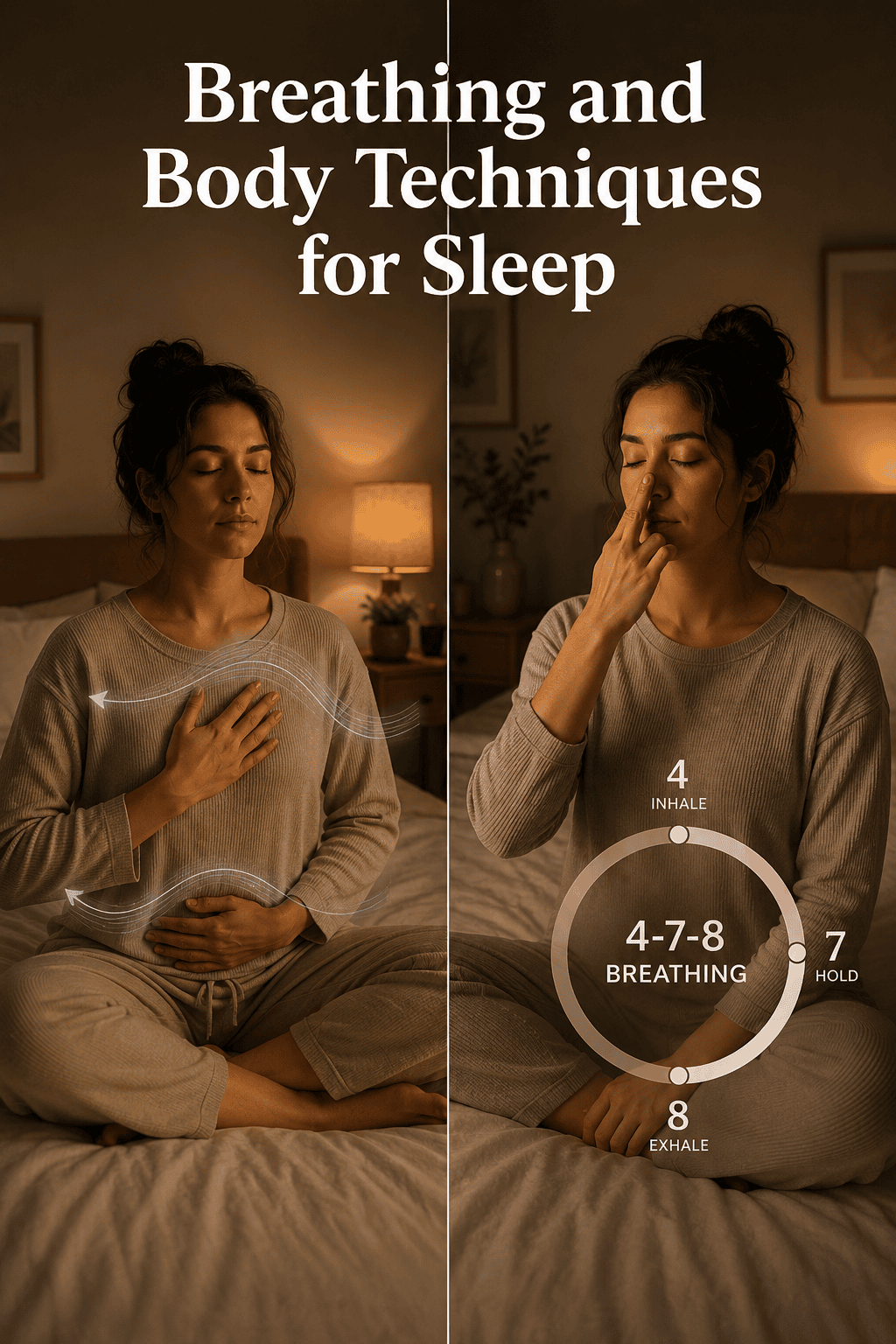
Controlled breathing is one of the fastest ways to calm your mind for sleep because it directly activates the parasympathetic nervous system – the “rest and digest” state that counteracts the stress response.
The 4-7-8 Method
Dr. Andrew Weil’s 4-7-8 technique is probably the most widely cited for sleep. Inhale through your nose for 4 seconds, hold for 7 seconds, exhale slowly through your mouth for 8 seconds. Repeat three to four cycles [1].
The extended exhale is what drives the calming effect. A longer exhale than inhale signals safety to your nervous system. In practice this means you don’t need to do it perfectly – even an approximate version helps.
Box Breathing
Inhale for 4 counts, hold for 4, exhale for 4, hold for 4. This is used by military personnel for acute stress management and works well for people who find the 4-7-8 hold too long [5].
Worth trying if you’ve found that breath-holding makes you more anxious rather than less.
Difference Between Meditation and Breathing Exercises for Sleep
Breathing exercises target your physiology first – they change your heart rate and nervous system state within minutes. Meditation targets your relationship with your thoughts – it trains you to observe them without reacting. Both are useful, but they work differently and suit different people.
If you’re in acute anxiety mode at bedtime, a breathing technique will usually work faster. If your problem is chronic overthinking that starts hours before bed, a regular meditation practice builds the mental skill to disengage from thought loops over time [4].
Here’s what the research actually says: a 2019 meta-analysis found that mindfulness meditation reduced insomnia severity and improved sleep quality across multiple studies, but the effects were more pronounced with consistent daily practice rather than occasional use [4].
The honest version is: meditation takes longer to show results, but the results tend to be more durable. Breathing exercises give you something to use tonight.
Progressive Muscle Relaxation: Technique 4
Progressive muscle relaxation (PMR) works by systematically tensing and releasing muscle groups from your face down to your feet. The tension-release cycle creates a contrast that makes relaxation physically noticeable, which helps your brain register that your body is safe [3].
Start with your forehead – scrunch it tight for five seconds, then release. Move to your jaw, shoulders, hands, stomach, thighs, calves, feet. The whole sequence takes about ten minutes.
This is particularly useful if you carry physical tension without realizing it. A lot of people who struggle with sleep are walking around with chronically tight shoulders and jaw muscles – their body is in a stress posture even when they think they’re calm.
What’s the Fastest Way to Calm Anxiety at Night
The fastest way to calm anxiety at night is a combination of a grounding technique and controlled breathing – used together, not separately. The 5-4-3-2-1 grounding method (name 5 things you can see, 4 you can touch, 3 you can hear, 2 you can smell, 1 you can taste) interrupts the thought spiral by forcing sensory attention. Follow it immediately with 4-7-8 breathing [5].
This combination works within five to ten minutes for most people with situational nighttime anxiety. If your anxiety is chronic or tied to a diagnosed anxiety disorder, see the section below on ADHD and anxiety.
For more on the anxiety-sleep connection specifically, this piece on sleep anxiety and what keeps you awake goes deeper into the cycle.
Does Melatonin Actually Help Calm Your Mind or Just Make You Tired
Melatonin does not calm your mind. It signals to your body that it’s time to sleep by shifting your circadian phase – but it has no direct effect on cognitive hyperarousal or racing thoughts.
If your problem is that your sleep window is shifted (you can’t fall asleep until 2am, for example), low-dose melatonin taken 1-2 hours before your target bedtime can help reset that timing. But if you’re lying awake with a busy mind, melatonin alone won’t quiet it [6].
The reason this matters is that a lot of people try melatonin for insomnia, don’t get the result they expected, and conclude that nothing works. Melatonin is a circadian tool, not a sedative. Using it for the wrong problem explains why it often disappoints.
Is It Better to Use White Noise or Guided Meditation for Sleep
White noise and guided meditation solve different problems. White noise masks environmental sounds that might interrupt sleep or prevent sleep onset – it’s most useful if external noise is part of your problem. Guided meditation actively redirects your attention and helps quiet an overactive mind – it’s more useful if the noise is internal [5].
If you wake up to sounds easily, white noise (or pink noise, which some people find more natural) is the better choice. If your issue is a racing mind in a quiet room, a sleep-focused guided meditation or a sleep story is likely more effective.
Worth trying if you haven’t found either helpful on its own: combine them. A low-level ambient sound underneath a quiet sleep story can work well for people who find pure silence activating.
Are Sleep Apps Like Calm or Headspace Worth It
Sleep apps like Calm and Headspace are worth trying if you’re consistent with them. The honest version is that the app itself isn’t magic – the value is in having a structured, low-effort way to practice the techniques that actually work (guided breathing, body scans, sleep stories) [6].
Both apps offer free trials. Headspace has stronger evidence behind its meditation programs. Calm is generally considered more accessible for people who are new to this. Neither requires any prior experience.
One practical note: use them with your phone face-down and screen brightness off, or via a speaker. The act of holding your phone and watching a screen activates your brain even when the content is calming [7].
What Should You Avoid Doing Before Bed If You Want a Calm Mind
Certain behaviors in the hour before bed reliably increase cognitive arousal and make it harder to calm your mind for sleep. The research is fairly consistent on this [7]:
- Checking email or work messages – even briefly – reactivates problem-solving mode
- Scrolling social media – the variable reward structure of feeds is genuinely stimulating to the brain
- Watching the news – emotionally activating content raises cortisol
- Paying bills or reviewing finances – high-stakes tasks that generate unresolved mental loops
- Starting a new TV show – new narratives require active cognitive engagement; re-watching familiar, low-stakes shows is actually less activating [2]
The blue light from screens is real but probably secondary to the content itself. A dim screen showing something boring is less disruptive than a dark room where you’re mentally replaying an argument.
For a structured approach to the pre-sleep window, this bedtime routine guide is worth reading.
How to Calm Your Mind for Sleep If You Have ADHD or an Anxiety Disorder
Standard sleep advice often fails people with ADHD or anxiety disorders because the underlying mechanisms are different. For ADHD, the problem is often that the brain requires a higher level of stimulation to downshift – which means that a completely quiet, dark room can actually make things worse, not better [3].
If you have ADHD, low-level background stimulation (a podcast you’ve heard before, ambient sound, a familiar audiobook) can provide just enough input to prevent the brain from seeking its own stimulation through racing thoughts.
For anxiety disorders, the core issue is often that bedtime becomes a conditioned trigger for anxiety – your brain has learned that lying in bed means worry time. Cognitive Behavioral Therapy for Insomnia (CBT-I) is the most evidence-backed treatment for this pattern. It’s more effective than medication for chronic insomnia and doesn’t carry dependency risks.
If you’re not sure whether your sleep problems cross into clinical territory, it’s worth taking a proper assessment.
If you suffer from symptoms like persistent racing thoughts, difficulty falling or staying asleep, or waking feeling unrested, consider taking this free, anonymous insomnia and sleep assessment. It evaluates how you’ve been feeling over the past two weeks and can help clarify whether what you’re dealing with goes beyond typical sleep trouble.
Can You Train Your Brain to Think Less Before Sleep
Yes – but it takes weeks, not nights. The process is essentially conditioning your brain to associate your bed with low arousal rather than with the effort of trying to sleep.
The main techniques are:
- Stimulus control – only use your bed for sleep (not reading, working, or watching TV). This rebuilds the association between bed and sleep rather than bed and wakefulness.
- Sleep restriction – temporarily limit your time in bed to match your actual sleep time, which builds sleep pressure and reduces the time spent lying awake. This is a core CBT-I technique.
- Consistent wake time – waking at the same time every day, regardless of how you slept, is one of the most powerful regulators of sleep drive. See how to fix your sleep schedule for a structured approach.
The reason this matters is that most people try to compensate for a bad night by going to bed earlier or sleeping in – which actually perpetuates the problem by weakening sleep pressure.
How Long Does It Take for Meditation to Help You Fall Asleep
For acute use – a single guided meditation session at bedtime – many people notice some calming effect within 10-20 minutes, though falling asleep faster isn’t guaranteed on the first try. For building a genuine skill at quieting your mind, most research suggests consistent practice over 4-8 weeks before you see reliable changes in sleep onset time [4].
The expectation gap is a real problem here. People try meditation twice, don’t fall asleep instantly, and conclude it doesn’t work. It’s a skill, not a switch. The more you practice observing your thoughts without reacting to them, the less power those thoughts have at 11pm.
Does Exercise During the Day Help Calm Your Mind at Night
Yes – regular aerobic exercise is one of the most consistent non-pharmacological interventions for improving sleep quality and reducing nighttime anxiety. The timing matters, though.
Exercise raises core body temperature and cortisol, both of which are activating. Morning or afternoon exercise gives your body time to return to baseline before bed. Vigorous exercise within two to three hours of bedtime can delay sleep onset for some people – though this varies individually [5].
Even a 20-30 minute walk during the day has a measurable effect on nighttime anxiety levels. You don’t need a gym or an intense workout. The mechanism is partly about cortisol regulation and partly about physically discharging the tension that accumulates from sedentary, cognitively demanding days.
Technique 9: Cognitive Defusion – Watching Your Thoughts Instead of Being Them
Cognitive defusion is a technique from Acceptance and Commitment Therapy (ACT). Instead of trying to stop or argue with anxious thoughts, you practice observing them at a slight distance – as mental events, not facts.
A simple version: when a thought appears, mentally label it. “There’s the thought that I won’t be able to function tomorrow.” Not “I won’t be able to function tomorrow.” The small linguistic shift creates psychological distance. You’re watching the thought rather than being inside it.
This pairs well with the insomnia overthinking guide if rumination is your main pattern.
Struggling with persistent sleep issues and not sure if it’s crossed into clinical insomnia? This free, anonymous assessment takes only a few minutes and evaluates your symptoms over the past two weeks. It’s a useful starting point before deciding whether to seek professional support.
Comparison: Which Technique Works Best for Your Situation
| Your Main Problem | Best Starting Technique | Time to Effect |
|---|---|---|
| Acute anxiety at bedtime | 4-7-8 breathing + grounding | 5-10 minutes |
| Looping thoughts / rumination | Cognitive shuffling or worry dump | 10-20 minutes |
| Physical tension + mental stress | Progressive muscle relaxation | 10-15 minutes |
| Chronic overthinking (long-term) | Daily mindfulness meditation | 4-8 weeks |
| ADHD-related restlessness | Low-level background audio | Variable |
| Conditioned bed-anxiety | Stimulus control + CBT-I | 2-4 weeks |
FAQ
Q: Can I calm my mind for sleep without medication?
Yes. Breathing techniques, cognitive shuffling, progressive muscle relaxation, and CBT-I are all non-pharmacological approaches with strong evidence. Medication can help in the short term but doesn’t address the underlying hyperarousal.
Q: What’s the quickest way to stop racing thoughts at night?
The 4-7-8 breathing technique combined with a grounding exercise (5-4-3-2-1 sensory method) is the fastest approach for most people. Expect 5-10 minutes, not instant results.
Q: Does melatonin help with a racing mind?
No. Melatonin regulates sleep timing, not mental activity. It won’t quiet anxious thoughts. It’s useful for circadian phase issues, not cognitive hyperarousal.
Q: How do I know if my sleep problem is clinical insomnia?
If you’ve had difficulty falling or staying asleep at least three nights per week for three or more months, and it’s affecting your daytime functioning, that meets the clinical threshold for insomnia disorder. A free assessment can help you evaluate your symptoms.
Q: Is white noise or silence better for sleep?
It depends on your environment and your problem. White noise helps mask external sounds. For a racing mind in a quiet room, guided meditation or a familiar audio program is usually more effective than silence or white noise alone.
Q: Why do I feel more anxious when I try to relax at night?
This is normal and has a name – cognitive hyperarousal with default mode network activation. When you remove all stimulation, your brain surfaces deferred thoughts and worries. The solution is to give your brain a low-stakes anchor rather than trying to force emptiness.
Q: Does exercise really help with nighttime racing thoughts?
Yes – regular aerobic exercise reduces baseline anxiety and improves sleep quality. Morning or afternoon timing is best. Even a daily 20-minute walk makes a measurable difference over time.
Q: How long does it take to see results from meditation for sleep?
Occasional use can help within a single session. Building a durable skill at quieting your mind typically takes 4-8 weeks of consistent daily practice.
Q: Are sleep apps like Calm worth paying for?
They’re worth trying on a free trial. The value is in having a structured, low-friction way to practice techniques that work. The app doesn’t do the work – consistency does.
Q: What if I’ve tried everything and nothing works?
If you’ve been dealing with this for a while and standard approaches haven’t helped, it may be time to look at CBT-I with a trained therapist, or to investigate whether an underlying condition (anxiety disorder, sleep apnea, ADHD) is driving the problem. See also: why you might have insomnia and how to find your trigger.
Conclusion
If you’ve been lying awake night after night trying to force your brain to stop, you already know that trying harder doesn’t work. The techniques in this article aren’t about willpower – they’re about working with your nervous system instead of against it.
Start with one technique tonight. The 4-7-8 breathing method or cognitive shuffling are the lowest-friction entry points. If you’ve been dealing with this for a while, add a consistent wake time and a pre-bed worry dump to your routine. Those two changes alone can shift the pattern significantly over two to three weeks.
You don’t have to fall asleep – you just have to rest. That shift in goal takes the performance pressure off, which is often what allows sleep to actually arrive.
If your symptoms have been persistent and you’re not sure whether what you’re experiencing goes beyond typical stress-related sleep trouble, taking stock of where you are is a useful first step. This free anonymous assessment can help you evaluate your symptoms and decide whether professional support makes sense.
For more on building the conditions that make sleep easier over time, the bedtime routine guide for adults and this piece on falling asleep when stressed are good next reads.
References
[1] I Tried A Chief Medical Officers Hack To Fall Asleep Fast After Waking Up At 3 A M And It Worked Heres Why – https://www.tomsguide.com/wellness/sleep/i-tried-a-chief-medical-officers-hack-to-fall-asleep-fast-after-waking-up-at-3-a-m-and-it-worked-heres-why?utm_source=openai
[2] Sleep Researcher Shares 4 Unusual Tips For Falling Asleep Quickly And They Include Watching Re Runs Of Your Fave Tv Show – https://www.tomsguide.com/wellness/sleep/sleep-researcher-shares-4-unusual-tips-for-falling-asleep-quickly-and-they-include-watching-re-runs-of-your-fave-tv-show?utm_source=openai
[3] Racing Thoughts At Night – https://www.sleep.com/sleep-health/racing-thoughts-at-night?utm_source=openai
[4] Meditation For Sleep – https://www.healthline.com/health/meditation-for-sleep?utm_source=openai
[5] Calm An Anxious Brain For Better Sleep – https://www.atlantichealth.org/health-articles/sleep/calm-an-anxious-brain-for-better-sleep?utm_source=openai
[6] How To Calm Your Anxiety At Night – https://health.clevelandclinic.org/how-to-calm-your-anxiety-at-night?utm_source=openai
[7] Tools And Tricks To Calm Your Anxiety And Actually Get Some Sleep – https://www.healthline.com/health/mental-health/tools-and-tricks-to-calm-your-anxiety-and-actually-get-some-sleep?utm_source=openai



![7 Best Sleep Positions That Finally End Morning Back & Neck Pain Last updated: July 12, 2026 Quick Answer: The best sleep positions for back and neck pain are side sleeping with a pillow between your knees and back sleeping with a pillow under your knees. Both keep your spine in a neutral alignment, which reduces pressure on muscles and joints overnight. Stomach sleeping is the one position most consistently linked to worsening pain, and it's worth avoiding if you can. Key Takeaways Side sleeping with knee support is the most widely recommended position for lower back pain [1] Back sleeping with a pillow under the knees maintains the spine's natural curve [1] Stomach sleeping strains the neck and lumbar spine - it's the position to avoid [1] Your pillow height matters as much as your position - wrong pillow height causes neck pain regardless of how you sleep [2] Left-side sleeping is the best position during pregnancy and also helps with acid reflux Snoring and sleep apnea improve significantly with side sleeping compared to back sleeping It takes most people 2-4 weeks to adjust to a new sleep position consistently Mattress firmness should match your sleep position - side sleepers need softer, back sleepers need medium-firm Waking up with neck pain is almost always a pillow problem, not just a position problem [3] You can train yourself to stay in a new position using body pillows or rolled towels as physical barriers What Are the Best Sleep Positions for Back Pain? Side sleeping with a pillow between your knees is the single most recommended position for back pain, followed closely by back sleeping with a pillow under your knees. Both positions reduce spinal compression and help your muscles actually relax overnight instead of working to compensate for poor alignment. Here's what the research actually says: according to the Mayo Clinic, sleeping on your side with your legs slightly drawn toward your chest and a pillow between your knees helps align the spine, pelvis, and hips, taking pressure off the lower back [1]. Back sleeping with a pillow under the knees maintains the natural lumbar curve and lets the back muscles decompress [1]. The honest version is that there's no single "perfect" position for everyone. Back pain has different causes - disc issues, muscle tightness, SI joint problems - and what helps one person may not help another. But these two positions are the safest starting point for most people. The 7 positions, ranked from most to least back-friendly: Side sleeping with pillow between knees - best for most lower back pain Back sleeping with pillow under knees - best for maintaining lumbar curve Fetal position (side sleeping, knees drawn up) - good for disc herniation Side sleeping with full body pillow - reduces hip and shoulder pressure Back sleeping flat - neutral but less effective than with knee support Reclined back sleeping (adjustable base or wedge) - helpful for spinal stenosis Stomach sleeping with hip pillow - last resort if you can't change positions [1] Side Sleeping vs Back Sleeping - Which Is Actually Better? For most people, side sleeping wins - but back sleeping is better for specific conditions like sleep apnea or facial pressure issues. Side sleeping is the most common position worldwide, and it has real advantages: it reduces snoring, is the safest option during pregnancy, and keeps the airway more open. The downside is that it can create shoulder and hip pressure if your mattress is too firm, and it can cause neck pain if your pillow isn't the right height. Back sleeping is better for keeping your face and neck in neutral alignment, which is why some physical therapists prefer it for neck pain specifically [3]. The problem is that it worsens snoring and is actively dangerous for people with untreated sleep apnea. In practice this means: if you snore, have acid reflux, or are pregnant, side sleeping is the better choice. If you have chronic neck pain and don't snore, back sleeping with proper pillow support may serve you better. How Do I Know If My Sleep Position Is Causing Neck Pain? If your neck pain is worse in the morning and improves within an hour of getting up, your sleep position - or your pillow - is almost certainly the cause. The pattern matters here. Pain that's worst right after waking and fades during the day points directly to something happening during sleep. Pain that builds throughout the day is more likely posture or tension-related. Signs your position is the problem: Stiffness on one side only (usually the side you sleep on) Pain that's worse after longer sleep, not less Headaches at the base of the skull in the morning Numbness or tingling in your arm or hand when you wake up Harvard Health notes that the wrong pillow is one of the most overlooked causes of chronic neck pain - specifically, a pillow that's too high or too low forces your neck into a bent position for hours [2]. Even a good sleep position won't help if your pillow is working against you. If you've been dealing with this for a while and nothing seems to fix it, the pillow is usually where I'd look first. I spent months adjusting my sleep position before realizing my pillow was the actual problem. What's the Best Pillow for Side Sleepers? Side sleepers need a firmer, higher pillow that fills the gap between the shoulder and the head - typically 4 to 6 inches, depending on shoulder width. The reason this matters is that when you lie on your side, your shoulder pushes your head upward. A pillow that's too flat lets your head drop, straining the neck muscles on the upper side. A pillow that's too thick pushes your head up and strains the opposite side. What to look for: Height: Should keep your head level with your spine - not tilted up or down Firmness: Medium-firm to firm so it doesn't compress flat under your head's weight Material: Memory foam or latex holds its shape better than down or polyester fill Width: Wide enough that shifting slightly doesn't take you off the pillow The Sleep Foundation recommends that side sleepers also consider a body pillow between the knees to prevent the hips from rotating and pulling the spine out of alignment [3]. This is one of those small changes that makes a noticeable difference faster than you'd expect. Can Sleeping on Your Stomach Cause Problems? Yes - stomach sleeping is the most problematic position for both neck and back health. It forces your neck to rotate to one side for hours, compresses the lumbar spine, and puts your back muscles in a shortened, strained position all night [1]. Most people who struggle with morning stiffness and can't figure out why are stomach sleepers. It's not just you - this position is genuinely hard on the body. If you can't break the habit, the Mayo Clinic suggests placing a pillow under your hips and lower abdomen - not under your head - to reduce the arch in your lower back [1]. Skip the head pillow entirely if you're a stomach sleeper, or use a very thin one, to reduce how far your neck has to rotate. Worth trying if you're a committed stomach sleeper: a body pillow placed along your side can give you the pressure sensation you're used to while gradually shifting you toward a side-sleeping position. What Sleep Position Is Best for Snoring? Side sleeping is the most effective position for reducing snoring. Back sleeping causes the tongue and soft palate to fall backward into the airway, which is what creates the snoring sound. The difference can be significant. For people with mild to moderate snoring, switching to side sleeping alone sometimes eliminates it entirely. For people with obstructive sleep apnea, it reduces severity but isn't a substitute for a CPAP or other treatment. If you keep rolling onto your back at night: Sew a tennis ball into the back of a sleep shirt (old trick, but it works) Use a body pillow behind your back as a barrier Try a wedge pillow that elevates your upper body slightly Consider a positional sleep device designed specifically for this If snoring is affecting your sleep quality or your partner's, it's worth checking out the silent signs of a sleep disorder - snoring is sometimes the first visible sign of something that needs medical attention. Best Sleep Position for Pregnancy Left-side sleeping is the recommended position during pregnancy, particularly in the second and third trimesters. It improves circulation to the fetus, reduces pressure on the liver, and helps with kidney function. The reason left side specifically matters is that the inferior vena cava - the large vein that returns blood to the heart - runs along the right side of the spine. Lying on the left side keeps the uterus from compressing it as pregnancy progresses. A full-length body pillow or a pregnancy pillow that supports both the belly and the back makes left-side sleeping significantly more comfortable. If you're struggling with sleep during pregnancy more broadly, the insomnia during pregnancy guide covers what actually helps beyond just position. Sleep Positions to Avoid If You Have Arthritis For arthritis, the position to avoid depends on which joints are affected - but stomach sleeping is almost universally problematic, and sleeping with joints in a bent, compressed position worsens morning stiffness. General rules by joint: Hip arthritis: Avoid side sleeping on the affected hip - use a pillow between knees to reduce joint compression Knee arthritis: Avoid sleeping with knees fully bent - a small pillow under the knees in back sleeping helps Shoulder arthritis: Avoid sleeping on the affected shoulder - back sleeping or opposite-side sleeping is better Spinal arthritis (spondylitis): Back sleeping with minimal pillow height keeps the spine in the most neutral position The goal with arthritis is to keep affected joints in a mid-range, unloaded position overnight. Joints that are compressed or held at end-range for hours will be stiffer and more painful in the morning. What Sleep Position Helps With Acid Reflux? Left-side sleeping is the best position for acid reflux. It keeps the stomach below the esophagus, which makes it physically harder for stomach acid to travel upward. Back sleeping with the head elevated (using a wedge pillow, not just stacking pillows) is the second-best option. Elevating the upper body by 6 to 8 inches reduces reflux episodes significantly for most people. Right-side sleeping is the worst position for reflux - it relaxes the lower esophageal sphincter and makes reflux more likely. If you're waking up with a burning sensation in your chest or throat, your sleep position is worth examining before anything else. How Long Does It Take to Adjust to a New Sleep Position? Most people need 2 to 4 weeks to feel comfortable in a new sleep position, and up to 8 weeks before it becomes their default. The first few nights are usually the hardest - you'll wake up having rolled back to your old position, which is normal. The adjustment is partly physical (your body adapting to different pressure points) and partly habitual. Using a body pillow or a rolled towel as a physical barrier speeds up the process by making it uncomfortable to roll back. If you're also struggling to fall asleep during the transition, it's worth reading through these science-backed fixes for feeling tired but unable to sleep - position changes sometimes temporarily disrupt sleep onset before things improve. How to Train Yourself to Sleep on Your Back Back sleeping is one of the harder positions to adopt if you're a natural side or stomach sleeper, but it's trainable with the right setup. Step-by-step approach: Place a pillow under your knees before you get in bed - this makes back sleeping immediately more comfortable Use two body pillows, one on each side, to prevent rolling Keep your arms at your sides or on your chest - not above your head, which strains the shoulders [3] Start by trying to fall asleep on your back, even if you end up moving during the night Gradually, your body will spend more time in the position as it becomes familiar It's not just about willpower. The physical setup matters more than the intention. Best Mattress Firmness for Different Sleep Positions Your mattress firmness should match your primary sleep position. Using the wrong firmness is one of the most common reasons people wake up with pain even when their position is technically correct. Sleep Position Recommended Firmness Why Side sleeper Soft to medium (3-5/10) Allows shoulder and hip to sink in, keeping spine level Back sleeper Medium to medium-firm (5-7/10) Supports lumbar curve without excessive sinking Stomach sleeper Firm (7-8/10) Prevents hips from sinking and arching the spine Combination sleeper Medium (5/10) Balances needs across positions The reason this matters is simple: a side sleeper on a very firm mattress has their spine bowing upward because the shoulder and hip can't sink in. A back sleeper on a very soft mattress has their hips sinking too deep, which exaggerates the lumbar curve. Is It Bad to Sleep in the Same Position Every Night? Sleeping in the same position every night isn't inherently bad - as long as it's a good position. The problems arise when that position is stomach sleeping, or when you're sleeping on a surface that creates consistent pressure on the same joints. If you're a committed side sleeper, alternating sides periodically helps prevent shoulder and hip imbalances. Some people develop one-sided neck or shoulder tightness from always sleeping on the same side. For people who wake up stiff and sore, the issue is usually not the position itself but the combination of position, pillow, and mattress firmness. Fixing one without the others often doesn't solve the problem. 🔎 If you're waking up exhausted regardless of how you sleep, it may be worth looking deeper. Take this free, anonymous insomnia test to evaluate your symptoms over the past two weeks - it only takes a few minutes and can help you understand what's actually going on. Why Do I Wake Up With Neck Pain? Morning neck pain is almost always caused by one of three things: a pillow that's the wrong height, sleeping on your stomach, or sleeping with your arm under your head. The pillow height issue is the most common and the most overlooked. Harvard Health specifically notes that a pillow that doesn't support the natural curve of the neck - whether too high or too flat - puts the neck in a strained position for the entire night [2]. For back sleepers, a rounded, contoured pillow under the neck with a flatter section for the head works better than a standard flat pillow [2]. For side sleepers, the pillow needs to be thick enough to keep the head level with the spine. Most standard pillows are too thin for side sleeping, which is why so many side sleepers end up with one-sided neck pain. The Sleep Foundation also points out that back sleepers should keep their hands at their sides or on their chest - not raised above the head, which rotates and strains the neck and upper back [3]. If you've sorted out your pillow and position and still wake up with neck pain, applying heat or cold to the neck for 10 to 15 minutes before bed can help reduce existing tension before it compounds overnight [3]. Conclusion Morning back and neck pain isn't something you just have to accept. Most of the time, it comes down to a few specific, fixable things: your sleep position, your pillow height, and your mattress firmness. The most practical starting points: Switch to side sleeping with a pillow between your knees, or back sleeping with a pillow under your knees Check your pillow height - it should keep your head level with your spine, not tilted in either direction If you're a stomach sleeper, place a pillow under your hips and work gradually toward side sleeping Give any new position at least 3 to 4 weeks before deciding it doesn't work This is what worked for me: fixing the pillow height made more difference than any position change I tried. I'd been adjusting everything else for months before I realized the pillow I'd been using for years was too flat for side sleeping. If you're dealing with pain that doesn't improve with position changes, it's worth looking at the bigger picture. Poor sleep quality overall - not just position - affects how much pain you feel. You might find it useful to look at how to improve deep sleep or work through a proper bedtime routine for adults that helps your nervous system actually wind down before bed. And if you're not sure whether what you're experiencing goes beyond position-related discomfort, these 15 insomnia tips cover the situations where sleep problems run deeper than any single fix. You don't have to fall asleep perfectly every night. You just have to rest - and making your sleep position work for your body instead of against it is one of the more reliable ways to get there. 🔎 Still waking up exhausted no matter what you try? Take this free anonymous insomnia test - it evaluates your symptoms over the past two weeks and takes only a few minutes. It's a useful first step in understanding what's actually driving your sleep problems. Medical disclaimer: The information in this article is for educational purposes only and does not constitute medical advice. If you have chronic pain, a diagnosed sleep disorder, or symptoms that aren't improving, please consult a qualified healthcare provider. FAQ Q: What is the single best sleep position for lower back pain?Side sleeping with a pillow between the knees is the most consistently recommended position for lower back pain. It aligns the spine, hips, and pelvis and reduces pressure on the lumbar region [1]. Q: Is it okay to sleep on your back every night?Yes, back sleeping is one of the healthiest positions for spinal alignment. The key is using a pillow under the knees to maintain the natural lumbar curve. It's not recommended for people with untreated sleep apnea or heavy snorers [1]. Q: Why does my neck hurt more on the side I sleep on?This usually means your pillow is too thin. When side sleeping, the pillow needs to fill the space between your shoulder and your head. If it's too flat, your head drops toward the mattress, straining the neck muscles on the upper side [2]. Q: Can the wrong mattress cause back pain even with a good sleep position?Yes. A mattress that's too soft allows the hips to sink too far, misaligning the spine regardless of position. A mattress that's too firm creates pressure points on the hips and shoulders. Matching firmness to your sleep position matters [3]. Q: What's the best sleep position for people with acid reflux?Left-side sleeping is best for acid reflux. It keeps the stomach positioned below the esophagus, making it harder for acid to travel upward. Right-side sleeping is the worst position for reflux. Q: How do I stop rolling onto my back when I'm trying to side sleep?Use a body pillow behind your back as a physical barrier. You can also try the tennis ball method - sewing a tennis ball into the back of a sleep shirt makes rolling uncomfortable enough to disrupt the habit within a few weeks. Q: Is stomach sleeping always bad?It's the most problematic position for most people, particularly for neck and lower back health. If you can't change the habit, placing a pillow under the hips and lower abdomen reduces the strain significantly [1]. Q: What pillow is best for back sleepers with neck pain?A contoured or cervical pillow that supports the neck's natural curve while keeping the head relatively flat. Harvard Health recommends a rounded pillow under the neck with a flatter section for the head, rather than a single thick pillow that pushes the head forward [2]. Q: Does sleep position affect snoring?Yes, significantly. Back sleeping causes the tongue and soft palate to fall backward into the airway. Side sleeping keeps the airway more open and reduces snoring for most people. Q: How long before a new sleep position stops feeling uncomfortable?Most people adjust within 2 to 4 weeks. The first few nights are the hardest. Using pillows as physical barriers and being consistent about starting in the new position speeds up the process. References [1] Sleeping Positions for Back Pain - https://www.mayoclinic.org/diseases-conditions/back-pain/in-depth/sleeping-positions/art-20546852 [2] Say Good Night to Neck Pain - https://www.health.harvard.edu/pain/say-good-night-to-neck-pain [3] Best Sleeping Position for Neck Pain - https://www.sleepfoundation.org/sleeping-positions/best-sleeping-position-for-neck-pain 🔎 Not sure if your sleep issues go beyond position? Take this free, anonymous insomnia test - evaluate how you've felt over the past two weeks and get a clearer picture of what might be keeping you from real rest. Meta Title: 7 Best Sleep Positions to End Back & Neck Pain (2026) Meta Description: Waking up stiff and sore? These 7 best sleep positions are backed by research and fix the real causes of morning back and neck pain. Find out which works for you. Tags: best sleep positions, sleep positions for back pain, neck pain sleep position, side sleeping benefits, back sleeping tips, sleep posture, pillow for side sleepers, acid reflux sleep position, pregnancy sleep position, snoring sleep position, mattress firmness, insomnia tips](https://napsology.com/wp-content/uploads/2026/07/slot-0-1783848052926-500x330.png)