Post Disclaimer
This post contains affiliate links. If you buy something through these links, I may earn a small commission at no extra cost to you. Full disclosure.
This article is for informational purposes only and does not constitute medical advice. Always consult a healthcare professional for personal health concerns. Full disclaimer.
Last updated: June 6, 2026
Quick Answer: If you’re asking why you can’t sleep, the answer is rarely just “stress” or “too much screen time.” The real causes range from undiagnosed medical conditions and anxiety disorders to diet, body temperature timing, and relationship conflict — many of which standard sleep hygiene advice never touches. Identifying your specific trigger is the only way to actually fix it.
Key Takeaways
- Anxiety is one of the most underdiagnosed drivers of chronic insomnia — and it creates a feedback loop that gets worse without targeted intervention
- Medical conditions like sleep apnea, restless legs syndrome, and acid reflux are common and frequently missed
- What you eat, drink, and do in the 3–4 hours before bed matters more than most people realize
- Screen time affects sleep through blue light exposure and mental stimulation — both are problems, but mental stimulation is the bigger one
- Adults need 7–9 hours of sleep per night, but quality matters as much as quantity
- Waking in the middle of the night is often a separate problem from difficulty falling asleep — and has different causes
- Most people who struggle with sleep have tried generic advice. The reasons on this list go deeper
- Knowing when to see a doctor is as important as any self-help strategy
- If you’ve been dealing with this for a while, an insomnia assessment can help clarify what you’re actually dealing with
- You don’t have to fall asleep — you just have to rest. That reframe alone can reduce sleep anxiety enough to help
Does Anxiety Really Mess Up Your Sleep?
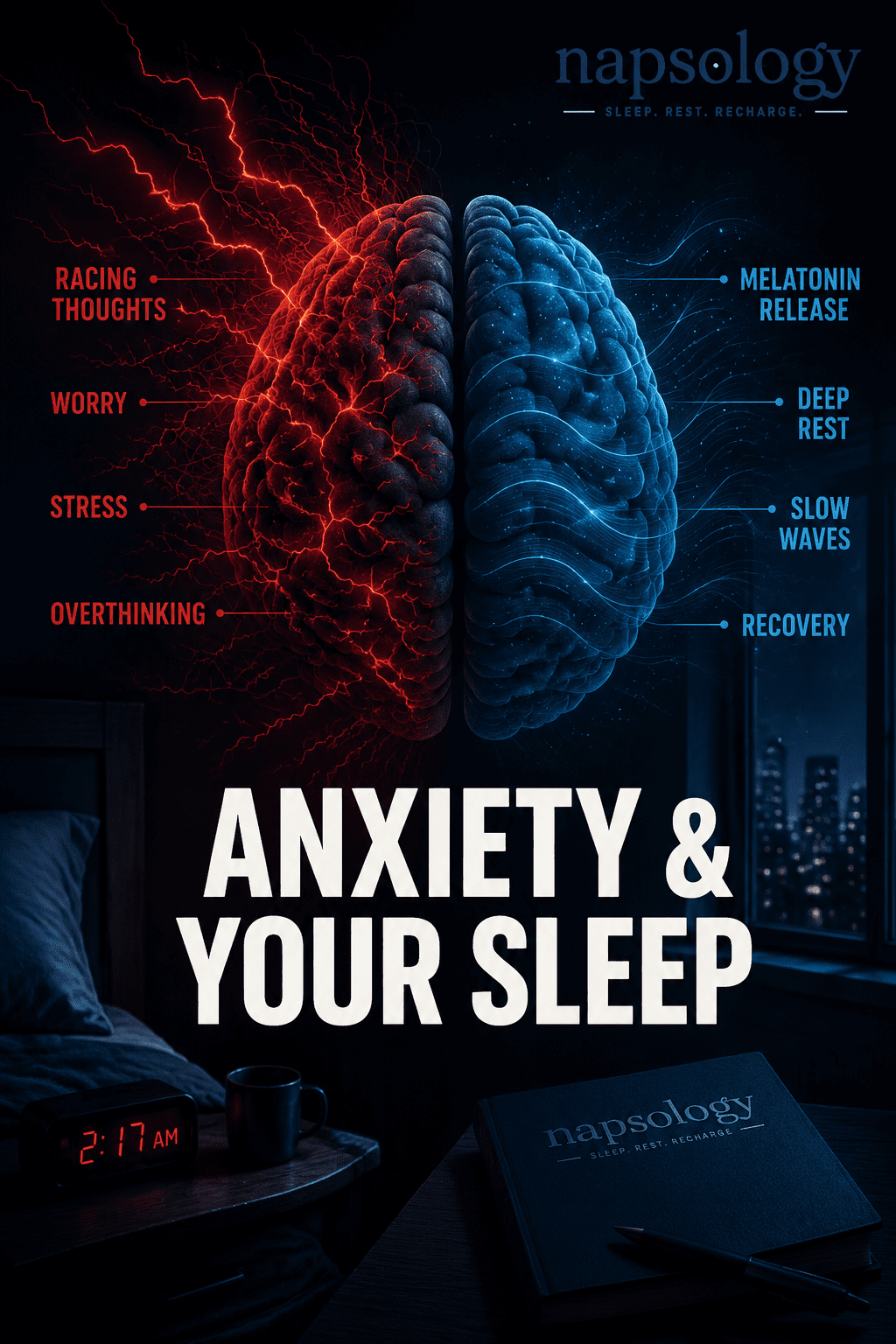
Yes — and it does so in a way that’s almost cruel. Anxiety activates your body’s threat-response system, flooding you with cortisol and adrenaline at exactly the moment you need your nervous system to wind down. The result is a racing mind, physical tension, and a state of hyperarousal that makes sleep feel physiologically impossible [4].
Here’s what the research actually says: the relationship between anxiety and insomnia is bidirectional. Anxiety makes sleep harder. Poor sleep makes anxiety worse. Over time, this becomes a self-reinforcing loop that has nothing to do with willpower or relaxation techniques.
In practice, this means that treating the sleep problem without addressing the anxiety — or vice versa — rarely works long-term. If you’ve tried every sleep tip and still can’t switch off at night, anxiety may be the actual root cause.
“Most people who struggle with sleep aren’t failing at relaxation. They’re dealing with a nervous system that’s stuck in a threat state — and no amount of lavender pillow spray fixes that.”
If this resonates, it’s worth taking a proper assessment before assuming you just have “bad sleep.” This free insomnia and anxiety test asks you to evaluate how you’ve felt over the past two weeks — it’s anonymous, takes a few minutes, and can help you understand whether what you’re dealing with is clinical insomnia, anxiety-driven sleep disruption, or something else entirely.
Medical disclaimer: This test is not a substitute for professional medical advice. Always consult a qualified healthcare provider for diagnosis and treatment.
What Medical Conditions Cause Insomnia?
Several common medical conditions directly disrupt sleep — and many go undiagnosed for years. The most frequent offenders are sleep apnea, restless legs syndrome (RLS), acid reflux, chronic pain, and thyroid disorders.
Sleep apnea causes repeated pauses in breathing during sleep. You may not even know it’s happening, but you’ll wake up exhausted, often with a headache, and your partner may report loud snoring [3]. It’s more common than most people think, and it’s treatable.
Restless legs syndrome creates uncomfortable sensations in the legs — often described as crawling, tingling, or an irresistible urge to move them. It tends to be worst at night and is more common in women [3]. If your legs feel restless the moment you lie down, this is worth raising with a doctor.
Acid reflux and GERD are frequently overlooked sleep disruptors. Spicy or heavy meals close to bedtime can trigger reflux that wakes you up — or prevents you from falling asleep in the first place [1].
Other conditions worth knowing about:
- Chronic pain (arthritis, fibromyalgia, back pain)
- Hyperthyroidism — elevated thyroid hormones act like a stimulant
- Menopause-related hormonal shifts, which cause night sweats and fragmented sleep
- Depression, which often manifests as early morning waking rather than difficulty falling asleep
Why Do I Wake Up in the Middle of the Night?
Waking at 2am or 3am and being unable to get back to sleep is a different problem from not being able to fall asleep initially — and it has different causes.
The most common reasons include: blood sugar drops (especially if you ate a high-sugar meal before bed), alcohol metabolism (alcohol sedates you initially but causes arousal as it’s processed), sleep apnea episodes, anxiety about the next day, and simply being a lighter sleeper in your second sleep cycle [3].
Alcohol is a particularly sneaky one. It feels like it helps you fall asleep, but it fragments the second half of your night significantly. The honest version is that alcohol is not a sleep aid — it’s a sedative that borrows from your sleep quality later.
If you’re waking consistently at the same time each night, that’s worth tracking. A pattern can point to a specific cause — whether physiological or psychological.
How Does Screen Time Affect My Ability to Fall Asleep?
Screen time disrupts sleep through two separate mechanisms: blue light suppression of melatonin, and mental stimulation that keeps your brain in an alert state [4].
Blue light from phones and tablets signals to your brain that it’s still daytime, suppressing melatonin production and delaying your natural sleep onset. But — and this is the part most people miss — the mental stimulation from scrolling, reading news, or watching emotionally engaging content is often the bigger problem. Your brain needs a transition period before sleep. Screens don’t provide one.
Worth trying if you’re resistant to the “no screens” advice: switch to passive, low-stakes content in the last 30 minutes rather than cutting screens entirely. A boring documentary beats doomscrolling. And if you’re watching something that makes your heart race or your mind race, that’s the actual problem — not the screen itself.
Common Mistakes People Make That Ruin Their Sleep
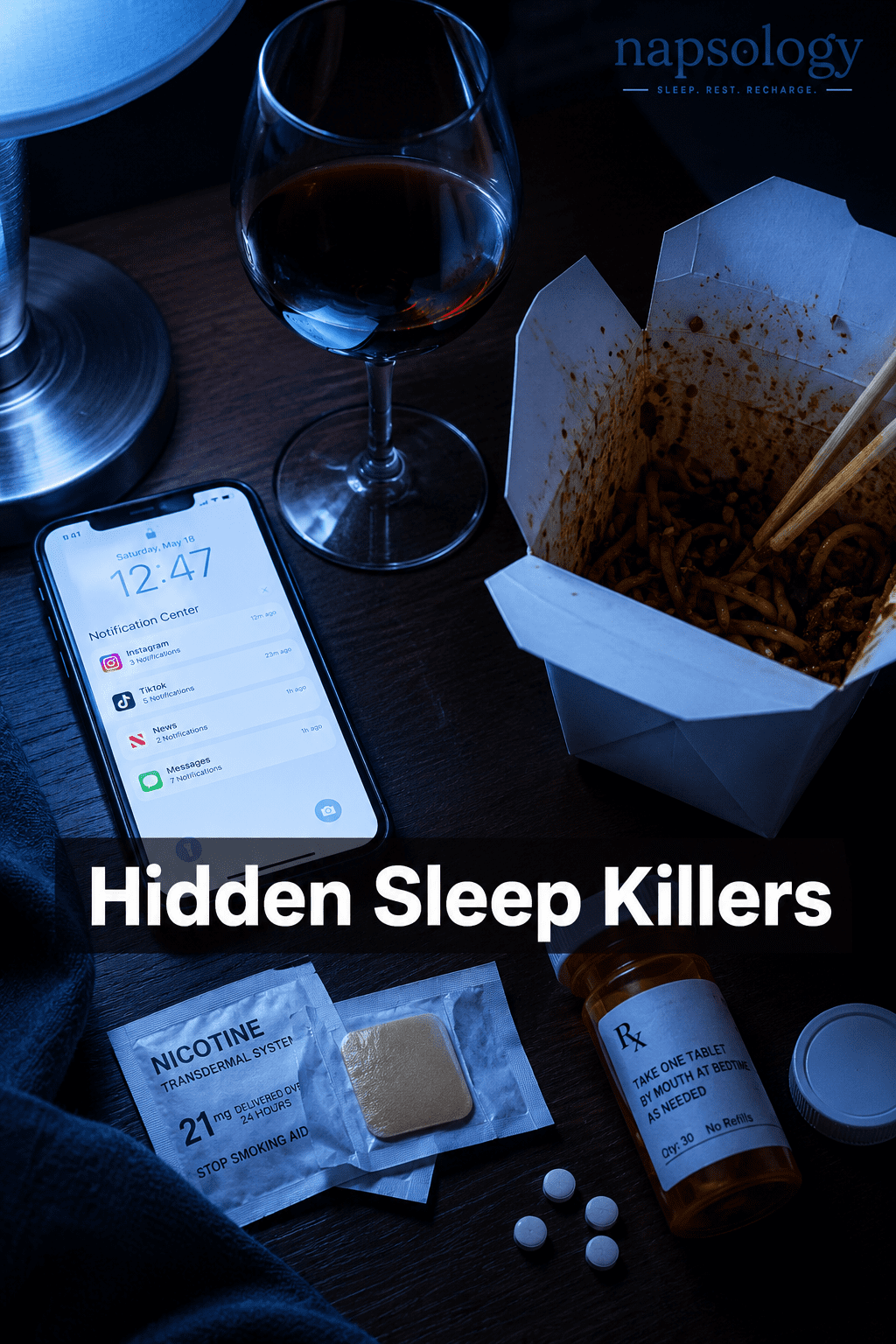
Most sleep mistakes aren’t obvious. The big ones — caffeine after 2pm, irregular bedtimes, napping too late — get covered everywhere. Here are the ones that don’t:
Exercising too close to bedtime. Regular exercise improves sleep quality significantly, but high-intensity aerobic exercise within 2–3 hours of bed can raise your core temperature and heart rate enough to delay sleep onset [3]. Morning or early afternoon exercise is better for sleep.
Hot showers right before bed. This one surprised me when I first read it. A hot shower raises your core body temperature — and your body needs to cool down to initiate sleep. If you want to use a shower as a wind-down ritual, take it 90 minutes before bed so your temperature has time to drop [1].
Letting your pet sleep in your bed. I know. Nobody wants to hear this. But pets move, make noise, and can trigger allergies — all of which fragment sleep in ways you may not consciously register [1].
Wearing the wrong sleepwear (or none at all). What you wear to bed signals your brain that sleep is coming. Cotton or moisture-wicking fabrics help regulate temperature. If you run hot at night, this is one of the simplest adjustments you can make [1].
Relationship conflict before bed. Research from Johns Hopkins suggests that negative daytime interactions with a bed partner can measurably reduce sleep quality that night [1]. This is not a wellness platitude — it’s a physiological response to unresolved stress.
Can Diet and Exercise Help Me Sleep Better?
Yes – but the timing and specifics matter more than most people realize.
Diet-wise, the key rules are: avoid large meals within 2–3 hours of bed, cut caffeine by early afternoon (caffeine has a half-life of about 5–6 hours, meaning half of a 3pm coffee is still in your system at 9pm), and be cautious with alcohol [3]. Spicy foods in particular can trigger reflux and worsen sleep apnea symptoms [1].
Exercise is one of the most consistently effective non-pharmaceutical sleep interventions available. Regular physical activity – even moderate walking – improves both sleep onset and sleep depth. The caveat is timing: vigorous exercise too close to bedtime can backfire [3].
A practical approach: aim for 30 minutes of moderate exercise most days, ideally in the morning or early afternoon. Eat your last substantial meal at least two hours before bed. Keep a consistent dinner time – your digestive system runs on a circadian rhythm too.
How Much Sleep Do Adults Actually Need?
Most adults need 7–9 hours per night, according to the Sleep Foundation [4]. But here’s the nuance: that’s total sleep time, not time in bed. If you’re lying in bed for 9 hours but only sleeping 6, you’re not getting 9 hours of sleep – you’re getting 6 hours of sleep and 3 hours of anxious wakefulness.
Sleep quality matters as much as quantity. Fragmented sleep – even if it adds up to 8 hours doesn’t deliver the same cognitive and physical restoration as consolidated sleep.
Some people genuinely function well on 6.5 hours. A small percentage need 9. But if you’re relying on caffeine to get through the day, waking up unrefreshed, or struggling to concentrate — you’re probably not getting enough quality sleep, regardless of what the clock says.
Best Natural Ways to Fall Asleep Faster
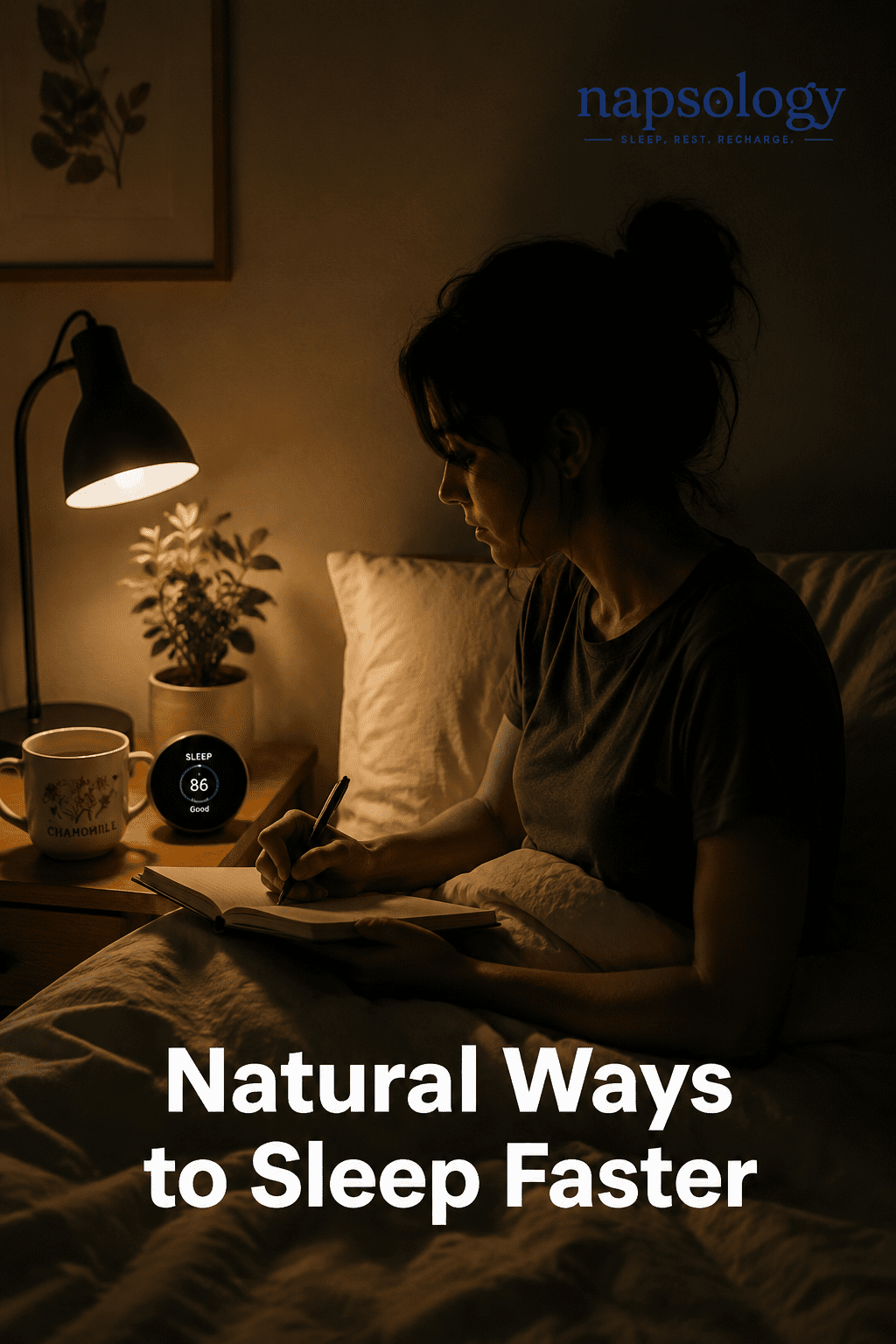
The most effective non-medication approaches to sleep are the ones that work with your body’s physiology rather than against it.
Cognitive Behavioral Therapy for Insomnia (CBT-I) is the gold standard — more effective than sleeping pills for chronic insomnia, with lasting results [4]. It addresses the thought patterns and behaviors that perpetuate sleeplessness. It’s available through therapists, apps, and online programs.
Stimulus control means using your bed only for sleep and sex — not reading, not watching TV, not scrolling. This retrains your brain to associate the bed with sleep rather than wakefulness.
Sleep restriction therapy sounds counterintuitive but works: you temporarily limit your time in bed to your actual sleep time, building sleep pressure until your sleep consolidates. This is best done with guidance.
Temperature management: keep your bedroom cool (around 65–68°F / 18–20°C), and consider a warm bath or shower 90 minutes before bed to trigger the body’s natural cooling response [1].
Journaling before bed can offload the mental to-do list that keeps your brain active at night. Writing down tomorrow’s tasks — not processing emotions, just listing — has been shown to reduce sleep onset time [4].
This is what worked for me personally: combining a consistent wind-down routine with stimulus control. It took about two weeks to notice a real difference, and it wasn’t linear. But it was the first thing that actually moved the needle after years of trying other approaches.
Are Sleeping Pills Safe to Use?
Sleeping pills can be appropriate for short-term use, but they come with real trade-offs that are worth understanding before you reach for them.
Over-the-counter options like diphenhydramine (the antihistamine in most sleep aids) cause tolerance quickly — often within a few nights — and leave many people feeling groggy the next day. They don’t improve sleep architecture; they sedate.
Prescription options like benzodiazepines and Z-drugs (zolpidem, eszopiclone) are more effective short-term but carry risks of dependence, rebound insomnia when stopped, and cognitive effects — particularly in older adults.
The honest version is: sleeping pills are a bridge, not a solution. They can help you get through a crisis period, but they don’t address why you can’t sleep. CBT-I has better long-term outcomes for chronic insomnia than medication alone [4].
If you’re considering medication, talk to your doctor about the specific type, duration, and an exit plan. Don’t start without that conversation.
What’s the Difference Between Insomnia and Just Being a Light Sleeper?
Being a light sleeper means you wake easily in response to noise, light, or movement — but you can fall back asleep relatively quickly and feel reasonably rested. Insomnia is a clinical condition defined by persistent difficulty falling asleep, staying asleep, or waking too early, combined with daytime impairment [4].
The key distinction is the daytime impact. If you wake at 5am and feel fine, you might just be a natural early riser. If you’re exhausted, irritable, struggling to concentrate, and this has been happening for more than three months — that’s insomnia, and it deserves proper attention.
It’s not just you. Chronic insomnia affects roughly 10–15% of adults, and many of them have been told to “just relax” or “try melatonin” for years without real improvement.
How Do I Know If My Sleep Problems Are Serious?
Some sleep problems are situational and resolve on their own. Others are signs of something that needs medical attention.
Signs that warrant a doctor’s visit:
- You’ve had sleep problems for more than three months
- You’re excessively sleepy during the day despite adequate time in bed
- Your partner reports that you stop breathing during sleep, or you wake gasping
- You have an overwhelming urge to move your legs at night
- Sleep problems are affecting your work, relationships, or mental health
- You’re relying on alcohol or medication to sleep
If you’ve been dealing with this for a while and you’re not sure where on the spectrum you fall, a structured assessment can help. This free insomnia test evaluates how you’ve been feeling over the past two weeks and can give you a clearer picture of what you’re dealing with before you book a doctor’s appointment.
Medical disclaimer: This assessment is not a substitute for professional medical evaluation.
Signs That I Should See a Doctor About Sleep Issues
The threshold for seeing a doctor is lower than most people think — and waiting too long is one of the most common mistakes.
Chronic sleep deprivation is linked to cardiovascular disease, type 2 diabetes, cognitive decline, and increased cancer risk [2]. These aren’t distant hypothetical risks. They’re documented outcomes of years of poor sleep.
See a doctor if:
- Sleep problems have lasted more than 3 months
- You snore loudly or wake gasping
- Daytime fatigue is affecting your safety (driving, operating machinery)
- You’ve tried CBT-I or behavioral approaches without improvement
- You suspect an underlying condition like sleep apnea or RLS
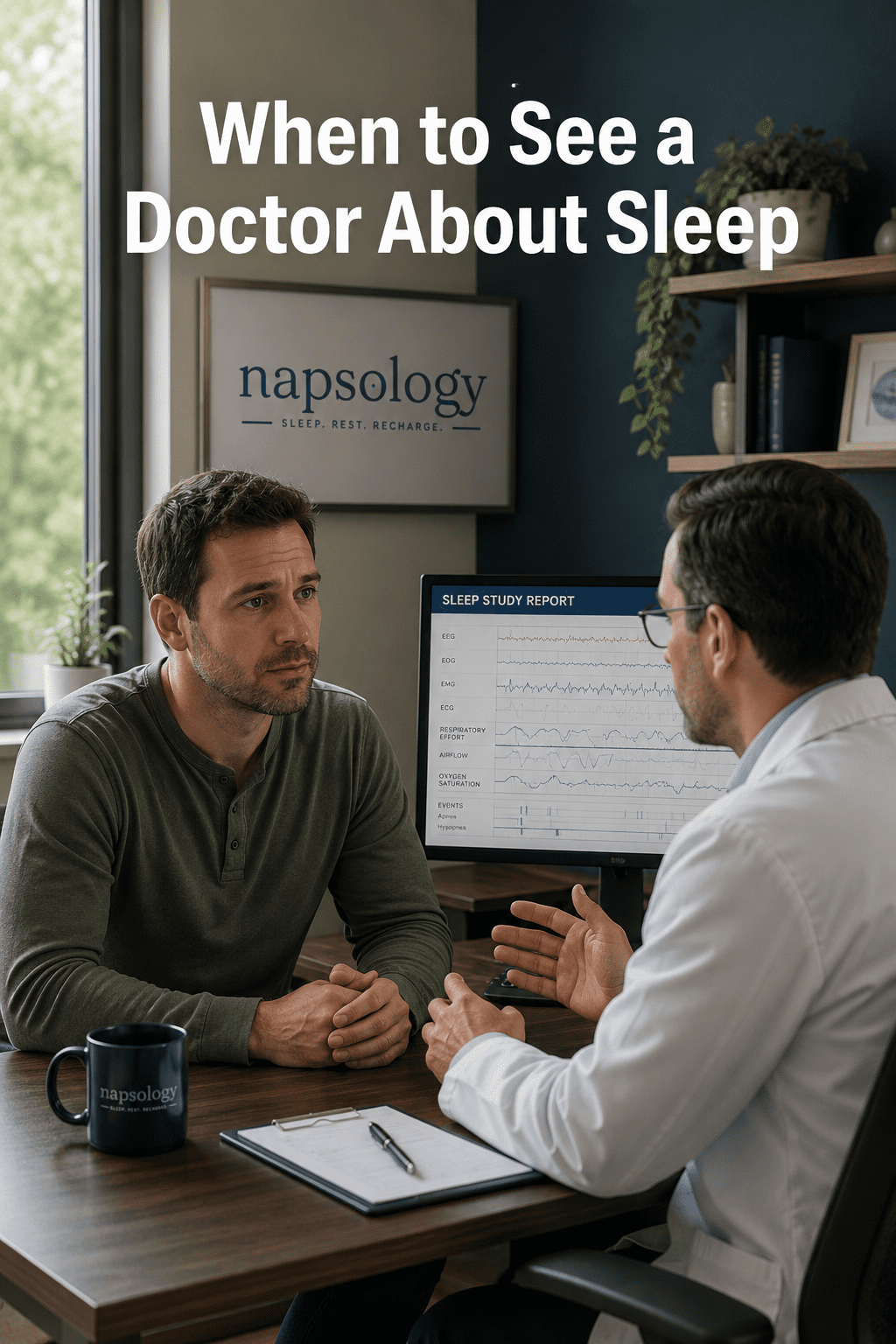
A sleep specialist can order a sleep study (polysomnography) if needed — this is the gold standard for diagnosing sleep apnea and other sleep disorders. It’s not as intimidating as it sounds, and it can finally give you answers after years of guessing.
Conclusion
If you’ve been lying awake asking why you can’t sleep, you’re not broken and you’re not alone. The reasons are real, they’re specific, and most of them are fixable — but only once you identify which ones actually apply to you.
Start with what you can observe: your diet in the hours before bed, your alcohol intake, your bedroom temperature, and whether anxiety is keeping you in a state of hyperarousal at night. Then look deeper — at whether a medical condition might be involved, whether your relationship with your bed has become adversarial, and whether what you’re experiencing has crossed into clinical insomnia territory.
Actionable next steps:
- Track your sleep for one week — note bedtime, wake time, any mid-night waking, and how you feel in the morning. Patterns matter.
- Remove one likely culprit this week: alcohol before bed, late caffeine, or late exercise.
- If you’ve been dealing with this for more than three months, book a GP appointment. Mention the words “chronic insomnia” specifically.
- Look into CBT-I — either through a therapist or a structured online program. It’s the most evidence-backed long-term solution available [4].
You don’t have to fall asleep — you just have to rest. And sometimes, removing the pressure to perform sleep is the first thing that actually helps.
For more on sleep science, insomnia, and what actually works, explore Napsology — a blog written by someone who lives with a sleep disorder and has spent years separating the useful from the noise.
FAQ
Q: Why can’t I sleep even when I’m exhausted?
Being physically tired doesn’t automatically switch off a hyperaroused nervous system. If anxiety, cortisol, or an underlying condition like sleep apnea is present, exhaustion and sleeplessness can coexist.
Q: Is it normal to wake up at 3am every night?
Occasional early waking is normal. Waking at the same time every night and being unable to return to sleep — especially with a racing mind — is a common pattern in anxiety-related insomnia and warrants attention.
Q: Can melatonin help with insomnia?
Melatonin is most effective for circadian rhythm disruption — jet lag, shift work, or delayed sleep phase. It’s less effective for chronic insomnia caused by anxiety or behavioral factors.
Q: How long does it take for CBT-I to work?
Most people see meaningful improvement within 4–8 weeks of consistent CBT-I practice. It’s not instant, but the results tend to be durable — unlike medication.
Q: Does alcohol help you sleep?
No. Alcohol sedates initially but disrupts the second half of sleep significantly, reducing REM sleep and causing early morning waking. It’s one of the most common hidden sleep disruptors.
Q: What’s the best sleeping position for sleep quality?
Side sleeping is generally recommended, especially for people with sleep apnea or acid reflux. Back sleeping can worsen both conditions.
Q: Can a bad diet cause insomnia?
Yes. Large meals, spicy food, high sugar intake, and caffeine close to bedtime all interfere with sleep onset and sleep quality.
Q: Is it bad to nap during the day if I have insomnia?
Long or late naps reduce sleep pressure and make it harder to fall asleep at night. If you need to nap, keep it under 20 minutes and before 3pm.
Q: What does unrefreshing sleep mean?
Waking up after a full night’s sleep and still feeling tired is called unrefreshing sleep. It’s a hallmark symptom of sleep apnea, fibromyalgia, and depression — and should be mentioned to a doctor.
Q: Can exercise cure insomnia?
Regular exercise significantly improves sleep quality and is one of the most effective behavioral interventions available. It’s not a cure, but it’s one of the highest-impact changes most people can make.
References
[1] Why Can’t I Sleep? 6 Surprising Factors – https://www.hopkinsmedicine.org/health/wellness-and-prevention/why-cant-i-sleep-6-surprising-factors
[2] Science Links Poor Sleep Increased Cancer Risk Expert Advice – https://www.tomsguide.com/wellness/sleep/science-links-poor-sleep-increased-cancer-risk-expert-advice
[3] 8 Reasons Why You’re Not Sleeping – https://www.health.harvard.edu/sleep/8-reasons-why-youre-not-sleeping
[4] What to Do When You Can’t Sleep – https://www.sleepfoundation.org/insomnia/treatment/what-do-when-you-cant-sleep