Post Disclaimer
This post contains affiliate links. If you buy something through these links, I may earn a small commission at no extra cost to you. Full disclosure.
This article is for informational purposes only and does not constitute medical advice. Always consult a healthcare professional for personal health concerns. Full disclaimer.
Last updated: June 19, 2026
Quick Answer: The most effective healthy habits before bed work by lowering your body’s arousal level – physically, mentally, and neurologically. That means dimming lights, cooling the room, stopping screens earlier than you think, eating the right things (and avoiding the wrong ones), and giving your nervous system a consistent signal that it’s safe to let go. None of this is complicated. But the order, timing, and consistency matter more than most people realize.
Key Takeaways
- Stop screens at least 60-90 minutes before bed, not 20 minutes – blue light suppresses melatonin more than most people account for [5]
- A consistent sleep and wake time is one of the most evidence-backed changes you can make, including weekends [4]
- Gentle stretching and slow breathing before bed reduce physical tension that keeps your nervous system alert
- Avoid caffeine after 2pm, alcohol within 3 hours of bed, and heavy meals within 2 hours of sleep [4]
- Journaling or a “worry dump” before bed can reduce racing thoughts at night
- Sleep supplements like melatonin are generally safe short-term but aren’t a fix for chronic insomnia
- Your bedroom temperature, light level, and noise matter more than most people give credit for
- If you’ve been struggling for months, a free insomnia screening is worth doing before trying more habit changes
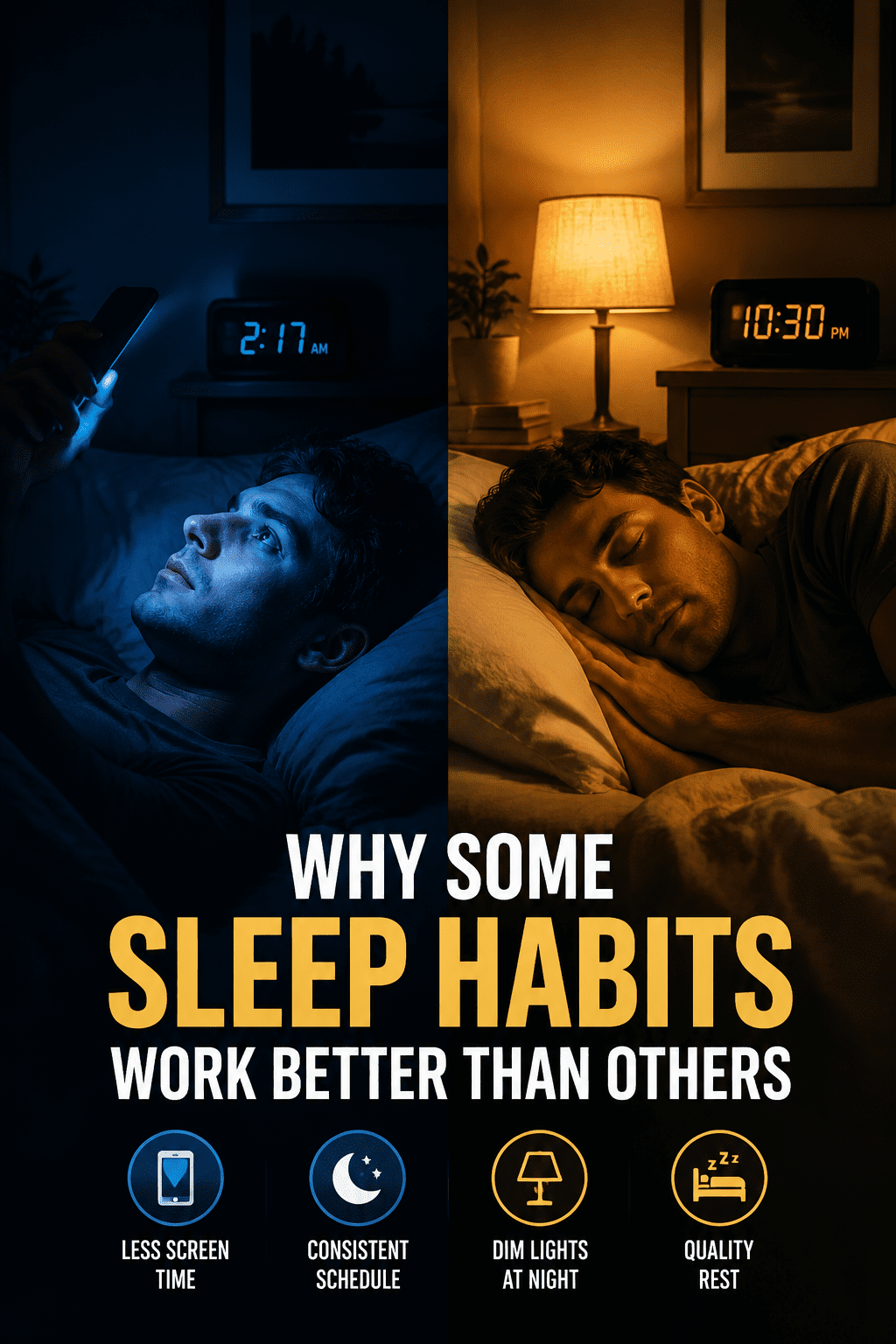
Why Some Healthy Habits Before Bed Work Better Than Others
Not all bedtime habits are equal, and the reason some work while others don’t comes down to one thing: your nervous system. Sleep isn’t something you force – it’s something your body does when it feels safe and calm enough to let go. Habits that lower physiological arousal (heart rate, cortisol, mental activity) work. Habits that just feel relaxing but don’t actually reduce arousal often don’t.
Most people who struggle with sleep have tried the basics. Warm bath, no coffee after noon, maybe some lavender spray. And when those things didn’t fix it, they concluded that sleep hygiene just doesn’t work for them. The honest version is – those basics are real, but they’re incomplete. Timing, consistency, and the specific order you do things in all affect how well they land.
Here’s what the research actually says: the brain learns sleep through repeated association. When you do the same things in the same order every night, your nervous system starts treating those cues as a signal that sleep is coming. That’s not just a wellness idea – it’s classical conditioning, and it works [4].
Common mistake: Doing all the “right” things but doing them inconsistently. One good night followed by a late night on the weekend resets a lot of the progress you’ve built.
How Long Before Bed Should You Stop Using Your Phone
You should stop using your phone – and any screen – at least 60 to 90 minutes before bed. Most advice says 30 minutes. That’s not enough.
Blue light from screens suppresses melatonin production, which is the hormone your body uses to signal that it’s nighttime [5]. But the bigger problem isn’t just the light – it’s the mental stimulation. Scrolling social media, reading news, or even texting keeps your brain in a reactive, alert state that takes time to come down from. The light is one part of it. The cognitive activation is the other.
In practice this means: if you want to be asleep by 11pm, screens should be off by 9:30pm at the latest. That’s earlier than feels necessary. But if you’ve been dealing with this for a while, you’ve probably noticed that your brain doesn’t just switch off the moment you put the phone down.
Worth trying if you’re not ready to go fully screen-free: switch to a rerun of a familiar, low-stakes TV show instead of anything new or emotionally stimulating. Sleep researchers have noted that rewatching shows you already know prevents the mental engagement of following a new plot, which can help the brain coast toward sleep rather than stay hooked [3].
What Are the Best Ways to Improve Sleep Quality Naturally
The best natural ways to improve sleep quality are: keeping a consistent sleep schedule, reducing evening light exposure, managing pre-bed eating and drinking, using your bed only for sleep, and addressing the mental load that follows you to bed.
These aren’t new ideas. But the reason they keep appearing in every sleep guide is that they’re the ones with the most consistent evidence behind them [4]. The problem isn’t that people don’t know about them – it’s that they try them for three days, don’t see dramatic results, and give up.
For a deeper look at how small nightly habits compound over time, the sleep hygiene guide for adults on Napsology covers 15 specific habits with context on why each one matters.
One thing I’ve found personally: the habits that helped me most weren’t the dramatic ones. It wasn’t blackout curtains or a $400 weighted blanket. It was going to bed at the same time every night – even when I didn’t feel tired – and stopping the habit of lying in bed reading on my phone. Those two changes alone shifted things more than anything else I tried.
What Stretches Help Relax Your Body Before Sleeping
Gentle, slow stretching before bed reduces muscle tension and activates the parasympathetic nervous system – the part of your body that handles rest and recovery. You don’t need a yoga routine. Five to ten minutes is enough.

The most useful stretches for sleep are:
- Child’s pose – releases lower back tension, slows breathing naturally
- Supine spinal twist – lying on your back, dropping both knees to one side, then the other
- Legs up the wall – simple, passive, and genuinely calming for the nervous system
- Seated forward fold – stretches the hamstrings and encourages a slow exhale
The reason this matters is that physical tension and mental tension feed each other. If your body is tight, your brain reads that as a signal that something’s wrong. Releasing the physical tension gives the mental state somewhere to go.
Pair stretching with slow breathing – inhale for 4 counts, exhale for 6 – and you’re actively downregulating your nervous system rather than just hoping it calms down on its own.
What Foods and Drinks Should You Avoid Before Bedtime
Avoid caffeine after 2pm, alcohol within 3 hours of sleep, and heavy or spicy meals within 2 hours of bed. These three are the main dietary disruptors of sleep quality [4].
Caffeine has a half-life of around 5-6 hours, which means a 3pm coffee still has half its caffeine in your system at 8-9pm. Most people underestimate this. Alcohol is trickier – it can help you fall asleep faster but fragments sleep in the second half of the night, reducing REM sleep and leaving you feeling unrefreshed [4].
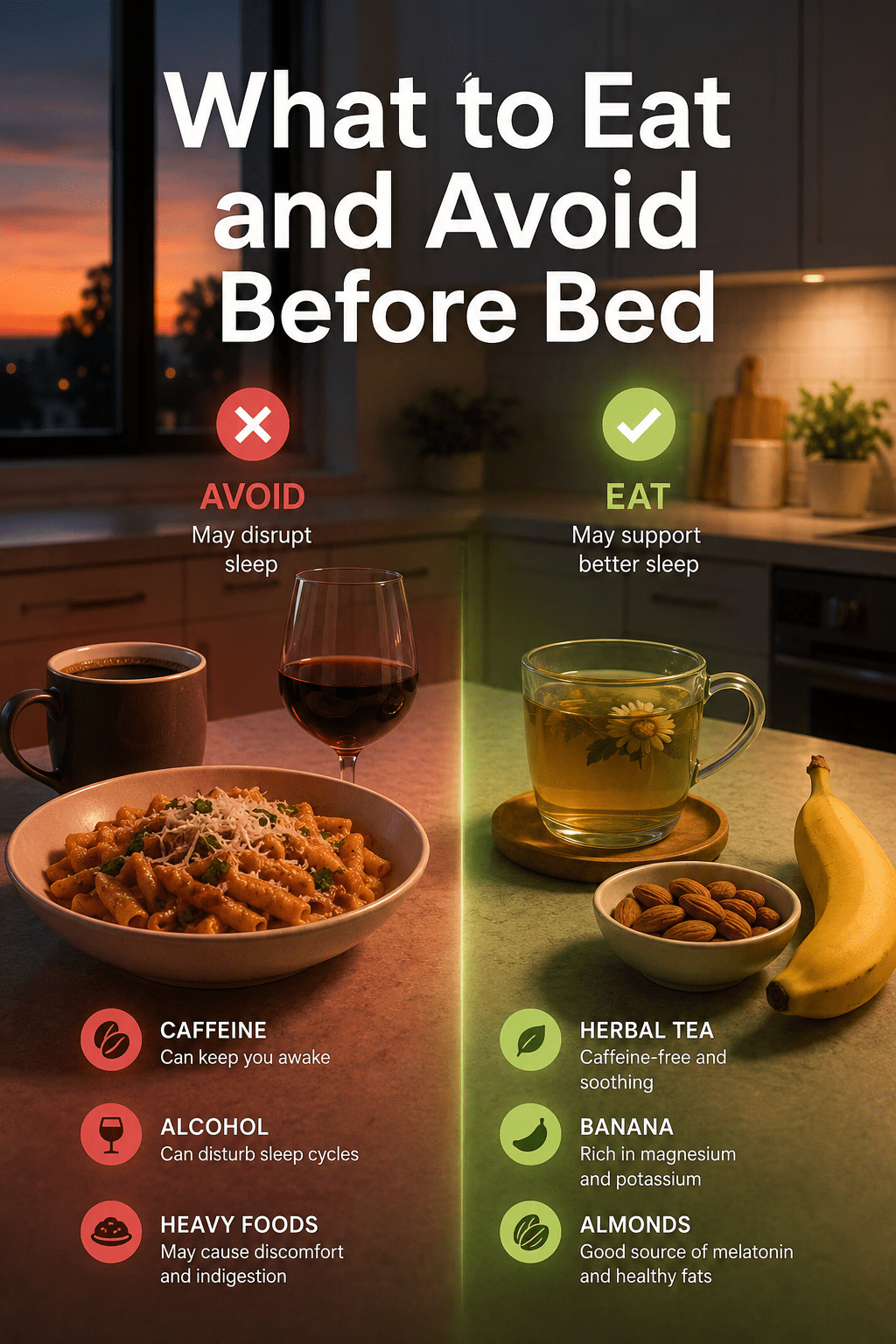
Heavy meals close to bedtime force your digestive system to stay active while your body is trying to shift into sleep mode. That conflict disrupts sleep onset and can cause discomfort that wakes you mid-night.
What you can have: A small snack with tryptophan – like a banana, a small handful of almonds, or a piece of whole grain toast – can support melatonin production without overloading digestion. Herbal teas like chamomile or passionflower are fine and may have mild calming effects, though the evidence is modest.
Can Meditation Really Help You Fall Asleep Faster
Yes – but with a caveat. Meditation helps most when it’s used consistently and when it targets the right problem. If your main issue is a racing mind at bedtime, mindfulness-based practices have solid evidence behind them for reducing sleep-onset insomnia [6].
The caveat is that meditation doesn’t work the same way for everyone, and if you’ve never meditated before, trying to learn it at 11pm when you’re already frustrated and wired is a tough starting point. Start with guided body scan meditations – they give your brain something passive to follow rather than asking you to “clear your mind,” which is not how minds work.
If you’ve been dealing with this for a while and the racing thoughts feel like the core problem, the Napsology guide on insomnia and overthinking goes into specific techniques for quieting that loop.
You don’t have to fall asleep – you just have to rest. That reframe alone can reduce the performance anxiety that makes insomnia worse.
Are Sleep Supplements Safe to Use Every Night
Short-term use of melatonin is generally considered safe for most adults, but it’s not a long-term fix for chronic insomnia. Melatonin works best for circadian rhythm issues – jet lag, shift work, or delayed sleep phase – rather than for the kind of insomnia driven by anxiety or hyperarousal.
The dose most people take is too high. Studies suggest that 0.5mg to 1mg is often as effective as 5mg or 10mg, with fewer next-day effects. Start low.
Other supplements like magnesium glycinate and L-theanine have some evidence for mild sleep support and are generally low-risk. But “natural” doesn’t automatically mean safe for everyone – if you’re on medications, check with a doctor before adding anything regularly.
Medical disclaimer: This article is informational only and does not constitute medical advice. Always consult a qualified healthcare provider before starting any supplement.
What Common Mistakes Do People Make in Their Nighttime Routine
The most common mistake is building a routine that’s relaxing in theory but still keeps the brain engaged. Reading in bed, scrolling with night mode on, watching new TV shows, or having intense conversations before sleep all count.
A few specific ones worth flagging:
- Brushing teeth right before bed – sounds harmless, but the bright bathroom light and the stimulating sensation of minty toothpaste can nudge your brain back toward alertness. Brush at least 45-60 minutes before you actually want to sleep [1]
- Reading in bed – this one’s complicated. Reading a physical book is better than a screen, but if you do it in bed regularly, your brain starts associating the bed with wakefulness rather than sleep [2]. Read in a chair or on the couch instead
- Checking the clock when you wake at night – this increases anxiety about how much sleep you’re losing, which makes it harder to fall back asleep. Turn the clock away
- Trying too hard – sleep effort is real. The more you try to force sleep, the more alert you become. This is the paradox that makes insomnia self-sustaining
For more on what actually works when the basics haven’t, the Napsology guide on building a sleep routine that calms your brain is worth reading.
How Much Does a Good Bedtime Routine Actually Impact Health
A consistent bedtime routine has measurable effects on sleep quality, mood, cognitive function, immune health, and cardiovascular risk over time. This isn’t overstating it – chronic poor sleep is linked to serious long-term health outcomes [6].
The more immediate effects most people notice within 2-3 weeks of consistent habits: falling asleep faster, waking less during the night, and feeling more alert during the day. Those aren’t small things. If you’ve been running on broken sleep for months or years, even modest improvements in sleep quality have a meaningful effect on how you function.
The reason this matters is that sleep isn’t just rest – it’s when your brain consolidates memory, clears metabolic waste, and regulates emotional processing. Cutting it short or fragmenting it doesn’t just make you tired. It affects everything else. For a closer look at how sleep stages affect recovery, the guide to improving REM sleep on Napsology explains what’s happening during each phase and why it matters.
What Do Sleep Experts Recommend for People With Insomnia
Sleep experts consistently recommend Cognitive Behavioral Therapy for Insomnia (CBT-I) as the first-line treatment for chronic insomnia – above medication and above supplements. It addresses the thought patterns and behaviors that maintain insomnia, not just the symptoms [4].
CBT-I includes sleep restriction (temporarily limiting time in bed to build sleep pressure), stimulus control (retraining your brain to associate bed with sleep), and cognitive restructuring (changing how you think about sleep). It’s not easy, but it has the strongest evidence of anything available.
If you’re not sure whether what you’re experiencing is clinical insomnia, it’s worth doing a proper screening.
If you’ve been struggling with sleep for more than a few weeks, consider taking this free insomnia test. It evaluates how you’ve felt over the past two weeks, takes only a few minutes, and is completely anonymous: Take the free insomnia test here
Professional sleep consultations vary in cost – a sleep study (polysomnography) can run $1,000-$3,000 without insurance in the US, while CBT-I therapy sessions typically range from $100-$200 per session. Many therapists now offer CBT-I online, which is more accessible and often covered by insurance. If cost is a barrier, there are also validated digital CBT-I programs that are significantly cheaper.
How Do Healthy Habits Before Bed Affect Different Age Groups
The core habits work across age groups, but the specifics shift. Adults 25-45 dealing with stress-driven insomnia benefit most from cognitive approaches – journaling, worry dumps, and CBT-I techniques. New parents dealing with fragmented sleep need different strategies focused on maximizing sleep quality in shorter windows rather than extending duration.
Older adults tend to experience earlier circadian shifts (going to bed and waking earlier naturally) and lighter sleep with more frequent waking. For them, sleep restriction and stimulus control are particularly useful, and melatonin timing matters more than dose.
Shift workers face a different challenge entirely – their circadian rhythm is chronically misaligned. Light therapy, strategic napping, and very strict sleep environment control matter more for this group than standard bedtime routines.
It’s not just you – the same advice doesn’t work the same way for everyone, and that’s not a personal failing. It means you might need to adjust the approach rather than abandon it.
For people dealing with waking up during the night, the pattern of disruption often points to a specific cause – and the fix is usually targeted rather than general.
If any of the patterns above sound familiar – racing mind at bedtime, waking at 3am, feeling exhausted but unable to sleep – it may be worth getting a clearer picture of what’s actually going on. This free, anonymous insomnia test takes about 5 minutes and evaluates how you’ve been feeling over the past two weeks. It’s a useful starting point before deciding what to try next.
Conclusion
If you’ve read this far, you’re probably not someone who just needs to “try chamomile tea.” You’ve been dealing with this for a while, and you want something that actually makes a difference.
Here’s where to start, in order:
- Fix your wake time first – pick a consistent time and hold it every day, even after a bad night. This is the anchor everything else builds on.
- Move screens back to 90 minutes before bed – not 30, not 20. Ninety.
- Stop using your bed for anything except sleep – no reading, no phone, no TV in bed.
- Add 5-10 minutes of gentle stretching or slow breathing before you get into bed.
- Write down your worries before bed – not to solve them, just to get them out of your head and onto paper.
- Cut caffeine after 2pm and alcohol within 3 hours of sleep.
None of this is fast. Two to three weeks of consistency is the minimum before you can judge whether something’s working. But these are the habits with the most evidence behind them, and they compound over time.
If you’ve tried all of this and you’re still struggling, that’s a signal to look deeper – at whether anxiety, a circadian rhythm issue, or a clinical sleep disorder might be driving things. The Napsology guide on why you can’t sleep even when you’re tired is a good next read, and the free insomnia test is worth taking if you haven’t already.
You don’t have to fix everything at once. Pick one thing. Do it consistently. See what shifts.
FAQ
Q: How long does it take for a bedtime routine to start working?
Most people notice some improvement within 1-2 weeks of consistent habits, but meaningful changes in sleep quality typically take 3-4 weeks. Consistency matters more than perfection.
Q: Is it okay to nap if I slept badly the night before?
Short naps (20-30 minutes) before 3pm are generally fine. Longer naps or naps taken late in the day reduce sleep pressure at night and can make insomnia worse.
Q: Does reading before bed help or hurt sleep?
It depends where you read. Reading a physical book in a chair or on the couch is fine. Reading in bed – even a physical book – can weaken the association between your bed and sleep over time [2].
Q: What’s the best bedroom temperature for sleep?
Research consistently points to 65-68°F (18-20°C) as the range where most adults sleep best [4]. Your body temperature naturally drops during sleep onset, and a cool room supports that process.
Q: Can I use melatonin every night?
Short-term use is generally considered safe, but nightly use for chronic insomnia isn’t recommended as a standalone strategy. It works better for circadian issues than for anxiety-driven sleeplessness. Start with 0.5-1mg rather than the high doses most products sell.
Q: What if I do everything right and still can’t sleep?
That’s a sign the issue may be clinical rather than behavioral. CBT-I with a trained therapist is the most evidence-backed next step. A free insomnia screening like this one can help clarify what you’re dealing with.
Q: Is alcohol before bed really that bad?
Yes – even though it helps you fall asleep faster, alcohol disrupts the second half of your sleep cycle, reducing REM sleep and causing more frequent waking after 3-4am [4].
Q: Do weighted blankets actually help?
Some people find them genuinely calming, particularly those with anxiety. The evidence is modest but not nothing. They’re worth trying if you run cold and tend to feel better with pressure – but they’re not a fix for insomnia.
References
[1] Trouble Falling Asleep? Brushing Your Teeth Right Before Bed Could Be To Blame, Expert Says – https://www.tomsguide.com/wellness/sleep/trouble-falling-asleep-brushing-your-teeth-right-before-bed-could-be-to-blame-expert-says
[2] The Bedtime Reading Habit That Could Be Behind Your 3 A.M. Wake-Ups – https://www.tomsguide.com/wellness/sleep/the-bedtime-reading-habit-that-could-be-behind-your-3-a-m-wake-ups
[3] Sleep Researcher Shares 4 Unusual Tips For Falling Asleep Quickly, Including Watching Re-Runs Of Your Favourite TV Show – https://www.tomsguide.com/wellness/sleep/sleep-researcher-shares-4-unusual-tips-for-falling-asleep-quickly-and-they-include-watching-re-runs-of-your-fave-tv-show
[4] Mayo Clinic – Sleep Tips: 6 Steps to Better Sleep – https://www.mayoclinic.org/health/sleep/HQ01387
[5] Medical News Today – Sleep Hygiene – https://www.medicalnewstoday.com/articles/sleep-hygiene
[6] Science Links Poor Sleep to Increased Cancer Risk – Expert Advice – https://www.tomsguide.com/wellness/sleep/science-links-poor-sleep-increased-cancer-risk-expert-advice