
![7 Best Sleep Positions That Finally End Morning Back & Neck Pain Last updated: July 12, 2026 Quick Answer: The best sleep positions for back and neck pain are side sleeping with a pillow between your knees and back sleeping with a pillow under your knees. Both keep your spine in a neutral alignment, which reduces pressure on muscles and joints overnight. Stomach sleeping is the one position most consistently linked to worsening pain, and it's worth avoiding if you can. Key Takeaways Side sleeping with knee support is the most widely recommended position for lower back pain [1] Back sleeping with a pillow under the knees maintains the spine's natural curve [1] Stomach sleeping strains the neck and lumbar spine - it's the position to avoid [1] Your pillow height matters as much as your position - wrong pillow height causes neck pain regardless of how you sleep [2] Left-side sleeping is the best position during pregnancy and also helps with acid reflux Snoring and sleep apnea improve significantly with side sleeping compared to back sleeping It takes most people 2-4 weeks to adjust to a new sleep position consistently Mattress firmness should match your sleep position - side sleepers need softer, back sleepers need medium-firm Waking up with neck pain is almost always a pillow problem, not just a position problem [3] You can train yourself to stay in a new position using body pillows or rolled towels as physical barriers What Are the Best Sleep Positions for Back Pain? Side sleeping with a pillow between your knees is the single most recommended position for back pain, followed closely by back sleeping with a pillow under your knees. Both positions reduce spinal compression and help your muscles actually relax overnight instead of working to compensate for poor alignment. Here's what the research actually says: according to the Mayo Clinic, sleeping on your side with your legs slightly drawn toward your chest and a pillow between your knees helps align the spine, pelvis, and hips, taking pressure off the lower back [1]. Back sleeping with a pillow under the knees maintains the natural lumbar curve and lets the back muscles decompress [1]. The honest version is that there's no single "perfect" position for everyone. Back pain has different causes - disc issues, muscle tightness, SI joint problems - and what helps one person may not help another. But these two positions are the safest starting point for most people. The 7 positions, ranked from most to least back-friendly: Side sleeping with pillow between knees - best for most lower back pain Back sleeping with pillow under knees - best for maintaining lumbar curve Fetal position (side sleeping, knees drawn up) - good for disc herniation Side sleeping with full body pillow - reduces hip and shoulder pressure Back sleeping flat - neutral but less effective than with knee support Reclined back sleeping (adjustable base or wedge) - helpful for spinal stenosis Stomach sleeping with hip pillow - last resort if you can't change positions [1] Side Sleeping vs Back Sleeping - Which Is Actually Better? For most people, side sleeping wins - but back sleeping is better for specific conditions like sleep apnea or facial pressure issues. Side sleeping is the most common position worldwide, and it has real advantages: it reduces snoring, is the safest option during pregnancy, and keeps the airway more open. The downside is that it can create shoulder and hip pressure if your mattress is too firm, and it can cause neck pain if your pillow isn't the right height. Back sleeping is better for keeping your face and neck in neutral alignment, which is why some physical therapists prefer it for neck pain specifically [3]. The problem is that it worsens snoring and is actively dangerous for people with untreated sleep apnea. In practice this means: if you snore, have acid reflux, or are pregnant, side sleeping is the better choice. If you have chronic neck pain and don't snore, back sleeping with proper pillow support may serve you better. How Do I Know If My Sleep Position Is Causing Neck Pain? If your neck pain is worse in the morning and improves within an hour of getting up, your sleep position - or your pillow - is almost certainly the cause. The pattern matters here. Pain that's worst right after waking and fades during the day points directly to something happening during sleep. Pain that builds throughout the day is more likely posture or tension-related. Signs your position is the problem: Stiffness on one side only (usually the side you sleep on) Pain that's worse after longer sleep, not less Headaches at the base of the skull in the morning Numbness or tingling in your arm or hand when you wake up Harvard Health notes that the wrong pillow is one of the most overlooked causes of chronic neck pain - specifically, a pillow that's too high or too low forces your neck into a bent position for hours [2]. Even a good sleep position won't help if your pillow is working against you. If you've been dealing with this for a while and nothing seems to fix it, the pillow is usually where I'd look first. I spent months adjusting my sleep position before realizing my pillow was the actual problem. What's the Best Pillow for Side Sleepers? Side sleepers need a firmer, higher pillow that fills the gap between the shoulder and the head - typically 4 to 6 inches, depending on shoulder width. The reason this matters is that when you lie on your side, your shoulder pushes your head upward. A pillow that's too flat lets your head drop, straining the neck muscles on the upper side. A pillow that's too thick pushes your head up and strains the opposite side. What to look for: Height: Should keep your head level with your spine - not tilted up or down Firmness: Medium-firm to firm so it doesn't compress flat under your head's weight Material: Memory foam or latex holds its shape better than down or polyester fill Width: Wide enough that shifting slightly doesn't take you off the pillow The Sleep Foundation recommends that side sleepers also consider a body pillow between the knees to prevent the hips from rotating and pulling the spine out of alignment [3]. This is one of those small changes that makes a noticeable difference faster than you'd expect. Can Sleeping on Your Stomach Cause Problems? Yes - stomach sleeping is the most problematic position for both neck and back health. It forces your neck to rotate to one side for hours, compresses the lumbar spine, and puts your back muscles in a shortened, strained position all night [1]. Most people who struggle with morning stiffness and can't figure out why are stomach sleepers. It's not just you - this position is genuinely hard on the body. If you can't break the habit, the Mayo Clinic suggests placing a pillow under your hips and lower abdomen - not under your head - to reduce the arch in your lower back [1]. Skip the head pillow entirely if you're a stomach sleeper, or use a very thin one, to reduce how far your neck has to rotate. Worth trying if you're a committed stomach sleeper: a body pillow placed along your side can give you the pressure sensation you're used to while gradually shifting you toward a side-sleeping position. What Sleep Position Is Best for Snoring? Side sleeping is the most effective position for reducing snoring. Back sleeping causes the tongue and soft palate to fall backward into the airway, which is what creates the snoring sound. The difference can be significant. For people with mild to moderate snoring, switching to side sleeping alone sometimes eliminates it entirely. For people with obstructive sleep apnea, it reduces severity but isn't a substitute for a CPAP or other treatment. If you keep rolling onto your back at night: Sew a tennis ball into the back of a sleep shirt (old trick, but it works) Use a body pillow behind your back as a barrier Try a wedge pillow that elevates your upper body slightly Consider a positional sleep device designed specifically for this If snoring is affecting your sleep quality or your partner's, it's worth checking out the silent signs of a sleep disorder - snoring is sometimes the first visible sign of something that needs medical attention. Best Sleep Position for Pregnancy Left-side sleeping is the recommended position during pregnancy, particularly in the second and third trimesters. It improves circulation to the fetus, reduces pressure on the liver, and helps with kidney function. The reason left side specifically matters is that the inferior vena cava - the large vein that returns blood to the heart - runs along the right side of the spine. Lying on the left side keeps the uterus from compressing it as pregnancy progresses. A full-length body pillow or a pregnancy pillow that supports both the belly and the back makes left-side sleeping significantly more comfortable. If you're struggling with sleep during pregnancy more broadly, the insomnia during pregnancy guide covers what actually helps beyond just position. Sleep Positions to Avoid If You Have Arthritis For arthritis, the position to avoid depends on which joints are affected - but stomach sleeping is almost universally problematic, and sleeping with joints in a bent, compressed position worsens morning stiffness. General rules by joint: Hip arthritis: Avoid side sleeping on the affected hip - use a pillow between knees to reduce joint compression Knee arthritis: Avoid sleeping with knees fully bent - a small pillow under the knees in back sleeping helps Shoulder arthritis: Avoid sleeping on the affected shoulder - back sleeping or opposite-side sleeping is better Spinal arthritis (spondylitis): Back sleeping with minimal pillow height keeps the spine in the most neutral position The goal with arthritis is to keep affected joints in a mid-range, unloaded position overnight. Joints that are compressed or held at end-range for hours will be stiffer and more painful in the morning. What Sleep Position Helps With Acid Reflux? Left-side sleeping is the best position for acid reflux. It keeps the stomach below the esophagus, which makes it physically harder for stomach acid to travel upward. Back sleeping with the head elevated (using a wedge pillow, not just stacking pillows) is the second-best option. Elevating the upper body by 6 to 8 inches reduces reflux episodes significantly for most people. Right-side sleeping is the worst position for reflux - it relaxes the lower esophageal sphincter and makes reflux more likely. If you're waking up with a burning sensation in your chest or throat, your sleep position is worth examining before anything else. How Long Does It Take to Adjust to a New Sleep Position? Most people need 2 to 4 weeks to feel comfortable in a new sleep position, and up to 8 weeks before it becomes their default. The first few nights are usually the hardest - you'll wake up having rolled back to your old position, which is normal. The adjustment is partly physical (your body adapting to different pressure points) and partly habitual. Using a body pillow or a rolled towel as a physical barrier speeds up the process by making it uncomfortable to roll back. If you're also struggling to fall asleep during the transition, it's worth reading through these science-backed fixes for feeling tired but unable to sleep - position changes sometimes temporarily disrupt sleep onset before things improve. How to Train Yourself to Sleep on Your Back Back sleeping is one of the harder positions to adopt if you're a natural side or stomach sleeper, but it's trainable with the right setup. Step-by-step approach: Place a pillow under your knees before you get in bed - this makes back sleeping immediately more comfortable Use two body pillows, one on each side, to prevent rolling Keep your arms at your sides or on your chest - not above your head, which strains the shoulders [3] Start by trying to fall asleep on your back, even if you end up moving during the night Gradually, your body will spend more time in the position as it becomes familiar It's not just about willpower. The physical setup matters more than the intention. Best Mattress Firmness for Different Sleep Positions Your mattress firmness should match your primary sleep position. Using the wrong firmness is one of the most common reasons people wake up with pain even when their position is technically correct. Sleep Position Recommended Firmness Why Side sleeper Soft to medium (3-5/10) Allows shoulder and hip to sink in, keeping spine level Back sleeper Medium to medium-firm (5-7/10) Supports lumbar curve without excessive sinking Stomach sleeper Firm (7-8/10) Prevents hips from sinking and arching the spine Combination sleeper Medium (5/10) Balances needs across positions The reason this matters is simple: a side sleeper on a very firm mattress has their spine bowing upward because the shoulder and hip can't sink in. A back sleeper on a very soft mattress has their hips sinking too deep, which exaggerates the lumbar curve. Is It Bad to Sleep in the Same Position Every Night? Sleeping in the same position every night isn't inherently bad - as long as it's a good position. The problems arise when that position is stomach sleeping, or when you're sleeping on a surface that creates consistent pressure on the same joints. If you're a committed side sleeper, alternating sides periodically helps prevent shoulder and hip imbalances. Some people develop one-sided neck or shoulder tightness from always sleeping on the same side. For people who wake up stiff and sore, the issue is usually not the position itself but the combination of position, pillow, and mattress firmness. Fixing one without the others often doesn't solve the problem. 🔎 If you're waking up exhausted regardless of how you sleep, it may be worth looking deeper. Take this free, anonymous insomnia test to evaluate your symptoms over the past two weeks - it only takes a few minutes and can help you understand what's actually going on. Why Do I Wake Up With Neck Pain? Morning neck pain is almost always caused by one of three things: a pillow that's the wrong height, sleeping on your stomach, or sleeping with your arm under your head. The pillow height issue is the most common and the most overlooked. Harvard Health specifically notes that a pillow that doesn't support the natural curve of the neck - whether too high or too flat - puts the neck in a strained position for the entire night [2]. For back sleepers, a rounded, contoured pillow under the neck with a flatter section for the head works better than a standard flat pillow [2]. For side sleepers, the pillow needs to be thick enough to keep the head level with the spine. Most standard pillows are too thin for side sleeping, which is why so many side sleepers end up with one-sided neck pain. The Sleep Foundation also points out that back sleepers should keep their hands at their sides or on their chest - not raised above the head, which rotates and strains the neck and upper back [3]. If you've sorted out your pillow and position and still wake up with neck pain, applying heat or cold to the neck for 10 to 15 minutes before bed can help reduce existing tension before it compounds overnight [3]. Conclusion Morning back and neck pain isn't something you just have to accept. Most of the time, it comes down to a few specific, fixable things: your sleep position, your pillow height, and your mattress firmness. The most practical starting points: Switch to side sleeping with a pillow between your knees, or back sleeping with a pillow under your knees Check your pillow height - it should keep your head level with your spine, not tilted in either direction If you're a stomach sleeper, place a pillow under your hips and work gradually toward side sleeping Give any new position at least 3 to 4 weeks before deciding it doesn't work This is what worked for me: fixing the pillow height made more difference than any position change I tried. I'd been adjusting everything else for months before I realized the pillow I'd been using for years was too flat for side sleeping. If you're dealing with pain that doesn't improve with position changes, it's worth looking at the bigger picture. Poor sleep quality overall - not just position - affects how much pain you feel. You might find it useful to look at how to improve deep sleep or work through a proper bedtime routine for adults that helps your nervous system actually wind down before bed. And if you're not sure whether what you're experiencing goes beyond position-related discomfort, these 15 insomnia tips cover the situations where sleep problems run deeper than any single fix. You don't have to fall asleep perfectly every night. You just have to rest - and making your sleep position work for your body instead of against it is one of the more reliable ways to get there. 🔎 Still waking up exhausted no matter what you try? Take this free anonymous insomnia test - it evaluates your symptoms over the past two weeks and takes only a few minutes. It's a useful first step in understanding what's actually driving your sleep problems. Medical disclaimer: The information in this article is for educational purposes only and does not constitute medical advice. If you have chronic pain, a diagnosed sleep disorder, or symptoms that aren't improving, please consult a qualified healthcare provider. FAQ Q: What is the single best sleep position for lower back pain?Side sleeping with a pillow between the knees is the most consistently recommended position for lower back pain. It aligns the spine, hips, and pelvis and reduces pressure on the lumbar region [1]. Q: Is it okay to sleep on your back every night?Yes, back sleeping is one of the healthiest positions for spinal alignment. The key is using a pillow under the knees to maintain the natural lumbar curve. It's not recommended for people with untreated sleep apnea or heavy snorers [1]. Q: Why does my neck hurt more on the side I sleep on?This usually means your pillow is too thin. When side sleeping, the pillow needs to fill the space between your shoulder and your head. If it's too flat, your head drops toward the mattress, straining the neck muscles on the upper side [2]. Q: Can the wrong mattress cause back pain even with a good sleep position?Yes. A mattress that's too soft allows the hips to sink too far, misaligning the spine regardless of position. A mattress that's too firm creates pressure points on the hips and shoulders. Matching firmness to your sleep position matters [3]. Q: What's the best sleep position for people with acid reflux?Left-side sleeping is best for acid reflux. It keeps the stomach positioned below the esophagus, making it harder for acid to travel upward. Right-side sleeping is the worst position for reflux. Q: How do I stop rolling onto my back when I'm trying to side sleep?Use a body pillow behind your back as a physical barrier. You can also try the tennis ball method - sewing a tennis ball into the back of a sleep shirt makes rolling uncomfortable enough to disrupt the habit within a few weeks. Q: Is stomach sleeping always bad?It's the most problematic position for most people, particularly for neck and lower back health. If you can't change the habit, placing a pillow under the hips and lower abdomen reduces the strain significantly [1]. Q: What pillow is best for back sleepers with neck pain?A contoured or cervical pillow that supports the neck's natural curve while keeping the head relatively flat. Harvard Health recommends a rounded pillow under the neck with a flatter section for the head, rather than a single thick pillow that pushes the head forward [2]. Q: Does sleep position affect snoring?Yes, significantly. Back sleeping causes the tongue and soft palate to fall backward into the airway. Side sleeping keeps the airway more open and reduces snoring for most people. Q: How long before a new sleep position stops feeling uncomfortable?Most people adjust within 2 to 4 weeks. The first few nights are the hardest. Using pillows as physical barriers and being consistent about starting in the new position speeds up the process. References [1] Sleeping Positions for Back Pain - https://www.mayoclinic.org/diseases-conditions/back-pain/in-depth/sleeping-positions/art-20546852 [2] Say Good Night to Neck Pain - https://www.health.harvard.edu/pain/say-good-night-to-neck-pain [3] Best Sleeping Position for Neck Pain - https://www.sleepfoundation.org/sleeping-positions/best-sleeping-position-for-neck-pain 🔎 Not sure if your sleep issues go beyond position? Take this free, anonymous insomnia test - evaluate how you've felt over the past two weeks and get a clearer picture of what might be keeping you from real rest. Meta Title: 7 Best Sleep Positions to End Back & Neck Pain (2026) Meta Description: Waking up stiff and sore? These 7 best sleep positions are backed by research and fix the real causes of morning back and neck pain. Find out which works for you. Tags: best sleep positions, sleep positions for back pain, neck pain sleep position, side sleeping benefits, back sleeping tips, sleep posture, pillow for side sleepers, acid reflux sleep position, pregnancy sleep position, snoring sleep position, mattress firmness, insomnia tips](https://napsology.com/wp-content/uploads/2026/07/slot-0-1783848052926-1140x760.png)
Post Disclaimer
This post contains affiliate links. If you buy something through these links, I may earn a small commission at no extra cost to you. Full disclosure.
This article is for informational purposes only and does not constitute medical advice. Always consult a healthcare professional for personal health concerns. Full disclaimer.
![7 Best Sleep Positions That Finally End Morning Back & Neck Pain Last updated: July 12, 2026 Quick Answer: The best sleep positions for back and neck pain are side sleeping with a pillow between your knees and back sleeping with a pillow under your knees. Both keep your spine in a neutral alignment, which reduces pressure on muscles and joints overnight. Stomach sleeping is the one position most consistently linked to worsening pain, and it's worth avoiding if you can. Key Takeaways Side sleeping with knee support is the most widely recommended position for lower back pain [1] Back sleeping with a pillow under the knees maintains the spine's natural curve [1] Stomach sleeping strains the neck and lumbar spine - it's the position to avoid [1] Your pillow height matters as much as your position - wrong pillow height causes neck pain regardless of how you sleep [2] Left-side sleeping is the best position during pregnancy and also helps with acid reflux Snoring and sleep apnea improve significantly with side sleeping compared to back sleeping It takes most people 2-4 weeks to adjust to a new sleep position consistently Mattress firmness should match your sleep position - side sleepers need softer, back sleepers need medium-firm Waking up with neck pain is almost always a pillow problem, not just a position problem [3] You can train yourself to stay in a new position using body pillows or rolled towels as physical barriers What Are the Best Sleep Positions for Back Pain? Side sleeping with a pillow between your knees is the single most recommended position for back pain, followed closely by back sleeping with a pillow under your knees. Both positions reduce spinal compression and help your muscles actually relax overnight instead of working to compensate for poor alignment. Here's what the research actually says: according to the Mayo Clinic, sleeping on your side with your legs slightly drawn toward your chest and a pillow between your knees helps align the spine, pelvis, and hips, taking pressure off the lower back [1]. Back sleeping with a pillow under the knees maintains the natural lumbar curve and lets the back muscles decompress [1]. The honest version is that there's no single "perfect" position for everyone. Back pain has different causes - disc issues, muscle tightness, SI joint problems - and what helps one person may not help another. But these two positions are the safest starting point for most people. The 7 positions, ranked from most to least back-friendly: Side sleeping with pillow between knees - best for most lower back pain Back sleeping with pillow under knees - best for maintaining lumbar curve Fetal position (side sleeping, knees drawn up) - good for disc herniation Side sleeping with full body pillow - reduces hip and shoulder pressure Back sleeping flat - neutral but less effective than with knee support Reclined back sleeping (adjustable base or wedge) - helpful for spinal stenosis Stomach sleeping with hip pillow - last resort if you can't change positions [1] Side Sleeping vs Back Sleeping - Which Is Actually Better? For most people, side sleeping wins - but back sleeping is better for specific conditions like sleep apnea or facial pressure issues. Side sleeping is the most common position worldwide, and it has real advantages: it reduces snoring, is the safest option during pregnancy, and keeps the airway more open. The downside is that it can create shoulder and hip pressure if your mattress is too firm, and it can cause neck pain if your pillow isn't the right height. Back sleeping is better for keeping your face and neck in neutral alignment, which is why some physical therapists prefer it for neck pain specifically [3]. The problem is that it worsens snoring and is actively dangerous for people with untreated sleep apnea. In practice this means: if you snore, have acid reflux, or are pregnant, side sleeping is the better choice. If you have chronic neck pain and don't snore, back sleeping with proper pillow support may serve you better. How Do I Know If My Sleep Position Is Causing Neck Pain? If your neck pain is worse in the morning and improves within an hour of getting up, your sleep position - or your pillow - is almost certainly the cause. The pattern matters here. Pain that's worst right after waking and fades during the day points directly to something happening during sleep. Pain that builds throughout the day is more likely posture or tension-related. Signs your position is the problem: Stiffness on one side only (usually the side you sleep on) Pain that's worse after longer sleep, not less Headaches at the base of the skull in the morning Numbness or tingling in your arm or hand when you wake up Harvard Health notes that the wrong pillow is one of the most overlooked causes of chronic neck pain - specifically, a pillow that's too high or too low forces your neck into a bent position for hours [2]. Even a good sleep position won't help if your pillow is working against you. If you've been dealing with this for a while and nothing seems to fix it, the pillow is usually where I'd look first. I spent months adjusting my sleep position before realizing my pillow was the actual problem. What's the Best Pillow for Side Sleepers? Side sleepers need a firmer, higher pillow that fills the gap between the shoulder and the head - typically 4 to 6 inches, depending on shoulder width. The reason this matters is that when you lie on your side, your shoulder pushes your head upward. A pillow that's too flat lets your head drop, straining the neck muscles on the upper side. A pillow that's too thick pushes your head up and strains the opposite side. What to look for: Height: Should keep your head level with your spine - not tilted up or down Firmness: Medium-firm to firm so it doesn't compress flat under your head's weight Material: Memory foam or latex holds its shape better than down or polyester fill Width: Wide enough that shifting slightly doesn't take you off the pillow The Sleep Foundation recommends that side sleepers also consider a body pillow between the knees to prevent the hips from rotating and pulling the spine out of alignment [3]. This is one of those small changes that makes a noticeable difference faster than you'd expect. Can Sleeping on Your Stomach Cause Problems? Yes - stomach sleeping is the most problematic position for both neck and back health. It forces your neck to rotate to one side for hours, compresses the lumbar spine, and puts your back muscles in a shortened, strained position all night [1]. Most people who struggle with morning stiffness and can't figure out why are stomach sleepers. It's not just you - this position is genuinely hard on the body. If you can't break the habit, the Mayo Clinic suggests placing a pillow under your hips and lower abdomen - not under your head - to reduce the arch in your lower back [1]. Skip the head pillow entirely if you're a stomach sleeper, or use a very thin one, to reduce how far your neck has to rotate. Worth trying if you're a committed stomach sleeper: a body pillow placed along your side can give you the pressure sensation you're used to while gradually shifting you toward a side-sleeping position. What Sleep Position Is Best for Snoring? Side sleeping is the most effective position for reducing snoring. Back sleeping causes the tongue and soft palate to fall backward into the airway, which is what creates the snoring sound. The difference can be significant. For people with mild to moderate snoring, switching to side sleeping alone sometimes eliminates it entirely. For people with obstructive sleep apnea, it reduces severity but isn't a substitute for a CPAP or other treatment. If you keep rolling onto your back at night: Sew a tennis ball into the back of a sleep shirt (old trick, but it works) Use a body pillow behind your back as a barrier Try a wedge pillow that elevates your upper body slightly Consider a positional sleep device designed specifically for this If snoring is affecting your sleep quality or your partner's, it's worth checking out the silent signs of a sleep disorder - snoring is sometimes the first visible sign of something that needs medical attention. Best Sleep Position for Pregnancy Left-side sleeping is the recommended position during pregnancy, particularly in the second and third trimesters. It improves circulation to the fetus, reduces pressure on the liver, and helps with kidney function. The reason left side specifically matters is that the inferior vena cava - the large vein that returns blood to the heart - runs along the right side of the spine. Lying on the left side keeps the uterus from compressing it as pregnancy progresses. A full-length body pillow or a pregnancy pillow that supports both the belly and the back makes left-side sleeping significantly more comfortable. If you're struggling with sleep during pregnancy more broadly, the insomnia during pregnancy guide covers what actually helps beyond just position. Sleep Positions to Avoid If You Have Arthritis For arthritis, the position to avoid depends on which joints are affected - but stomach sleeping is almost universally problematic, and sleeping with joints in a bent, compressed position worsens morning stiffness. General rules by joint: Hip arthritis: Avoid side sleeping on the affected hip - use a pillow between knees to reduce joint compression Knee arthritis: Avoid sleeping with knees fully bent - a small pillow under the knees in back sleeping helps Shoulder arthritis: Avoid sleeping on the affected shoulder - back sleeping or opposite-side sleeping is better Spinal arthritis (spondylitis): Back sleeping with minimal pillow height keeps the spine in the most neutral position The goal with arthritis is to keep affected joints in a mid-range, unloaded position overnight. Joints that are compressed or held at end-range for hours will be stiffer and more painful in the morning. What Sleep Position Helps With Acid Reflux? Left-side sleeping is the best position for acid reflux. It keeps the stomach below the esophagus, which makes it physically harder for stomach acid to travel upward. Back sleeping with the head elevated (using a wedge pillow, not just stacking pillows) is the second-best option. Elevating the upper body by 6 to 8 inches reduces reflux episodes significantly for most people. Right-side sleeping is the worst position for reflux - it relaxes the lower esophageal sphincter and makes reflux more likely. If you're waking up with a burning sensation in your chest or throat, your sleep position is worth examining before anything else. How Long Does It Take to Adjust to a New Sleep Position? Most people need 2 to 4 weeks to feel comfortable in a new sleep position, and up to 8 weeks before it becomes their default. The first few nights are usually the hardest - you'll wake up having rolled back to your old position, which is normal. The adjustment is partly physical (your body adapting to different pressure points) and partly habitual. Using a body pillow or a rolled towel as a physical barrier speeds up the process by making it uncomfortable to roll back. If you're also struggling to fall asleep during the transition, it's worth reading through these science-backed fixes for feeling tired but unable to sleep - position changes sometimes temporarily disrupt sleep onset before things improve. How to Train Yourself to Sleep on Your Back Back sleeping is one of the harder positions to adopt if you're a natural side or stomach sleeper, but it's trainable with the right setup. Step-by-step approach: Place a pillow under your knees before you get in bed - this makes back sleeping immediately more comfortable Use two body pillows, one on each side, to prevent rolling Keep your arms at your sides or on your chest - not above your head, which strains the shoulders [3] Start by trying to fall asleep on your back, even if you end up moving during the night Gradually, your body will spend more time in the position as it becomes familiar It's not just about willpower. The physical setup matters more than the intention. Best Mattress Firmness for Different Sleep Positions Your mattress firmness should match your primary sleep position. Using the wrong firmness is one of the most common reasons people wake up with pain even when their position is technically correct. Sleep Position Recommended Firmness Why Side sleeper Soft to medium (3-5/10) Allows shoulder and hip to sink in, keeping spine level Back sleeper Medium to medium-firm (5-7/10) Supports lumbar curve without excessive sinking Stomach sleeper Firm (7-8/10) Prevents hips from sinking and arching the spine Combination sleeper Medium (5/10) Balances needs across positions The reason this matters is simple: a side sleeper on a very firm mattress has their spine bowing upward because the shoulder and hip can't sink in. A back sleeper on a very soft mattress has their hips sinking too deep, which exaggerates the lumbar curve. Is It Bad to Sleep in the Same Position Every Night? Sleeping in the same position every night isn't inherently bad - as long as it's a good position. The problems arise when that position is stomach sleeping, or when you're sleeping on a surface that creates consistent pressure on the same joints. If you're a committed side sleeper, alternating sides periodically helps prevent shoulder and hip imbalances. Some people develop one-sided neck or shoulder tightness from always sleeping on the same side. For people who wake up stiff and sore, the issue is usually not the position itself but the combination of position, pillow, and mattress firmness. Fixing one without the others often doesn't solve the problem. 🔎 If you're waking up exhausted regardless of how you sleep, it may be worth looking deeper. Take this free, anonymous insomnia test to evaluate your symptoms over the past two weeks - it only takes a few minutes and can help you understand what's actually going on. Why Do I Wake Up With Neck Pain? Morning neck pain is almost always caused by one of three things: a pillow that's the wrong height, sleeping on your stomach, or sleeping with your arm under your head. The pillow height issue is the most common and the most overlooked. Harvard Health specifically notes that a pillow that doesn't support the natural curve of the neck - whether too high or too flat - puts the neck in a strained position for the entire night [2]. For back sleepers, a rounded, contoured pillow under the neck with a flatter section for the head works better than a standard flat pillow [2]. For side sleepers, the pillow needs to be thick enough to keep the head level with the spine. Most standard pillows are too thin for side sleeping, which is why so many side sleepers end up with one-sided neck pain. The Sleep Foundation also points out that back sleepers should keep their hands at their sides or on their chest - not raised above the head, which rotates and strains the neck and upper back [3]. If you've sorted out your pillow and position and still wake up with neck pain, applying heat or cold to the neck for 10 to 15 minutes before bed can help reduce existing tension before it compounds overnight [3]. Conclusion Morning back and neck pain isn't something you just have to accept. Most of the time, it comes down to a few specific, fixable things: your sleep position, your pillow height, and your mattress firmness. The most practical starting points: Switch to side sleeping with a pillow between your knees, or back sleeping with a pillow under your knees Check your pillow height - it should keep your head level with your spine, not tilted in either direction If you're a stomach sleeper, place a pillow under your hips and work gradually toward side sleeping Give any new position at least 3 to 4 weeks before deciding it doesn't work This is what worked for me: fixing the pillow height made more difference than any position change I tried. I'd been adjusting everything else for months before I realized the pillow I'd been using for years was too flat for side sleeping. If you're dealing with pain that doesn't improve with position changes, it's worth looking at the bigger picture. Poor sleep quality overall - not just position - affects how much pain you feel. You might find it useful to look at how to improve deep sleep or work through a proper bedtime routine for adults that helps your nervous system actually wind down before bed. And if you're not sure whether what you're experiencing goes beyond position-related discomfort, these 15 insomnia tips cover the situations where sleep problems run deeper than any single fix. You don't have to fall asleep perfectly every night. You just have to rest - and making your sleep position work for your body instead of against it is one of the more reliable ways to get there. 🔎 Still waking up exhausted no matter what you try? Take this free anonymous insomnia test - it evaluates your symptoms over the past two weeks and takes only a few minutes. It's a useful first step in understanding what's actually driving your sleep problems. Medical disclaimer: The information in this article is for educational purposes only and does not constitute medical advice. If you have chronic pain, a diagnosed sleep disorder, or symptoms that aren't improving, please consult a qualified healthcare provider. FAQ Q: What is the single best sleep position for lower back pain?Side sleeping with a pillow between the knees is the most consistently recommended position for lower back pain. It aligns the spine, hips, and pelvis and reduces pressure on the lumbar region [1]. Q: Is it okay to sleep on your back every night?Yes, back sleeping is one of the healthiest positions for spinal alignment. The key is using a pillow under the knees to maintain the natural lumbar curve. It's not recommended for people with untreated sleep apnea or heavy snorers [1]. Q: Why does my neck hurt more on the side I sleep on?This usually means your pillow is too thin. When side sleeping, the pillow needs to fill the space between your shoulder and your head. If it's too flat, your head drops toward the mattress, straining the neck muscles on the upper side [2]. Q: Can the wrong mattress cause back pain even with a good sleep position?Yes. A mattress that's too soft allows the hips to sink too far, misaligning the spine regardless of position. A mattress that's too firm creates pressure points on the hips and shoulders. Matching firmness to your sleep position matters [3]. Q: What's the best sleep position for people with acid reflux?Left-side sleeping is best for acid reflux. It keeps the stomach positioned below the esophagus, making it harder for acid to travel upward. Right-side sleeping is the worst position for reflux. Q: How do I stop rolling onto my back when I'm trying to side sleep?Use a body pillow behind your back as a physical barrier. You can also try the tennis ball method - sewing a tennis ball into the back of a sleep shirt makes rolling uncomfortable enough to disrupt the habit within a few weeks. Q: Is stomach sleeping always bad?It's the most problematic position for most people, particularly for neck and lower back health. If you can't change the habit, placing a pillow under the hips and lower abdomen reduces the strain significantly [1]. Q: What pillow is best for back sleepers with neck pain?A contoured or cervical pillow that supports the neck's natural curve while keeping the head relatively flat. Harvard Health recommends a rounded pillow under the neck with a flatter section for the head, rather than a single thick pillow that pushes the head forward [2]. Q: Does sleep position affect snoring?Yes, significantly. Back sleeping causes the tongue and soft palate to fall backward into the airway. Side sleeping keeps the airway more open and reduces snoring for most people. Q: How long before a new sleep position stops feeling uncomfortable?Most people adjust within 2 to 4 weeks. The first few nights are the hardest. Using pillows as physical barriers and being consistent about starting in the new position speeds up the process. References [1] Sleeping Positions for Back Pain - https://www.mayoclinic.org/diseases-conditions/back-pain/in-depth/sleeping-positions/art-20546852 [2] Say Good Night to Neck Pain - https://www.health.harvard.edu/pain/say-good-night-to-neck-pain [3] Best Sleeping Position for Neck Pain - https://www.sleepfoundation.org/sleeping-positions/best-sleeping-position-for-neck-pain 🔎 Not sure if your sleep issues go beyond position? Take this free, anonymous insomnia test - evaluate how you've felt over the past two weeks and get a clearer picture of what might be keeping you from real rest. Meta Title: 7 Best Sleep Positions to End Back & Neck Pain (2026) Meta Description: Waking up stiff and sore? These 7 best sleep positions are backed by research and fix the real causes of morning back and neck pain. Find out which works for you. Tags: best sleep positions, sleep positions for back pain, neck pain sleep position, side sleeping benefits, back sleeping tips, sleep posture, pillow for side sleepers, acid reflux sleep position, pregnancy sleep position, snoring sleep position, mattress firmness, insomnia tips](https://napsology.com/wp-content/uploads/2026/07/slot-0-1783848052926.png)
Last updated: July 12, 2026
Quick Answer: The best sleep positions for back and neck pain are side sleeping with a pillow between your knees and back sleeping with a pillow under your knees. Both keep your spine in a neutral alignment, which reduces pressure on muscles and joints overnight. Stomach sleeping is the one position most consistently linked to worsening pain, and it’s worth avoiding if you can.
Key Takeaways
- Side sleeping with knee support is the most widely recommended position for lower back pain [1]
- Back sleeping with a pillow under the knees maintains the spine’s natural curve [1]
- Stomach sleeping strains the neck and lumbar spine – it’s the position to avoid [1]
- Your pillow height matters as much as your position – wrong pillow height causes neck pain regardless of how you sleep [2]
- Left-side sleeping is the best position during pregnancy and also helps with acid reflux
- Snoring and sleep apnea improve significantly with side sleeping compared to back sleeping
- It takes most people 2-4 weeks to adjust to a new sleep position consistently
- Mattress firmness should match your sleep position – side sleepers need softer, back sleepers need medium-firm
- Waking up with neck pain is almost always a pillow problem, not just a position problem [3]
- You can train yourself to stay in a new position using body pillows or rolled towels as physical barriers
What Are the Best Sleep Positions for Back Pain?
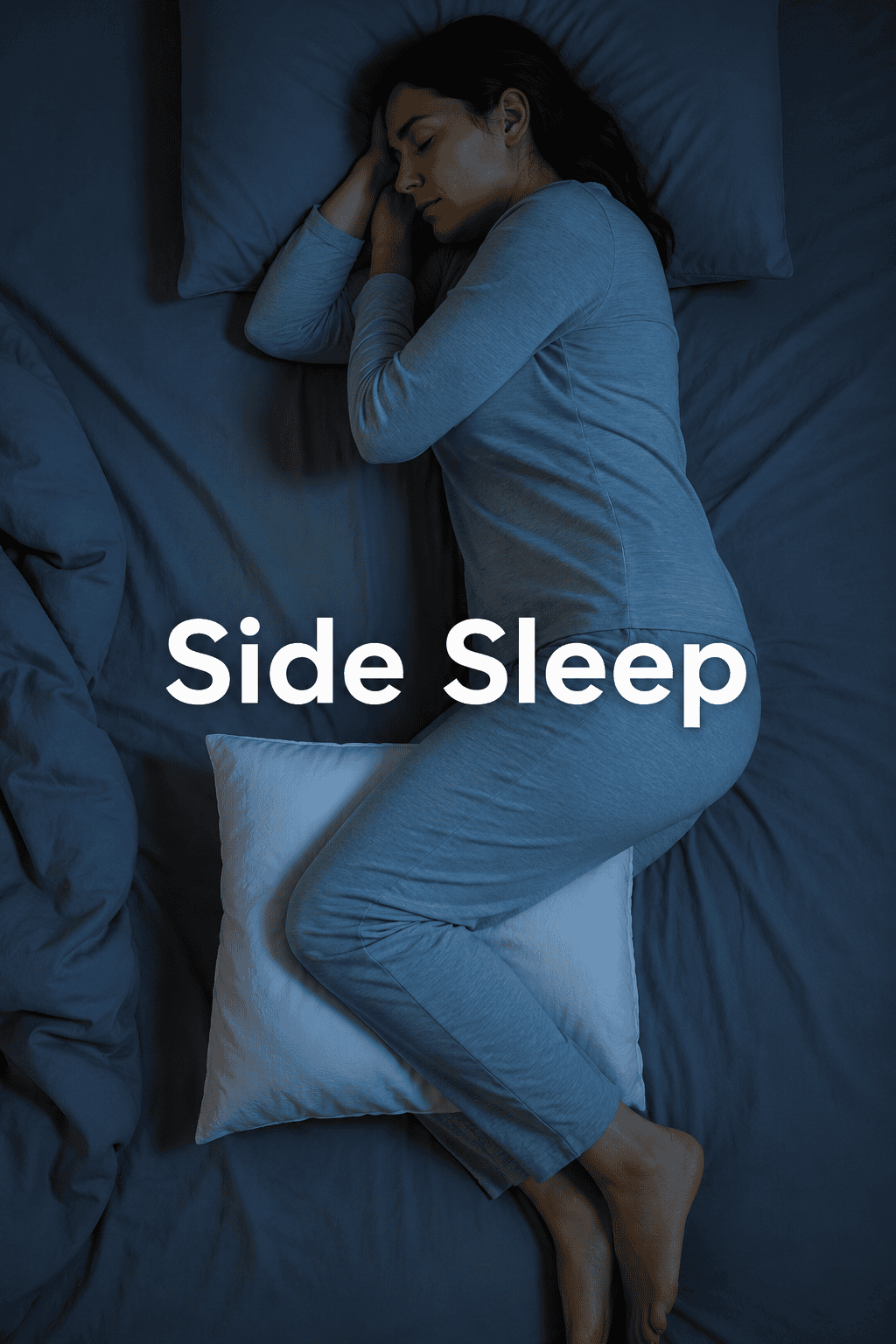
Side sleeping with a pillow between your knees is the single most recommended position for back pain, followed closely by back sleeping with a pillow under your knees. Both positions reduce spinal compression and help your muscles actually relax overnight instead of working to compensate for poor alignment.
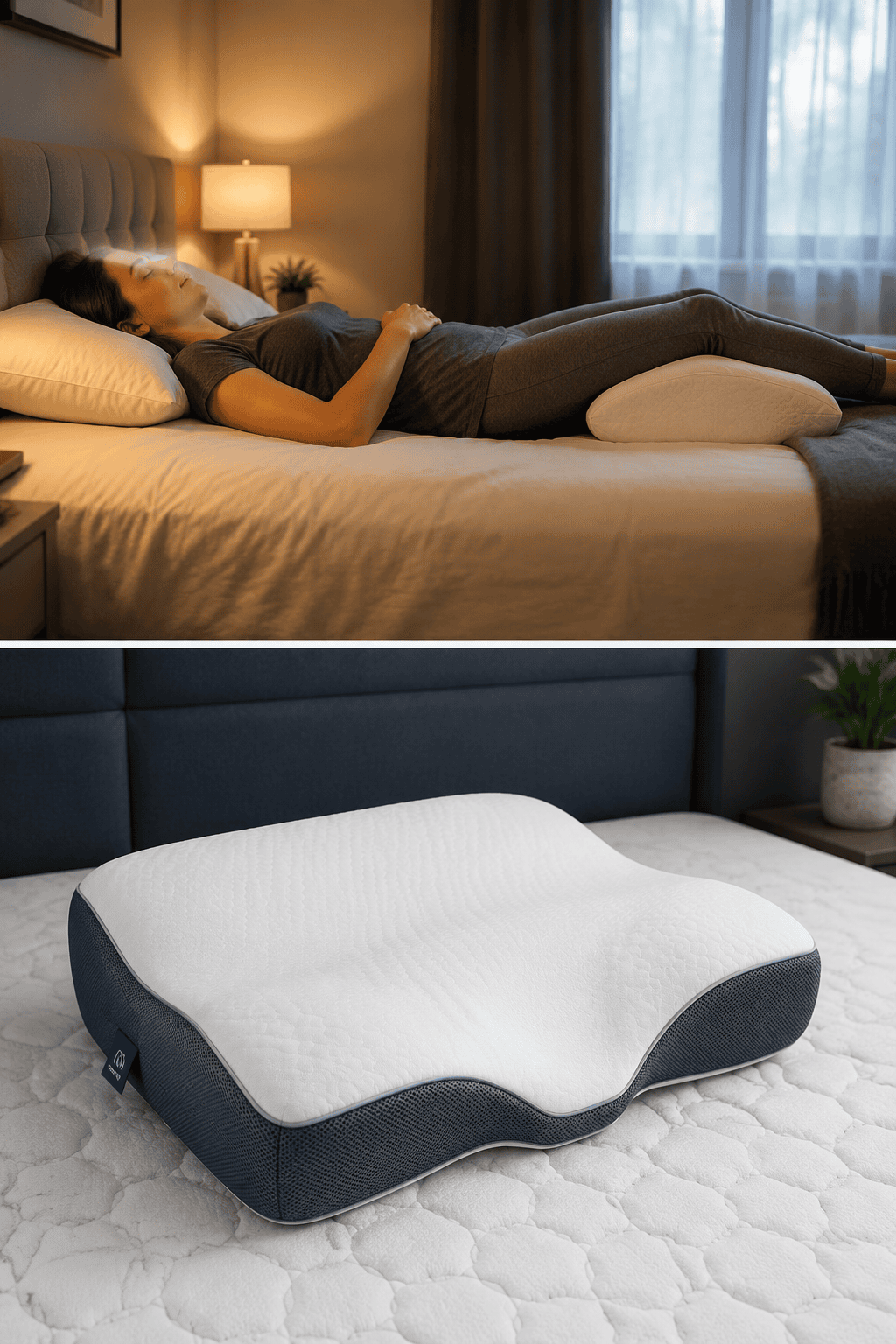
Here’s what the research actually says: according to the Mayo Clinic, sleeping on your side with your legs slightly drawn toward your chest and a pillow between your knees helps align the spine, pelvis, and hips, taking pressure off the lower back [1]. Back sleeping with a pillow under the knees maintains the natural lumbar curve and lets the back muscles decompress [1].
The honest version is that there’s no single “perfect” position for everyone. Back pain has different causes – disc issues, muscle tightness, SI joint problems – and what helps one person may not help another. But these two positions are the safest starting point for most people.
The 7 positions, ranked from most to least back-friendly:
- Side sleeping with pillow between knees – best for most lower back pain
- Back sleeping with pillow under knees – best for maintaining lumbar curve
- Fetal position (side sleeping, knees drawn up) – good for disc herniation
- Side sleeping with full body pillow – reduces hip and shoulder pressure
- Back sleeping flat – neutral but less effective than with knee support
- Reclined back sleeping (adjustable base or wedge) – helpful for spinal stenosis
- Stomach sleeping with hip pillow – last resort if you can’t change positions [1]
Side Sleeping vs Back Sleeping – Which Is Actually Better?
For most people, side sleeping wins – but back sleeping is better for specific conditions like sleep apnea or facial pressure issues.
Side sleeping is the most common position worldwide, and it has real advantages: it reduces snoring, is the safest option during pregnancy, and keeps the airway more open. The downside is that it can create shoulder and hip pressure if your mattress is too firm, and it can cause neck pain if your pillow isn’t the right height.
Back sleeping is better for keeping your face and neck in neutral alignment, which is why some physical therapists prefer it for neck pain specifically [3]. The problem is that it worsens snoring and is actively dangerous for people with untreated sleep apnea.
In practice this means: if you snore, have acid reflux, or are pregnant, side sleeping is the better choice. If you have chronic neck pain and don’t snore, back sleeping with proper pillow support may serve you better.
How Do I Know If My Sleep Position Is Causing Neck Pain?
If your neck pain is worse in the morning and improves within an hour of getting up, your sleep position – or your pillow – is almost certainly the cause.
The pattern matters here. Pain that’s worst right after waking and fades during the day points directly to something happening during sleep. Pain that builds throughout the day is more likely posture or tension-related.
Signs your position is the problem:
- Stiffness on one side only (usually the side you sleep on)
- Pain that’s worse after longer sleep, not less
- Headaches at the base of the skull in the morning
- Numbness or tingling in your arm or hand when you wake up
Harvard Health notes that the wrong pillow is one of the most overlooked causes of chronic neck pain – specifically, a pillow that’s too high or too low forces your neck into a bent position for hours [2]. Even a good sleep position won’t help if your pillow is working against you.
If you’ve been dealing with this for a while and nothing seems to fix it, the pillow is usually where I’d look first. I spent months adjusting my sleep position before realizing my pillow was the actual problem.
What’s the Best Pillow for Side Sleepers?
Side sleepers need a firmer, higher pillow that fills the gap between the shoulder and the head – typically 4 to 6 inches, depending on shoulder width.
The reason this matters is that when you lie on your side, your shoulder pushes your head upward. A pillow that’s too flat lets your head drop, straining the neck muscles on the upper side. A pillow that’s too thick pushes your head up and strains the opposite side.
What to look for:
- Height: Should keep your head level with your spine – not tilted up or down
- Firmness: Medium-firm to firm so it doesn’t compress flat under your head’s weight
- Material: Memory foam or latex holds its shape better than down or polyester fill
- Width: Wide enough that shifting slightly doesn’t take you off the pillow
The Sleep Foundation recommends that side sleepers also consider a body pillow between the knees to prevent the hips from rotating and pulling the spine out of alignment [3]. This is one of those small changes that makes a noticeable difference faster than you’d expect.
Can Sleeping on Your Stomach Cause Problems?
Yes – stomach sleeping is the most problematic position for both neck and back health. It forces your neck to rotate to one side for hours, compresses the lumbar spine, and puts your back muscles in a shortened, strained position all night [1].
Most people who struggle with morning stiffness and can’t figure out why are stomach sleepers. It’s not just you – this position is genuinely hard on the body.
If you can’t break the habit, the Mayo Clinic suggests placing a pillow under your hips and lower abdomen – not under your head – to reduce the arch in your lower back [1]. Skip the head pillow entirely if you’re a stomach sleeper, or use a very thin one, to reduce how far your neck has to rotate.
Worth trying if you’re a committed stomach sleeper: a body pillow placed along your side can give you the pressure sensation you’re used to while gradually shifting you toward a side-sleeping position.
What Sleep Position Is Best for Snoring?
Side sleeping is the most effective position for reducing snoring. Back sleeping causes the tongue and soft palate to fall backward into the airway, which is what creates the snoring sound.
The difference can be significant. For people with mild to moderate snoring, switching to side sleeping alone sometimes eliminates it entirely. For people with obstructive sleep apnea, it reduces severity but isn’t a substitute for a CPAP or other treatment.
If you keep rolling onto your back at night:
- Sew a tennis ball into the back of a sleep shirt (old trick, but it works)
- Use a body pillow behind your back as a barrier
- Try a wedge pillow that elevates your upper body slightly
- Consider a positional sleep device designed specifically for this
If snoring is affecting your sleep quality or your partner’s, it’s worth checking out the silent signs of a sleep disorder – snoring is sometimes the first visible sign of something that needs medical attention.
Best Sleep Position for Pregnancy
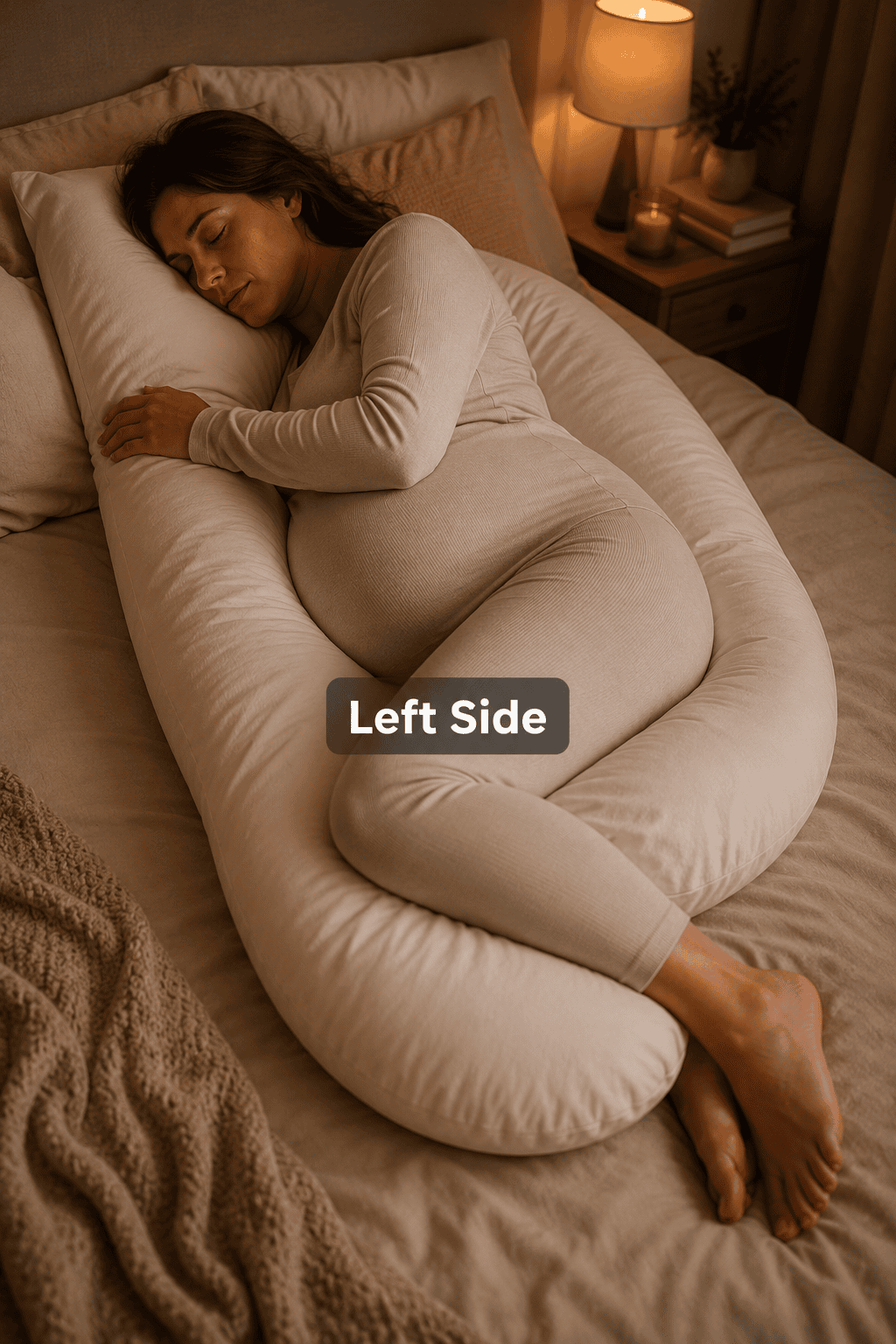
Left-side sleeping is the recommended position during pregnancy, particularly in the second and third trimesters. It improves circulation to the fetus, reduces pressure on the liver, and helps with kidney function.
The reason left side specifically matters is that the inferior vena cava – the large vein that returns blood to the heart – runs along the right side of the spine. Lying on the left side keeps the uterus from compressing it as pregnancy progresses.
A full-length body pillow or a pregnancy pillow that supports both the belly and the back makes left-side sleeping significantly more comfortable. If you’re struggling with sleep during pregnancy more broadly, the insomnia during pregnancy guide covers what actually helps beyond just position.
Sleep Positions to Avoid If You Have Arthritis
For arthritis, the position to avoid depends on which joints are affected – but stomach sleeping is almost universally problematic, and sleeping with joints in a bent, compressed position worsens morning stiffness.
General rules by joint:
- Hip arthritis: Avoid side sleeping on the affected hip – use a pillow between knees to reduce joint compression
- Knee arthritis: Avoid sleeping with knees fully bent – a small pillow under the knees in back sleeping helps
- Shoulder arthritis: Avoid sleeping on the affected shoulder – back sleeping or opposite-side sleeping is better
- Spinal arthritis (spondylitis): Back sleeping with minimal pillow height keeps the spine in the most neutral position
The goal with arthritis is to keep affected joints in a mid-range, unloaded position overnight. Joints that are compressed or held at end-range for hours will be stiffer and more painful in the morning.
What Sleep Position Helps With Acid Reflux?
Left-side sleeping is the best position for acid reflux. It keeps the stomach below the esophagus, which makes it physically harder for stomach acid to travel upward.
Back sleeping with the head elevated (using a wedge pillow, not just stacking pillows) is the second-best option. Elevating the upper body by 6 to 8 inches reduces reflux episodes significantly for most people.
Right-side sleeping is the worst position for reflux – it relaxes the lower esophageal sphincter and makes reflux more likely. If you’re waking up with a burning sensation in your chest or throat, your sleep position is worth examining before anything else.
How Long Does It Take to Adjust to a New Sleep Position?
Most people need 2 to 4 weeks to feel comfortable in a new sleep position, and up to 8 weeks before it becomes their default. The first few nights are usually the hardest – you’ll wake up having rolled back to your old position, which is normal.
The adjustment is partly physical (your body adapting to different pressure points) and partly habitual. Using a body pillow or a rolled towel as a physical barrier speeds up the process by making it uncomfortable to roll back.
If you’re also struggling to fall asleep during the transition, it’s worth reading through these science-backed fixes for feeling tired but unable to sleep – position changes sometimes temporarily disrupt sleep onset before things improve.
How to Train Yourself to Sleep on Your Back
Back sleeping is one of the harder positions to adopt if you’re a natural side or stomach sleeper, but it’s trainable with the right setup.
Step-by-step approach:
- Place a pillow under your knees before you get in bed – this makes back sleeping immediately more comfortable
- Use two body pillows, one on each side, to prevent rolling
- Keep your arms at your sides or on your chest – not above your head, which strains the shoulders [3]
- Start by trying to fall asleep on your back, even if you end up moving during the night
- Gradually, your body will spend more time in the position as it becomes familiar
It’s not just about willpower. The physical setup matters more than the intention.
Best Mattress Firmness for Different Sleep Positions
Your mattress firmness should match your primary sleep position. Using the wrong firmness is one of the most common reasons people wake up with pain even when their position is technically correct.
| Sleep Position | Recommended Firmness | Why |
|---|---|---|
| Side sleeper | Soft to medium (3-5/10) | Allows shoulder and hip to sink in, keeping spine level |
| Back sleeper | Medium to medium-firm (5-7/10) | Supports lumbar curve without excessive sinking |
| Stomach sleeper | Firm (7-8/10) | Prevents hips from sinking and arching the spine |
| Combination sleeper | Medium (5/10) | Balances needs across positions |
The reason this matters is simple: a side sleeper on a very firm mattress has their spine bowing upward because the shoulder and hip can’t sink in. A back sleeper on a very soft mattress has their hips sinking too deep, which exaggerates the lumbar curve.
Is It Bad to Sleep in the Same Position Every Night?
Sleeping in the same position every night isn’t inherently bad – as long as it’s a good position. The problems arise when that position is stomach sleeping, or when you’re sleeping on a surface that creates consistent pressure on the same joints.
If you’re a committed side sleeper, alternating sides periodically helps prevent shoulder and hip imbalances. Some people develop one-sided neck or shoulder tightness from always sleeping on the same side.
For people who wake up stiff and sore, the issue is usually not the position itself but the combination of position, pillow, and mattress firmness. Fixing one without the others often doesn’t solve the problem.
🔎 If you’re waking up exhausted regardless of how you sleep, it may be worth looking deeper. Take this free, anonymous insomnia test to evaluate your symptoms over the past two weeks – it only takes a few minutes and can help you understand what’s actually going on.
Why Do I Wake Up With Neck Pain?
Morning neck pain is almost always caused by one of three things: a pillow that’s the wrong height, sleeping on your stomach, or sleeping with your arm under your head.
The pillow height issue is the most common and the most overlooked. Harvard Health specifically notes that a pillow that doesn’t support the natural curve of the neck – whether too high or too flat – puts the neck in a strained position for the entire night [2]. For back sleepers, a rounded, contoured pillow under the neck with a flatter section for the head works better than a standard flat pillow [2].
For side sleepers, the pillow needs to be thick enough to keep the head level with the spine. Most standard pillows are too thin for side sleeping, which is why so many side sleepers end up with one-sided neck pain.
The Sleep Foundation also points out that back sleepers should keep their hands at their sides or on their chest – not raised above the head, which rotates and strains the neck and upper back [3].
If you’ve sorted out your pillow and position and still wake up with neck pain, applying heat or cold to the neck for 10 to 15 minutes before bed can help reduce existing tension before it compounds overnight [3].
Conclusion
Morning back and neck pain isn’t something you just have to accept. Most of the time, it comes down to a few specific, fixable things: your sleep position, your pillow height, and your mattress firmness.
The most practical starting points:
- Switch to side sleeping with a pillow between your knees, or back sleeping with a pillow under your knees
- Check your pillow height – it should keep your head level with your spine, not tilted in either direction
- If you’re a stomach sleeper, place a pillow under your hips and work gradually toward side sleeping
- Give any new position at least 3 to 4 weeks before deciding it doesn’t work
This is what worked for me: fixing the pillow height made more difference than any position change I tried. I’d been adjusting everything else for months before I realized the pillow I’d been using for years was too flat for side sleeping.
If you’re dealing with pain that doesn’t improve with position changes, it’s worth looking at the bigger picture. Poor sleep quality overall – not just position – affects how much pain you feel. You might find it useful to look at how to improve deep sleep or work through a proper bedtime routine for adults that helps your nervous system actually wind down before bed.
And if you’re not sure whether what you’re experiencing goes beyond position-related discomfort, these 15 insomnia tips cover the situations where sleep problems run deeper than any single fix.
You don’t have to fall asleep perfectly every night. You just have to rest – and making your sleep position work for your body instead of against it is one of the more reliable ways to get there.
🔎 Still waking up exhausted no matter what you try? Take this free anonymous insomnia test – it evaluates your symptoms over the past two weeks and takes only a few minutes. It’s a useful first step in understanding what’s actually driving your sleep problems.
Medical disclaimer: The information in this article is for educational purposes only and does not constitute medical advice. If you have chronic pain, a diagnosed sleep disorder, or symptoms that aren’t improving, please consult a qualified healthcare provider.
FAQ
Q: What is the single best sleep position for lower back pain?
Side sleeping with a pillow between the knees is the most consistently recommended position for lower back pain. It aligns the spine, hips, and pelvis and reduces pressure on the lumbar region [1].
Q: Is it okay to sleep on your back every night?
Yes, back sleeping is one of the healthiest positions for spinal alignment. The key is using a pillow under the knees to maintain the natural lumbar curve. It’s not recommended for people with untreated sleep apnea or heavy snorers [1].
Q: Why does my neck hurt more on the side I sleep on?
This usually means your pillow is too thin. When side sleeping, the pillow needs to fill the space between your shoulder and your head. If it’s too flat, your head drops toward the mattress, straining the neck muscles on the upper side [2].
Q: Can the wrong mattress cause back pain even with a good sleep position?
Yes. A mattress that’s too soft allows the hips to sink too far, misaligning the spine regardless of position. A mattress that’s too firm creates pressure points on the hips and shoulders. Matching firmness to your sleep position matters [3].
Q: What’s the best sleep position for people with acid reflux?
Left-side sleeping is best for acid reflux. It keeps the stomach positioned below the esophagus, making it harder for acid to travel upward. Right-side sleeping is the worst position for reflux.
Q: How do I stop rolling onto my back when I’m trying to side sleep?
Use a body pillow behind your back as a physical barrier. You can also try the tennis ball method – sewing a tennis ball into the back of a sleep shirt makes rolling uncomfortable enough to disrupt the habit within a few weeks.
Q: Is stomach sleeping always bad?
It’s the most problematic position for most people, particularly for neck and lower back health. If you can’t change the habit, placing a pillow under the hips and lower abdomen reduces the strain significantly [1].
Q: What pillow is best for back sleepers with neck pain?
A contoured or cervical pillow that supports the neck’s natural curve while keeping the head relatively flat. Harvard Health recommends a rounded pillow under the neck with a flatter section for the head, rather than a single thick pillow that pushes the head forward [2].
Q: Does sleep position affect snoring?
Yes, significantly. Back sleeping causes the tongue and soft palate to fall backward into the airway. Side sleeping keeps the airway more open and reduces snoring for most people.
Q: How long before a new sleep position stops feeling uncomfortable?
Most people adjust within 2 to 4 weeks. The first few nights are the hardest. Using pillows as physical barriers and being consistent about starting in the new position speeds up the process.
References
[1] Sleeping Positions for Back Pain – https://www.mayoclinic.org/diseases-conditions/back-pain/in-depth/sleeping-positions/art-20546852
[2] Say Good Night to Neck Pain – https://www.health.harvard.edu/pain/say-good-night-to-neck-pain
[3] Best Sleeping Position for Neck Pain – https://www.sleepfoundation.org/sleeping-positions/best-sleeping-position-for-neck-pain